
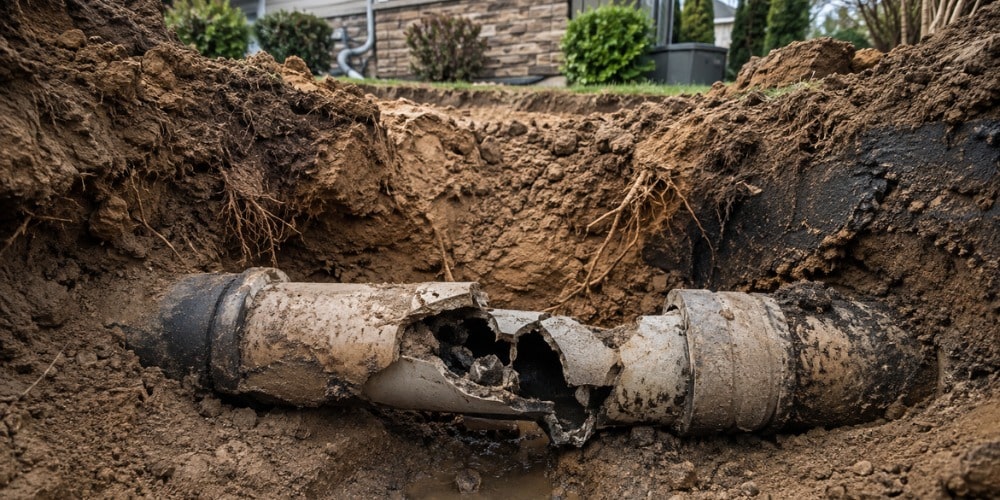
Standard homeowners insurance does not automatically cover sewer line damage. However, understanding whether homeowners insurance covers sewer line issues depends heavily on the cause of the damage, where the pipe is located, and whether you carry optional endorsements. The distinction matters enormously when a failure occurs.
Table of Contents
- What Standard Policies Actually Cover
- The Coverage Gap Most Homeowners Don’t Know About
- Optional Endorsements for Sewer Line Coverage
- How Much Sewer Line Repairs Actually Cost
- What to Do When You Suspect a Sewer Line Problem
- Things to Know
Key Takeaways
- Standard homeowners insurance only covers sewer line damage caused by a sudden, covered peril such as fire, wind, or vandalism, not wear, clogs, or neglect.
- A Nationwide survey found that 32% of homeowners incorrectly believe service lines are covered under a standard home policy.
- Sewer backup and service line coverage are separate, affordable endorsements that most insurers offer for $40 to $250 per year.
- The underground pipe running from your home to the street is your financial responsibility, not the city’s.
- If a sewer line issue arises, acting quickly limits both the physical damage and potential claim complications.
- Consulting your insurer and a licensed underground plumber together gives you the clearest picture of liability and repair costs.
What Standard Policies Actually Cover
A standard homeowners insurance policy operates around “named perils.” This means it only pays out when damage results from a cause specifically listed in the policy. For sewer lines, that typically includes sudden damage from fire, lightning, wind, or vandalism. If a tree falls and crushes your exterior sewer pipe, your insurer may cover it. In contrast, if the same pipe fails from decades of corrosion or grease buildup, you bear the cost.
According to the Insurance Information Institute, sewer and water backups are occurring more frequently across the country. Yet a standard homeowners policy does not cover backups, slow leaks, or deterioration. This applies regardless of how much damage results inside your home. The distinction trips up many policyholders, especially during a claim.
Moreover, it is worth separating two distinct problems. The first is the underground sewer pipe itself (the service line). The second is a sewer backup into your home’s interior. Both often involve drain cleaning service, and both remain uninsured under a standard policy. However, they require different endorsements to address the gap.
The Coverage Gap Most Homeowners Don’t Know About
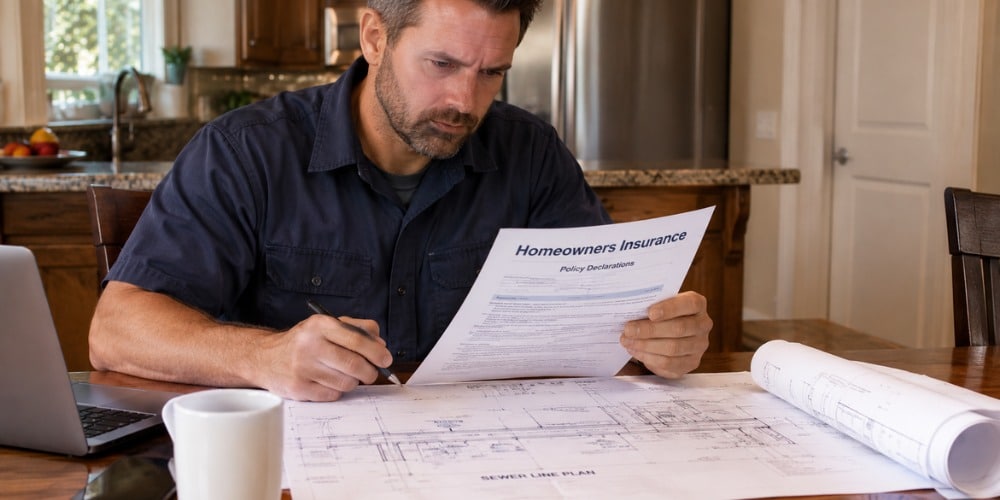
The coverage gap around sewer lines represents one of the most costly misunderstandings in residential insurance. According to a Nationwide survey, 32% of homeowners incorrectly believe that service lines are covered by a standard home policy. Additionally, a separate case study published by the Institute for Catastrophic Loss Reduction (ICLR) in 2024 found that 45% of 674 survey respondents did not know whether they had insurance coverage for sewer backup at all.
This matters significantly because the underground pipe running from your foundation to the city’s main line is entirely your responsibility. Most homeowners assume the city shares that liability. In reality, municipal responsibility typically begins at the property line or at the water meter, depending on your jurisdiction. Everything on your side of that boundary is yours to maintain and repair.
For homeowners in older neighborhoods, this creates serious financial exposure. Understanding what underground plumbing pipe types are in place can help you assess your risk before a crisis occurs. Pipes made from clay, cast iron, or Orangeburg material degrade over time and are not eligible for coverage under a standard policy.
Optional Endorsements for Sewer Line Coverage
Most major insurers offer two separate add-ons that address the coverage gap. Adding these endorsements protects you before disaster strikes.
Sewer Backup Coverage
This endorsement covers damage to your home’s interior caused by a sewer or drain backup. It protects finished basements, flooring, furniture, and appliances destroyed by sewage. Coverage limits typically range between $5,000 and $25,000, according to MoneyGeek. The annual cost for this endorsement averages $50 to $250 per year. Your insurer and coverage amount determine the exact price.
Service Line Coverage
This endorsement specifically protects the physical underground pipes on your property. It covers the cost to excavate, repair, or replace a failed sewer line between your home and the street. According to Lemonade, service line coverage typically runs $40 to $50 per year. It provides $10,000 to $12,000 in protection. That represents meaningful financial relief given typical repair costs.
| Endorsement | What It Covers | Typical Annual Cost | Typical Coverage Limit |
|---|---|---|---|
| Sewer Backup | Interior damage from sewage backup | $50 to $250 | $5,000 to $25,000 |
| Service Line | Underground pipe repair or replacement | $40 to $50 | $10,000 to $12,000 |
| Standard Policy | Fire, wind, vandalism damage only | Included in base premium | Varies |
Both endorsements deserve consideration during your next renewal. Neither is expensive relative to the repair bills they offset. Therefore, adding protection is a smart financial decision.
How Much Sewer Line Repairs Actually Cost
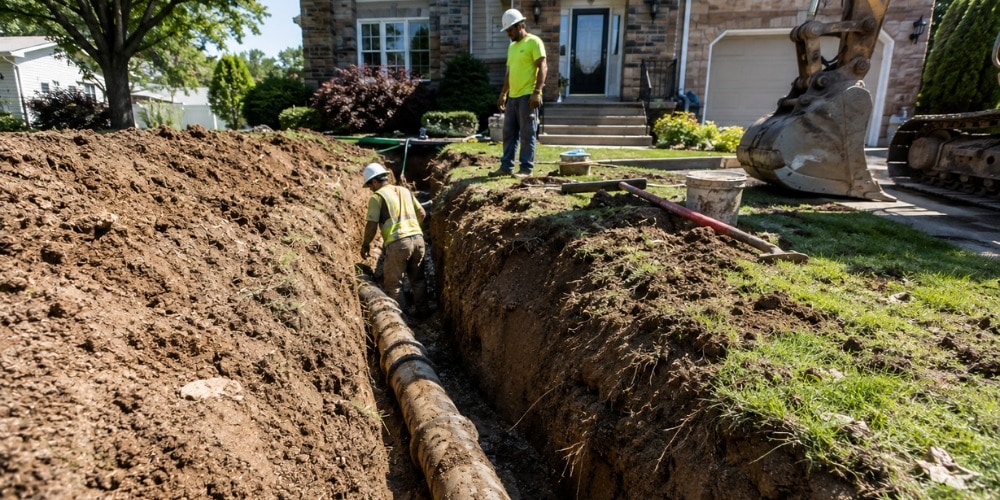
Repair costs vary widely based on pipe depth, material, access, and the repair method used. According to American Family Insurance, sewer repairs in 2024 ranged from $650 to $7,500 when the job involved sewer line replacement. More complex jobs, particularly those requiring full excavation under driveways or landscaping, push costs higher.
Understanding sewer line repair options before you call a contractor helps you ask better questions. It also prevents unnecessary upsells. Common red flags include slow drains throughout the house, sewage odors in the yard, and patches of unusually lush grass over the pipe’s path.
Furthermore, homeowners insurance premiums themselves are rising. According to Rate.com’s 2025 market analysis, the national average annual homeowners insurance premium reached $2,072. This represents a 20% increase from $1,723 in 2023. Adding endorsements increases your premium modestly, but the base cost of coverage is already climbing. Therefore, ensuring you are not paying for a policy with large uninsured gaps is smarter than ever.
What to Do When You Suspect a Sewer Line Problem
When symptoms appear, act promptly. Delayed action can compound damage and complicate insurance claims. Follow this practical sequence:
- Document everything. Take photos or video of any visible symptoms: slow drains, sewage odors, wet spots in the yard, or backed-up fixtures.
- Call your insurer first. Report the issue and ask whether your policy or any endorsements apply before authorizing repairs.
- Hire a licensed specialist. For exterior underground work, a company specializing specifically in buried pipe is your best resource. A qualified contractor protects you from unqualified operators.
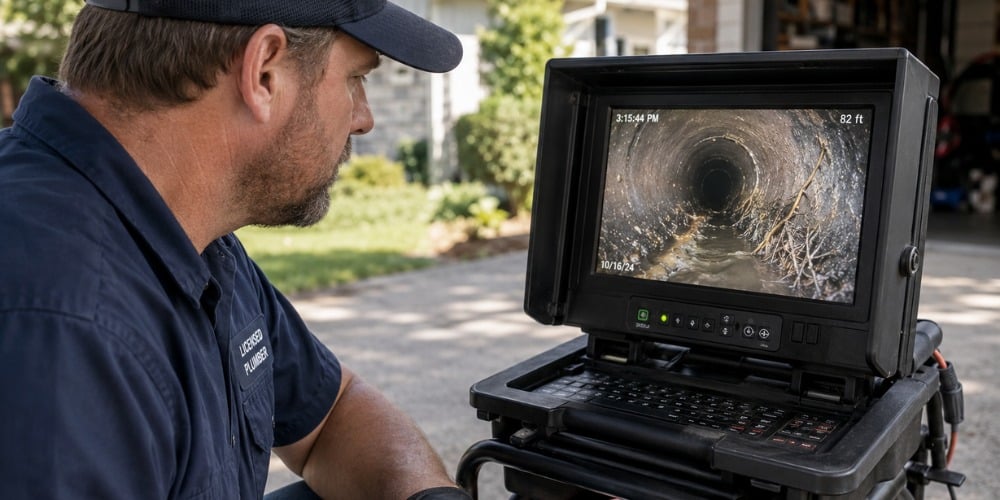
- Get a camera inspection. A sewer scope shows the exact location and condition of the failure. This supports your insurance claim and ensures the right repair method is chosen.
- Understand what you are scheduling. Preparation becomes easier when you know what to expect during a drain cleaning service. This knowledge gives you confidence before work begins.
Things to Know
- Your municipality is not responsible for the sewer line between your home and the street. That portion belongs to you.
- Sewer line failures from tree root intrusion are common and are almost never covered under a standard homeowners insurance policy.
- Not all insurers offer service line coverage as an endorsement. Shop around if your current provider does not.
- Filing a claim without the right documentation, including photos and a licensed inspection report, can result in denial even when a valid endorsement exists.
- Some home warranty plans also offer sewer line coverage, but these are separate products with their own exclusions and service call fees.
Get a Professional Assessment Before Your Next Claim Is Denied
Sewer line problems rarely announce themselves with enough warning to act slowly. If you are in the Alpharetta or North Atlanta area and need an exterior underground pipe inspection or repair, request a free estimate from Zippy Plumber today. We specialize exclusively in underground work from the foundation to the street, which means no guesswork and no generalist plumbers working outside their skill set. Contact us now and know exactly what you are dealing with before it becomes a financial emergency.
Frequently Asked Questions
Q: Does homeowners insurance cover sewer line replacement if the pipe collapses from age?
No. Standard homeowners insurance does not cover pipe failure caused by age, wear, or deterioration.
Insurers treat gradual deterioration as a maintenance issue rather than a covered peril. To get coverage for a collapsed older pipe, you would need a service line endorsement added to your policy before the failure occurs.
Q: Is the sewer line from my house to the street my responsibility or the city’s?
In most U.S. municipalities, homeowners are responsible for the sewer lateral from their foundation to the property line or the main connection point.
The city typically maintains the main sewer line under the street, but everything branching off it toward your home is your liability. Confirm the exact boundary with your local public works department.
Q: Will my insurer pay for tree root damage to a sewer line?
Tree root intrusion is almost universally excluded from standard homeowners insurance policies.
Because root intrusion is considered a gradual process rather than a sudden event, most insurers classify it as a maintenance issue. A service line endorsement may cover some root damage depending on how the policy is written. Therefore, confirm this directly with your agent.
Q: How do I know if my policy already includes sewer backup coverage?
Review your declarations page or call your insurer directly, as backup coverage is rarely included in a base policy without a specific endorsement.
Look for language referencing “water backup,” “sewer backup,” or “drain backup” in your coverage summary. If you do not see it listed, you almost certainly do not have it.
Q: Can I add sewer line coverage after a problem has already started?
No. Insurers will not allow you to add coverage for a known, pre-existing issue.
Any endorsement you purchase after damage has begun will not apply to that specific claim. This is why adding service line and sewer backup coverage during a routine policy review, not after a crisis, is the responsible move.