
What’s In This Guide
- Why the Difference Between a Fixture Clog and an Underground Problem Matters
- 5 Signs the Problem Is Underground, Not Inside Your Home
- What Causes Underground Sewer Line Damage in Alpharetta?
- How Can a Sewer Camera Inspection Confirm What’s Happening Below?
- What Affects the Cost of Underground Sewer Line Repair?
- When to Call a Professional for Underground Sewer Line Repair
- Frequently Asked Questions
- Ready to Confirm What’s Happening Underground?
A single slow drain in the kitchen sink is usually a small problem. Multiple slow drains at once, a lingering sewage odor outdoors, or a soggy patch of grass that never quite dries out often point to something bigger. These signs may indicate a problem beyond an individual fixture, somewhere in the sewer line running underground from the building toward the public sewer connection.
For homeowners in Alpharetta, telling a fixture clog apart from a sewer line repair need matters because the fix, the cost, and the risk of waiting are not the same.
Quick Facts
- Multiple slow drains at once can point to a problem in the main sewer line rather than separate fixture clogs.
- Yard wet spots and outdoor odor can signal a break or a pipe collapse below grade.
- Clay-rich soils are common across the Piedmont, and site-specific soil conditions can affect drainage, excavation, and the environment surrounding buried sewer lines.
- Root intrusion often develops where an existing crack, defective joint, or other opening gives roots a path into the sewer line.
- A sewer camera inspection can help identify visible defects and guide repair planning before excavation begins.
Why the Difference Between a Fixture Clog and an Underground Problem Matters
A localized fixture clog may clear with a plunger or short cable snake and remain resolved. An underground sewer line problem can continue to worsen if the underlying cause is not addressed, potentially leading to leaks, backups, or damage to the surrounding soil and property.
The stakes go beyond inconvenience:
- Property protection. Wastewater leaking from a damaged sewer pipe can saturate or erode surrounding soil and may affect nearby hardscaping, patios, or foundation areas over time.
- Sanitary risk. Sewage backups inside the home or pooling in the yard create a health hazard that should be evaluated by a qualified professional.
- Cost trajectory. A contained repair usually costs less than a failure that has spread to a longer section of pipe.
- Repeat service calls. Treating an underground issue as a series of isolated clogs can lead to repeated plumbing calls without addressing the underlying problem.
Knowing which category a problem falls into is the first real decision point, and it starts with recognizing the signs.
5 Signs the Problem Is Underground, Not Inside Your Home
Several signs can separate a single clogged fixture from an underground sewer line issue: multiple slow drains at the same time, sewage odor near the yard or cleanout, unusually green or soggy grass, gurgling in more than one fixture, and recurring backups after snaking or plunging.
1. Multiple Drains Slow Down Together
When the kitchen sink, a bathroom drain, and the toilet all slow down around the same time, the problem may be in the main sewer line rather than in each fixture separately.
2. Wet or Sunken Spots in the Yard
A soft, spongy, or unusually green patch of lawn, especially one that shows up regardless of recent rain, can mean wastewater is surfacing from a break or a pipe collapse below the surface.
3. Sewage Odor Near the Yard or Foundation
An outdoor sewage odor near a cleanout, a crawlspace vent, or a low point in the yard can indicate a defect that is allowing sewer gas or wastewater to escape from the line.
4. Gurgling or Bubbling in More Than One Fixture
A restriction in the main line can cause air to move through multiple drains at once, producing gurgling sounds in more than one fixture. When several fixtures are affected, the problem may extend beyond a single localized clog.
5. Recurring Backups After Snaking or Plunging
If a drain clears temporarily and then backs up again within weeks, root intrusion or a structural defect in the pipe may be causing the same section to fail repeatedly.
What Causes Underground Sewer Line Damage in Alpharetta?
Underground sewer damage can result from aging pipe materials, soil movement, root intrusion, corrosion, or a combination of conditions affecting the line over time.
Aging Clay and Cast Iron Pipe
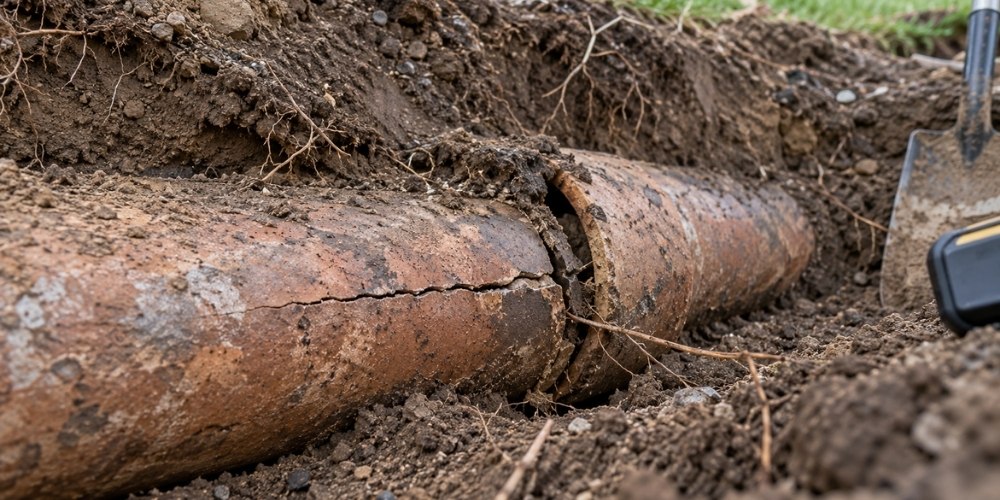
Older homes may have clay tile or cast iron sewer lines. Clay tile can crack or develop joint failures, while cast iron can corrode or deteriorate over time. These defects can create potential pathways for leaks and root intrusion.
Clay-Rich Soil Conditions
Clay-rich soils are common across the Piedmont. The USDA-NRCS description of the Cecil series, a soil found throughout the southeastern Piedmont, identifies a clay-rich subsoil extending from roughly 8 to 42 inches in its typical profile, with clay or clay loam occurring even deeper in some profiles. Soil conditions can affect drainage, excavation, and the environment surrounding buried plumbing, although conditions vary considerably by soil type and site.
Root Intrusion
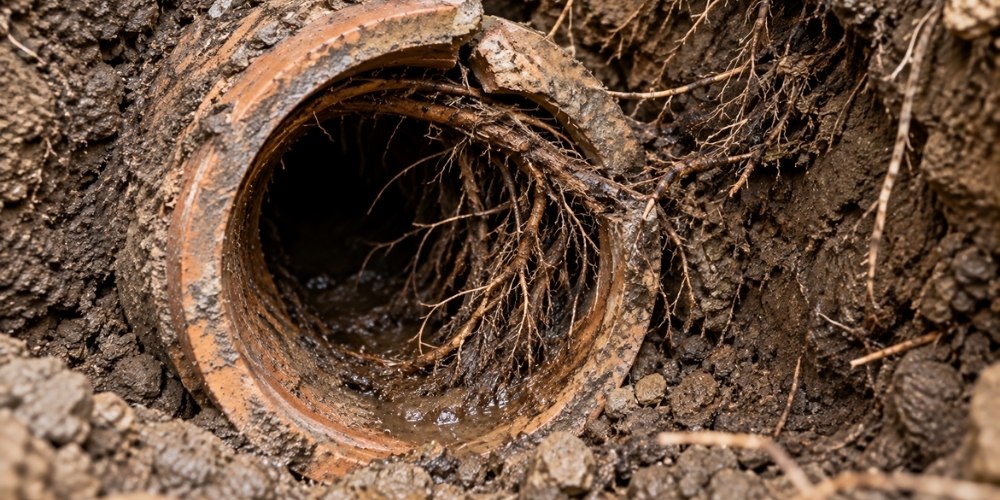
Tree roots are drawn to the moisture inside a sewer line, but they generally do not create the original opening. Older clay tile pipe can be vulnerable to root entry when cracks, deteriorated joints, or other gaps develop, giving roots a place to grow into. Once inside, root masses expand and worsen the surrounding damage.
Pipe Collapse
Years of soil pressure, root growth, or corrosion can eventually cause a section of pipe to collapse, blocking flow and requiring repair or replacement of the damaged segment. Before recommending underground sewer repair, a plumber may consider the pipe material, extent of the damage, site access, and soil conditions to determine an appropriate repair method.
How Can a Sewer Camera Inspection Confirm What's Happening Below?
A sewer camera inspection can help confirm a suspected underground sewer problem and identify visible defects before a repair or excavation plan is developed.
- Review the reported signs. A technician starts with what the homeowner has noticed: which drains are affected, where the yard looks wet, and how long the issue has been happening.
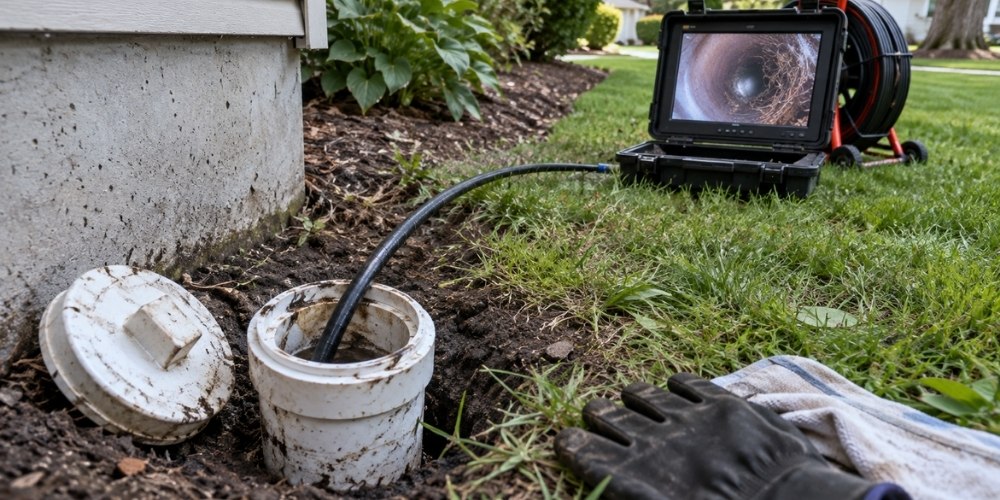
- Insert the camera. A waterproof camera enters the line through an existing cleanout or another accessible point, avoiding unnecessary disruption to the property.
- Map the pipe's condition. The live video feed can reveal visible cracks, root intrusion, offsets, or a pipe collapse and help determine the approximate location of the problem along the line. Additional locating equipment may be used to estimate the pipe's position and depth below the property.
- Document the findings. Video, measurements, and written notes create a record of exactly what the camera found and where.
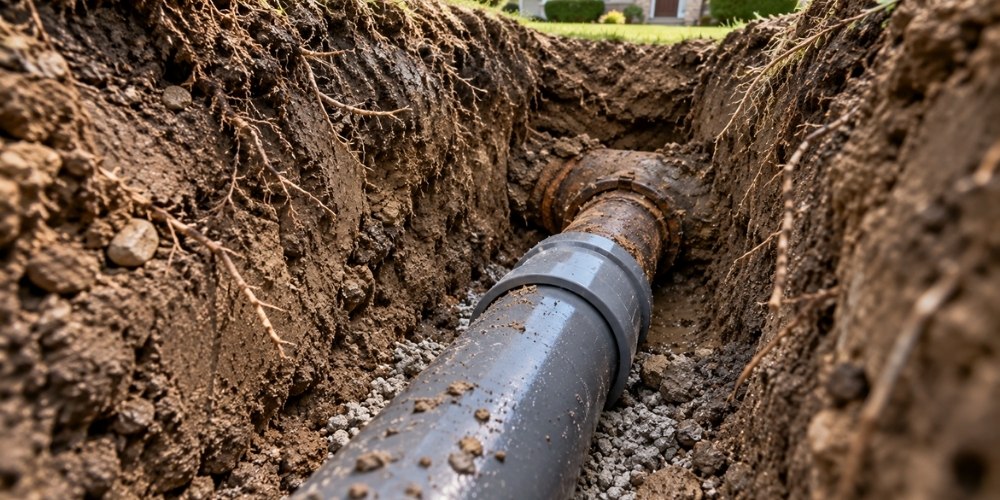
- Determine the repair path. Findings from the inspection help determine whether a trenchless method or traditional excavation is appropriate for that specific section of pipe.
For a suspected underground sewer problem, diagnosis should come before excavation whenever conditions allow. A detailed plumbing video camera inspection can help identify visible damage and guide the repair method before digging begins.
READ MORE: Sewer Line Repair in North Atlanta: Signs & Fix Options
What Affects the Cost of Underground Sewer Line Repair?
Underground sewer repair costs vary widely from property to property. The scope can range from a localized repair to a larger replacement project depending on the condition of the line, access, and other site-specific factors. There is no single flat rate that applies to every situation.
Several factors typically shape the estimate:
- Scope of the repair. A localized patch differs significantly from a full section replacement.
- Pipe material and age. Clay, cast iron, and PVC each require different repair approaches.
- Depth and access. A shallow line near a cleanout is more straightforward to reach than one buried deep beneath hardscaping.
- Soil and site conditions. Dense clay, tree roots, or tight lot access can affect labor and equipment needs.
- Repair method. The cost of trenchless methods may differ from traditional open-cut excavation depending on the pipe condition, access, and property.
- Urgency. A contained issue caught early is generally easier to assess and estimate than an active backup.
Because every property is different, the most accurate way to understand what a repair may cost is to obtain a site-specific estimate informed by a camera inspection and the actual condition of the pipe.
When to Call a Professional for Underground Sewer Line Repair
A professional should be called when signs point to a problem beyond a single fixture, before excavation begins to address a suspected sewer line problem, or when a commercial or multifamily property has a more complex shared system.
Reach out to a plumber when:
- Two or more drains slow down or back up around the same time
- A wet or foul-smelling spot in the yard does not go away after dry weather
- A drain that was recently snaked backs up again within a short period
- Mechanized digging or excavation is planned near a suspected sewer line. Georgia law requires contacting Georgia 811 at least three business days before excavation begins so affected utility companies have time to mark the approximate locations of their underground lines.
- A property manager, HOA, or commercial operator needs a diagnostic plan for a shared or high-traffic system, since commercial underground plumbing services may involve the added complexity of multi-unit or shared sewer lines
Underground sewer issues rarely resolve on their own, and the earlier they are confirmed, the more repair options tend to stay on the table.
Frequently Asked Questions
Can a sewer line be damaged even if sewage has not backed up inside the house?
Yes. Cracks, root intrusion, offsets, and small leaks can develop before a complete blockage occurs. Outdoor odors, recurring slow drains, unusually wet soil, or repeated clogs may appear before sewage backs up indoors. A camera inspection can help determine whether the line has structural damage even when wastewater is still moving through it.
Should I keep using water if I suspect a sewer line problem?
If several fixtures are backing up or sewage is beginning to surface, limit unnecessary water use until the problem is evaluated. Running sinks, showers, dishwashers, or washing machines sends additional wastewater into the same drainage system and can worsen an active backup. Contact a plumber to inspect the line and determine the next step.
Can sewer line repairs be completed without digging up the entire yard?
In some cases. Trenchless repair methods can reduce the amount of excavation required, but they are not appropriate for every damaged pipe. The condition of the existing line, pipe material, access points, and type of failure all affect whether a less invasive repair is possible.
What determines whether a sewer line should be repaired or replaced?
The decision depends on the location and extent of the damage, pipe material, overall pipe condition, access, and whether the problem is limited to one section or affects a larger portion of the line. A sewer camera inspection can help identify visible damage so the plumber can determine whether a localized repair or a more extensive replacement is appropriate.
How long does an underground sewer line repair take?
Timing depends on the length and location of the damaged section, repair method, pipe depth, access conditions, permitting, and whether excavation is required. A localized repair may take considerably less time than replacing a longer section beneath landscaping or hardscaping. A site inspection is needed to establish a realistic project timeline.
Ready to Confirm What’s Happening Underground?
Zippy Plumber provides sewer line repair and underground plumbing services for Alpharetta homes and businesses, using camera inspections to identify problems and help determine the appropriate repair approach before excavation begins.
If multiple drains are slowing down, the yard has an odor or wet spot that will not go away, or a previous snaking service did not solve the problem for long, a camera inspection is the next practical step.