
Sewer Line Repair in Dunwoody, GA
There Is a Difference Between Clearing a Drain and Repairing a Sewer Line
Drain clearing removes what is blocking the pipe. Sewer line repair addresses what is structurally wrong with it.
These are different problems with different solutions, and in Dunwoody, that distinction matters more than most homeowners realize. Many properties here have laterals running back to the public main that have been in the ground since the 1970s and early 1980s.
They have not simply slowed down with age. They have cracked, corroded internally, shifted at joints, or become so root-infiltrated that cleaning alone becomes a temporary fix applied to a permanent structural problem.
A slow drain that returns every few months may be more than a maintenance issue. It can point to something below the surface that repeated clearing will not fully resolve. A sewer camera inspection is what tells us which situation we are dealing with, and that determines whether sewer repair, sewer line replacement, or targeted trenchless work is the right call.
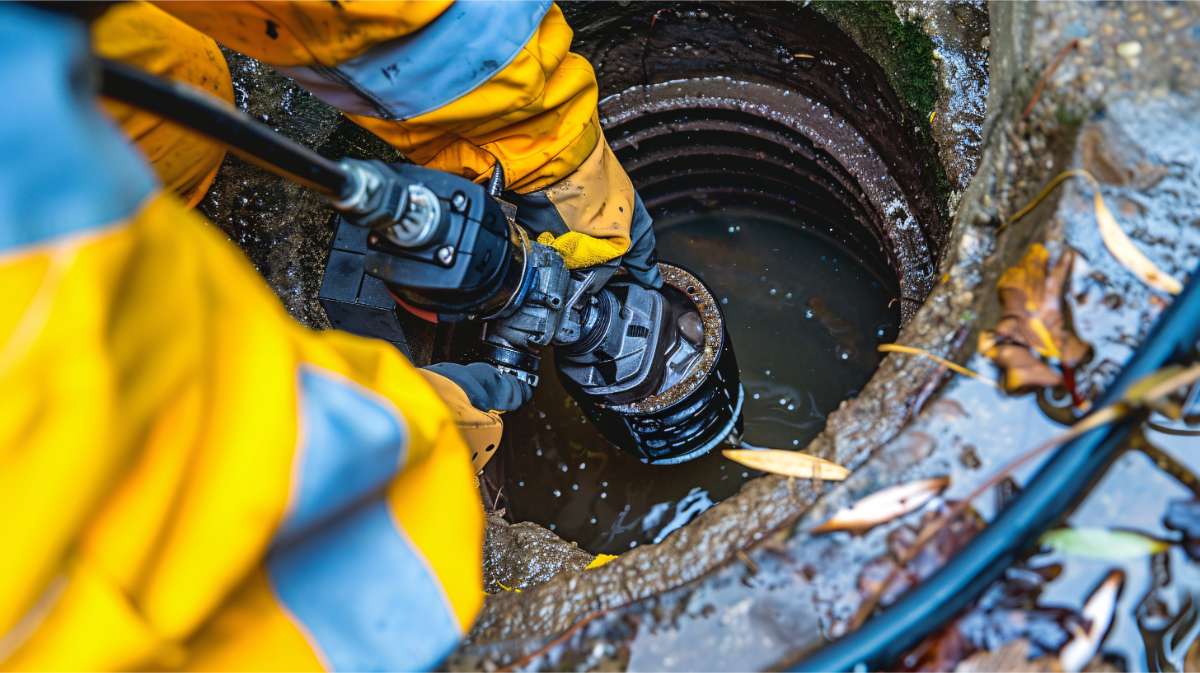
How Dunwoody's Underground Conditions Drive Sewer Line Damage
Mature Tree Cover and Root Intrusion
Many properties in Dunwoody feature mature landscaping, which can contribute to sewer line issues over time. Tree roots naturally seek out moisture and may enter sewer pipes through small cracks, loose joints, or existing weak points. As roots grow, they can restrict flow and increase the risk of backups or pipe damage.
Clay Soil and Joint Displacement
Dunwoody sits on Piedmont Georgia clay, a soil type that expands when wet and contracts as it dries. That seasonal movement stresses pipe joints repeatedly over years, slowly shifting sections out of alignment and opening the gaps that root systems and groundwater use to enter the line.
Aging Infrastructure Past Its Design Life
Many sewer lines in Dunwoody have been in service for decades. As underground plumbing systems age, they can become more susceptible to wear, corrosion, shifting, and other issues that affect performance. Combined with environmental factors such as soil movement and root growth, aging infrastructure can increase the likelihood of sewer line problems.
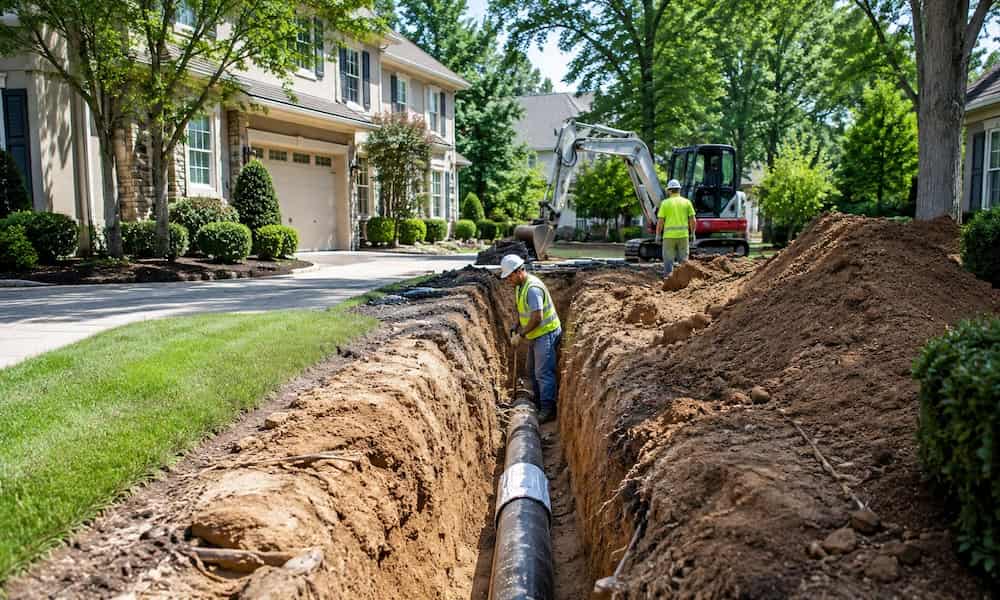
We Inspect First. Every Time.
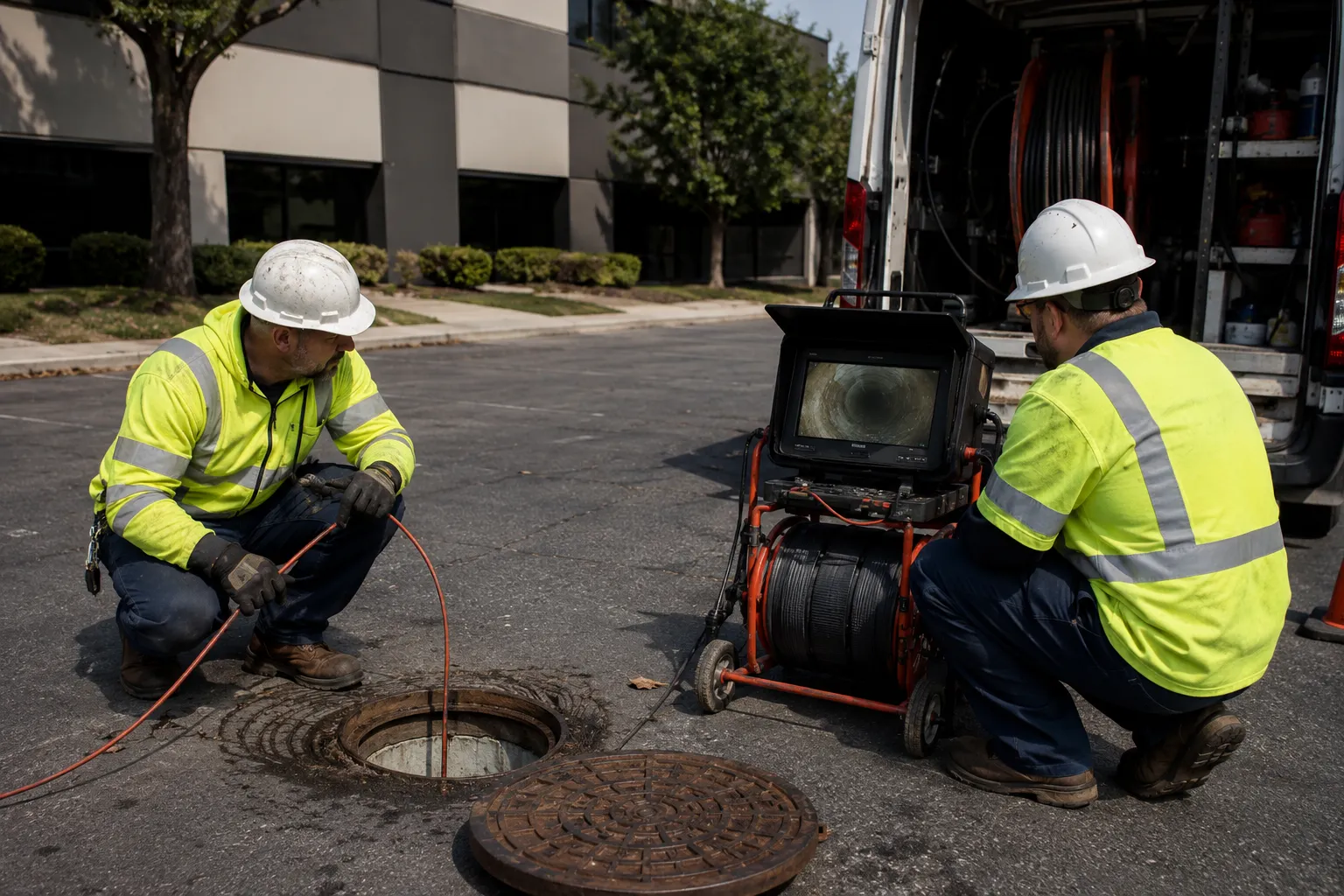
We do not recommend a sewer line repair or a sewer line replacement until we know what we are actually dealing with. Every project starts with a sewer camera inspection that puts a waterproof, high-resolution camera directly into the line and records what it finds in real time.
What a Sewer Camera Inspection Documents
The camera travels the length of the lateral from an existing cleanout or access point. Findings are recorded on video with measurements and written notes. What we typically document on Dunwoody properties includes:
- Root intrusion at joints: Fine root masses entering at gaps between pipe sections, ranging from early-stage infiltration to established root masses blocking flow
- Internal corrosion and scale: Common in older cast iron lines, where decades of mineral deposit and oxidation reduce effective pipe diameter
- Pipe belly (sag): A low section in the line where ground movement has created a depression, allowing solids to accumulate and wastewater to pool
- Offset joints: Sections displaced by soil movement, creating gaps that admit groundwater or allow wastewater to escape
- Cracks and fractures: From root pressure, ground settlement, or physical impact
- Deteriorated clay tile: Segments from pre-1975 installations that have dried, become brittle, and are at risk of collapse
What You Receive After the Inspection
You get a clear picture of what is happening underground before you agree to anything. Video documentation, pipe location data, and written findings are part of every assessment.
If sewer line replacement is what the pipe actually needs, the camera footage shows you exactly why. If a targeted sewer repair or trenchless approach can resolve the issue, we recommend that before replacement. The camera findings determine the scope.
Sewer Line Repair Options We Use in Dunwoody
Once we have a full picture of the line’s condition, we match the method to the actual problem. For many Dunwoody properties, trenchless sewer repair is the first option we evaluate because it resolves the damage without tearing out driveways, disrupting mature landscaping, or removing hardscaping that took years to install.
Trenchless Sewer Repair: Pipe Lining and Pipe Bursting
Trenchless sewer repair covers two primary methods, each suited to different pipe conditions and failure types.
Pipe Lining (CIPP)
Pipe lining (CIPP) inserts a resin-saturated flexible liner into the existing pipe through a single access point. Once positioned and inflated against the pipe wall, the liner cures in place and forms a new, smooth pipe inside the old one.
It is effective for cracked, corroded, or root-infiltrated laterals where the existing structure is still present, even if compromised. Corrosion and minor joint gaps that would allow root re-entry over time are with a durable liner.
Pipe Bursting
Pipe bursting pulls a new pipe through the old one while simultaneously fracturing the existing pipe outward into the surrounding soil. It is the right call when the deterioration is too advanced for a liner to adhere or when a larger-diameter replacement is needed to increase flow capacity.
For Dunwoody HOA communities where older laterals were originally undersized for current multifamily load, pipe bursting can address both the structural failure and the capacity issue in a single operation.
When Open-Cut Sewer Repair Is the Right Method
Trenchless repair is not always the right fit. In some cases, the condition of the pipe, the layout of the property, or access limitations may make excavation the better option.
When open-cut repair is needed, the damaged section is exposed, replaced, and the area is restored after the new pipe is installed.
When Sewer Line Replacement Makes More Sense Than Repair
Not every damaged lateral is a candidate for targeted repair. In some cases, sewer line replacement is the more cost-effective decision over time, even when the upfront scope is larger.
Conditions That Point Toward Full Replacement
Widespread Corrosion Throughout the Lateral
When cast iron has degraded uniformly across the entire line rather than at isolated points, lining addresses the symptom but not the underlying condition of the pipe.
Multiple Failure Points Across the Full Lateral Length
A sewer camera inspection that shows cracking, root intrusion, and joint displacement distributed across the pipe rather than concentrated in one section indicates systemic deterioration, not an isolated repair opportunity.
Collapsed Sections
Pipe bursting can address certain collapse scenarios, but severely collapsed sections with significant soil void development often require excavation and direct replacement.
A Repair History That Keeps Repeating
When the same lateral has been addressed multiple times in recent years and continues to fail, full sewer line replacement stops that cycle more reliably than another targeted fix on an aging line.
Undersized Original Pipe Diameter
Some older Dunwoody properties, particularly those in neighborhoods that have seen density increases or multifamily conversions, have sewer laterals that were originally installed at diameters insufficient for current load. Replacement addresses both the structural failure and the capacity issue simultaneously.
What the Sewer Line Replacement Process Involves
Sewer line replacement usually begins with an inspection to understand the pipe’s condition, location, and extent of damage. From there, the repair method is selected based on the findings, site access, and the overall condition of the sewer line. Depending on the situation, replacement may involve a trenchless method or traditional excavation. Once the new pipe is installed, the affected area is restored as needed.
Sewer Repair for Dunwoody Homes, HOAs, and Commercial Properties
The camera-first diagnostic process applies to every property type. What changes is the scope of coordination, the complexity of the system, and the urgency of the impact when something fails.
Residential Sewer Repair
In Dunwoody's established neighborhoods, most sewer laterals are cast iron or clay tile that is now 40 to 50 years old, and many have never been inspected since installation. Root intrusion, internal corrosion, and joint displacement are the most common findings. When trenchless methods apply, driveways, landscaping, and hardscaping stay intact throughout the repair.
HOA Communities and Multifamily Properties
Dunwoody's Ashford Dunwoody Road, Hammond Drive, and Mount Vernon Road corridors are dense with HOA-governed communities and multifamily developments. A single lateral failure in these settings can affect multiple units at once. We work with property managers and HOA boards to diagnose shared lateral issues, document findings on video, and coordinate sewer repair or sewer line replacement with minimal disruption to residents.
Commercial Sewer Line Services
The Perimeter Center district places sustained daily demand on underground sewer systems, and even a partial line failure carries immediate operational consequences. We handle sewer camera inspection, sewer repair, hydro jetting, and sewer line replacement for commercial clients, with documentation suited for facilities management records and full coordination of site safety and utility locate requirements.
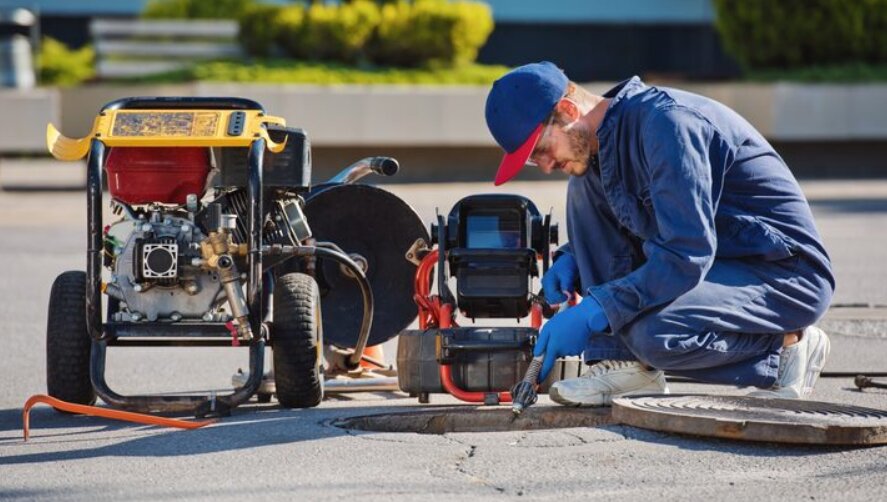
How Much is Sewer Line Repair or Replacement in Dunwoody?
Underground sewer work does not have a flat rate, and project costs can vary significantly based on the pipe’s length, depth, condition, access points, and the repair method required. Localized sewer line repairs may range from about $150 to $3,800, while some projects are priced by the linear foot, often falling between $55 and $250 per linear foot.
Full sewer line replacement, whether trenchless or traditional, can range from $2,000 to more than $30,000 depending on the length of the line, the depth of the pipe, the site conditions, and whether the project requires pipe lining, pipe bursting, or open excavation.
However, any estimate provided without a sewer camera inspection is only a rough guess. The most accurate way to understand what your project may involve is to schedule an inspection so the pipe condition, damage location, and repair options can be documented first.
A sewer camera inspection helps identify the location and extent of any issues so the repair recommendation is based on the actual pipe condition rather than a rough estimate.
What Drives the Cost of Underground Sewer Work
Pipe Depth and Access
Deeper pipes require more excavation labor or more specialized trenchless equipment. Both affect the total scope.
The Repair Method Required
Trenchless sewer repair carries higher material costs per linear foot than open-cut, but avoids the added labor of excavating a full-length trench and the expense of surface restoration afterward. On many Dunwoody jobs with finished driveways or mature landscaping, trenchless ends up costing less overall.
Extent and Distribution of Damage
A single root intrusion at one joint represents a very different scope than corrosion distributed across a sixty-foot lateral. The sewer camera inspection determines which situation you are dealing with.
Pipe Material and Diameter
Cast iron and clay pipe removal adds complexity compared to PVC. Larger-diameter commercial lines require proportionally more material and labor.
Surface Restoration
Open-cut jobs involving concrete driveways, pavers, or planted beds include restoration costs that trenchless methods avoid entirely. In Dunwoody neighborhoods where landscaping investment is significant, this cost difference matters.
Is Trenchless Sewer Repair Worth the Investment?
For most Dunwoody homeowners and property managers, yes. The cost of restoring a concrete driveway or an established planting bed after open-cut excavation can easily offset the premium for trenchless methods.
Beyond the immediate project, a properly installed CIPP liner seals root re-entry points and creates a smooth new interior surface that extends the working life of an aging lateral significantly, reducing the likelihood of repeat sewer repair calls on that line.
Where We Work in and Around Dunwoody
Dunwoody Service Areas and Neighborhoods
Dunwoody's sewer infrastructure varies by district. Residential areas like Dunwoody Village and the Winters Chapel corridor often have original cast iron and clay laterals susceptible to root intrusion and corrosion. In the Perimeter Center business district, we support commercial operators facing high-usage demands with camera inspections, repairs, and replacements to prevent operational downtime. We also specialize in the complex coordination required for shared sewer laterals in multifamily and HOA communities along Ashford Dunwoody Road, Hammond Drive, and Chamblee Dunwoody Road.
Nearby Cities We Serve Across North Atlanta
In addition to Dunwoody, our team serves the greater North Atlanta area, including Sandy Springs, Alpharetta, Roswell, East Cobb, Milton, and Johns Creek. Each of these communities has its own underground infrastructure profile, and we apply the same camera-first diagnostic method to every project regardless of location.
How Sewer Camera Inspection Helps Prevent Larger Sewer Line Repairs
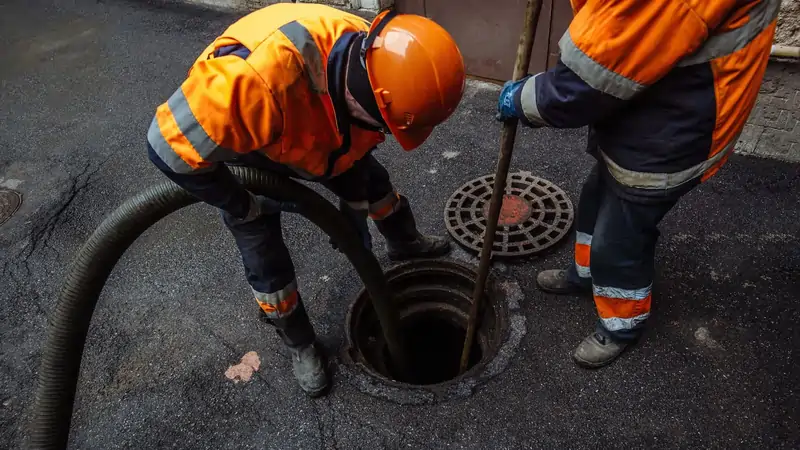
Most sewer line failures do not happen overnight. Root infiltration advances gradually over years as roots follow moisture through small pipe gaps. Corrosion works from the inside out. Ground movement slowly shifts joints. By the time visible symptoms appear, the deterioration underground is typically well advanced.
What Early Detection Can Catch Before It Becomes a Repair
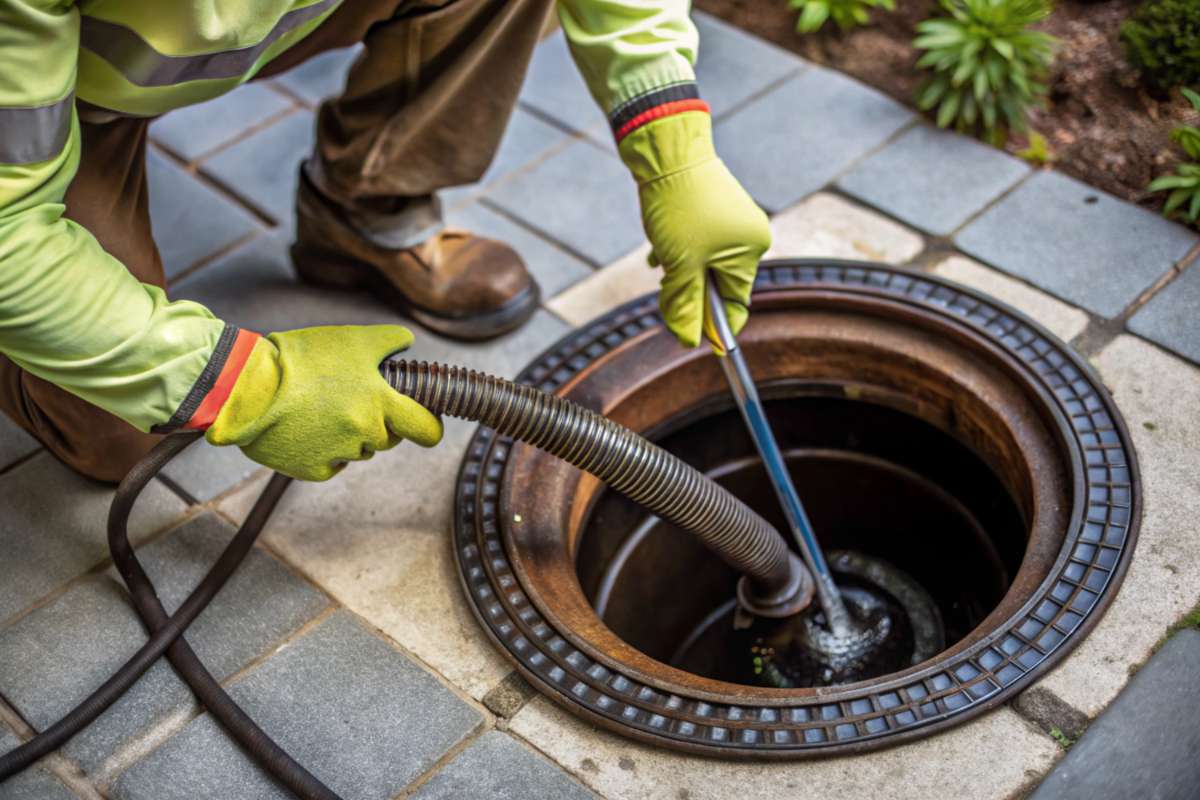
A sewer camera inspection scheduled before symptoms develop can identify:
Early-stage root penetration at joints before roots establish and widen the gap into a structural failure
Surface corrosion on cast iron walls before full pipe wall degradation occurs
Minor joint offsets from soil movement before infiltration begins
Small cracks addressable with a targeted sewer line repair rather than full replacement
When to Schedule a Sewer Camera Inspection in Dunwoody
Consider scheduling if:
Your home was built before 1995 and has never had a sewer inspection
You are purchasing a property and want to document the lateral's condition before closing
You have experienced recurrent slow drains, odors, or backups that clearing has not resolved
You manage a multifamily or commercial property and want a documented baseline for facilities records
Frequently Asked Questions About Sewer Line Repair
How do I know if I need sewer line repair or replacement?
Persistent issues like recurring slow drains, sewage odors, or backups are often signs of structural damage rather than simple blockages. Because many Dunwoody homes have aging cast iron or clay pipes, these symptoms often point to issues like root infiltration, joint displacement, or pipe shifting. A sewer camera inspection is the only way to confirm whether you need a targeted repair or a full replacement.
What is trenchless sewer repair and how does it work?
Trenchless sewer repair allows us to fix your pipes without digging up your entire yard, driveway, or landscaping. We use two primary methods: Pipe Lining (CIPP), which inserts a resin-saturated liner inside the existing pipe to create a new, smooth structure; and Pipe Bursting, which pulls a new, stronger pipe through the old one while fracturing the damaged section outward. Both are minimally invasive and highly effective.
How much does sewer line repair cost in Dunwoody?
Sewer line repair costs vary based on pipe length, depth, access, damage severity, and the repair method required. Across the industry, localized repairs may range from a few hundred dollars to several thousand dollars, while full sewer line replacement can cost significantly more. Because no two sewer lines are the same, Zippy Plumber performs a camera inspection first so the estimate is based on the actual damage, not a guess. Call us for estimate.
How long does a sewer camera inspection take?
Many residential sewer camera inspections can be completed in about an hour, depending on access, pipe length, blockage severity, and site conditions. Larger commercial or multifamily systems may take longer. When possible, we review the video footage with you so you have a clear picture of the line’s condition.
Can sewer inspection detect all pipe problems?
Not every underground condition is visible from inside the pipe, but a sewer camera inspection can identify many of the most common sewer line problems, including root intrusion, internal corrosion, offset joints, pipe bellies, cracks, and collapsed sections. It gives the team direct visual evidence inside the line so the repair recommendation is based on what the camera actually shows.
Schedule Your Sewer Line Repair in Dunwoody Today
Dunwoody’s underground sewer infrastructure includes many older laterals that may not have been inspected since original installation. Whether you are responding to an active problem or want to understand the condition of your lateral before it becomes a larger issue, a sewer camera inspection is where every repair decision starts.
Zippy Plumber serves residential homeowners, HOAs, property managers, and commercial operators throughout Dunwoody and the greater North Atlanta area.
We diagnose before we dig, document everything the camera finds, and recommend the repair method that actually matches the problem.