What’s In This Guide
- What Exactly Is Pipe Bursting and How Does It Replace a Sewer Line?
- When Does Full Sewer Line Replacement Actually Make Sense?
- How Is Pipe Bursting Repair Different from Pipe Lining and Open-Cut Excavation?
- What Signs Indicate a Sewer Line Needs to Be Replaced Rather Than Repaired?
- How Is Pipe Bursting Done, Step by Step?
- How Much Will Pipe Bursting Disrupt Your Yard?
- Frequently Asked Questions
- Not Sure Whether Your Sewer Line Needs Repair or Full Replacement?
A slow drain. A wet patch in the yard that will not dry out. A smell you cannot explain. Most homeowners do not think about their underground sewer line until something goes wrong, and by then, the damage is usually worse than expected.
Some lines just need a repair. Others have deteriorated to the point where replacement is the only fix that will actually last. Pipe bursting is how that replacement gets done without digging up everything above it.
Here are the key things to understand before making that call.
Quick Facts
Pipe bursting is a trenchless sewer line replacement method used when a damaged pipe is too collapsed, deteriorated, or misaligned for lining. It can:
- Replace the full sewer line
- Limit yard disruption
- Install durable HDPE pipe
- Provide a long-term repair solution
What Exactly Is Pipe Bursting and How Does It Replace a Sewer Line?
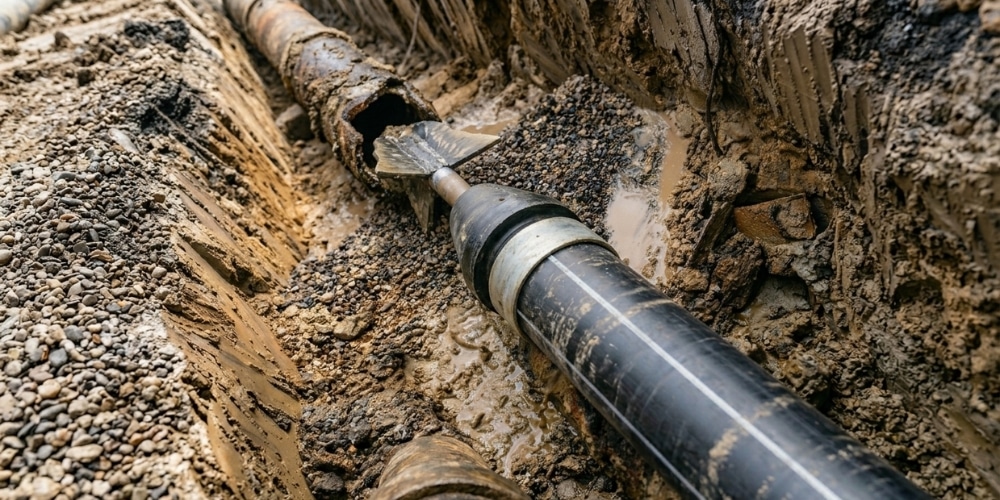
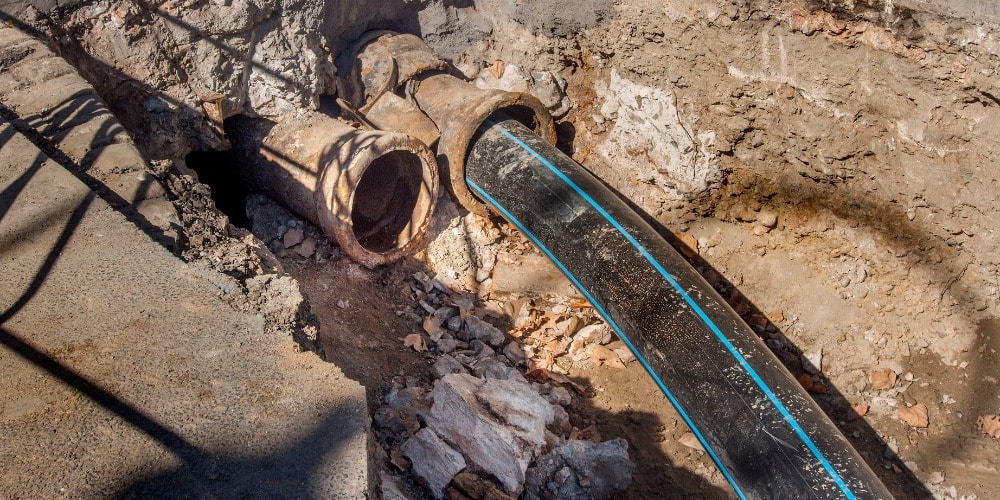
Pipe bursting is a way to replace a sewer line without digging a trench from your house to the street. A tool is pulled through the old pipe underground, breaks it apart, and a new pipe is pulled in right behind it. The old pipe is gone. A new one takes its place.
How Does the Old Pipe Get Broken Apart Without Digging It Up?
A steel cable is fed through the damaged pipe from one end to the other. At the front of the new pipe, a cone-shaped steel tool called a bursting head is attached. A powerful machine at the far end pulls the cable forward.
As the bursting head moves through the old pipe, it:
- Breaks the old pipe apart and pushes the pieces into the surrounding soil
- Creates a clear path through the ground
- Pulls the new pipe in right behind it as it goes
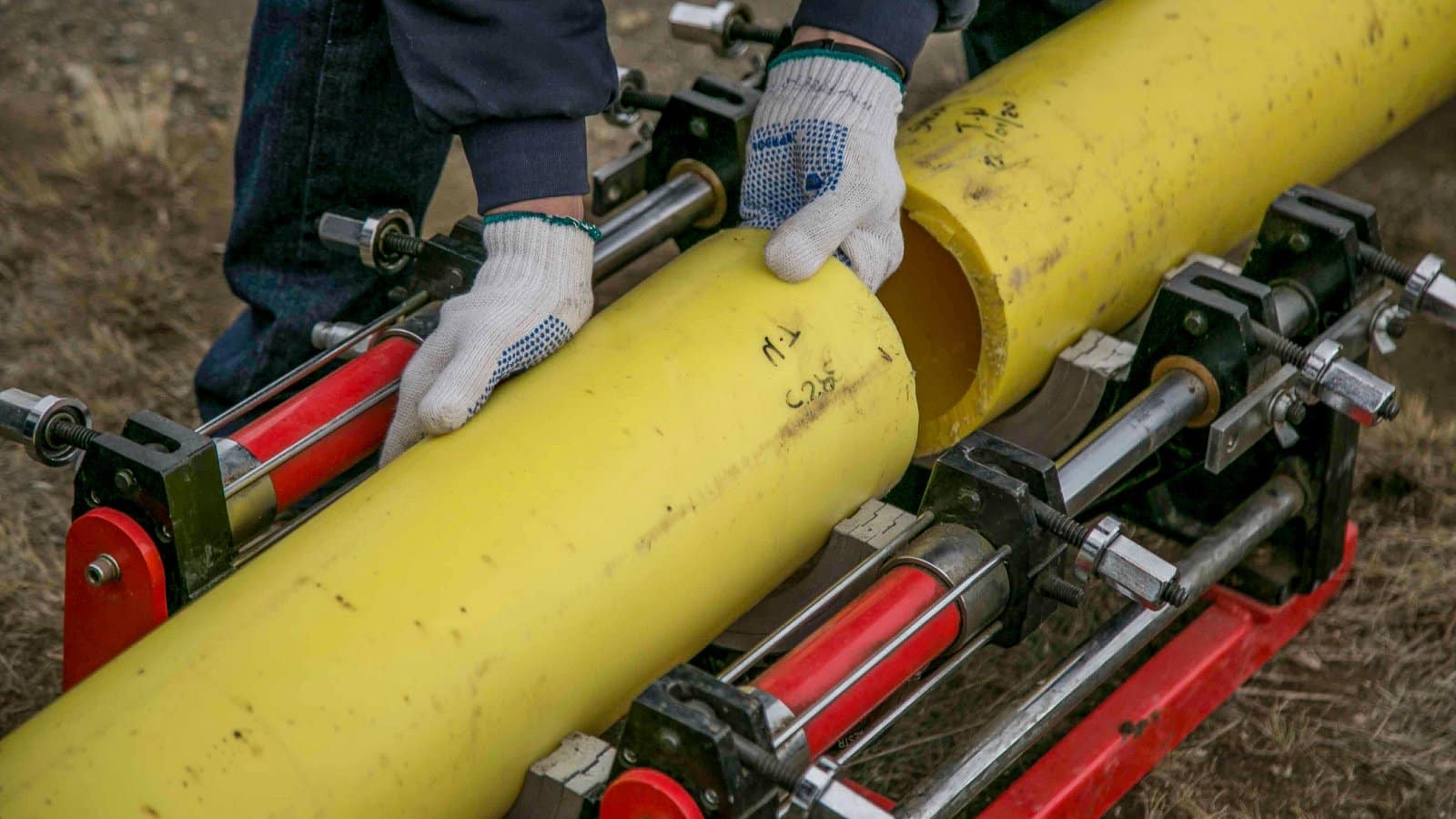
The new pipe used in pipe bursting repair is made from high-density polyethylene, commonly called HDPE. It is a flexible, durable plastic that:
- Does not rust or corrode inside
- Does not crack easily when the ground shifts slightly
- Has a smooth interior that tree roots cannot easily penetrate
- Is fused together in long sections so there are no joints for roots to enter
When Does Full Sewer Line Replacement Actually Make Sense?
Full sewer line replacement makes sense when the damage is too widespread for a repair to hold or too severe for a liner to work. Homeowners may need to replace a sewer line when structural deterioration, collapse, or recurring failures affect the entire system.
When the Pipe Cannot Be Rehabilitated
Lining works inside a pipe that still has walls to bond to. When a pipe has collapsed, crumbled, or shifted apart at the joints, there is nothing left for a liner to grip. Replacement is the only method that works.
When the Same Pipe Keeps Failing
A sewer line that has needed multiple repairs in a short period is not an isolated problem. It is a deteriorating system. Continuing to patch it delays an inevitable replacement while adding up in cost.
When the Pipe Material Has Reached the End of Its Life
Clay and cast iron pipes installed before 1980 have a finite lifespan. When deterioration has spread across most of the run rather than a single section, replacing the full line is a more permanent and cost-effective solution than repeated spot fixes.
➤ READ NEXT: Sewer Line Repair vs Replacement in Alpharetta: How to Decide
How Is Pipe Bursting Repair Different from Pipe Lining and Open-Cut Excavation?
|
Method |
Works Best When |
What Happens to the Old Pipe |
Yard Disruption |
|
Pipe Lining |
Pipe is cracked but still has its shape |
Stays in the ground with a liner inside |
Minimal, 1 to 2 small holes |
|
Pipe Bursting Repair |
Pipe has collapsed or badly deteriorated |
Broken apart and pushed into surrounding soil |
Minimal, 2 small holes |
|
Open-Cut Excavation |
Trenchless sewer repair methods are not safe to use |
Physically dug out and removed |
Full trench across the yard |
When Does Pipe Lining Work, and When Does the Pipe Rule It Out?
Pipe lining involves pulling a resin-coated sleeve inside the old pipe and hardening it there. Think of it like sliding a new pipe inside the old one. This works well when the old pipe is still mostly in one piece, even if it is cracked or leaking.
Pipe lining cannot work when:
- A section of the pipe has fully caved in, because nothing can get through it
- The pipe has shifted and separated at the joints, leaving a gap the liner cannot cross
- The pipe material has crumbled along most of the run, not just in one spot
Why Would Anyone Still Choose Open-Cut Excavation?
Pipe bursting is trenchless, but it is not always an option. Open-cut excavation is used when:
- Other utility lines such as gas, water, or electric run too close to allow safe bursting
- The ground slope changes in a way the bursting equipment cannot handle
- There is no safe place to dig the access holes at either end of the pipe run
What Signs Indicate a Sewer Line Needs to Be Replaced Rather Than Repaired?
Six signs typically point toward full sewer line replacement rather than a patch or lining job. A sewer camera inspection confirms what is actually happening before any work is chosen.
- The pipe has fully caved in. Nothing can pass through a collapsed section. The whole affected stretch needs to come out.
- The pipe joints have shifted apart. Sewer pipes are installed in sections. When those sections slide out of position far enough, most trenchless sewer line repair methods, including lining, cannot bridge the gap.
- Roots have broken down the pipe walls throughout most of the run. A spot fix will not hold when the pipe material is failing along its entire length.
- The same section has been repaired multiple times. Repeated failures on the same line are a sign of a bigger problem, not a series of isolated incidents.
- The pipe is old clay or cast iron that has worn out broadly. These materials have a lifespan, and many Alpharetta homes built before 1980 still have original underground lines.
- The yard is wet, sinking, or smells like sewage above the pipe path. These are signs of active underground leaking and need immediate attention.
How Is Pipe Bursting Done, Step by Step?
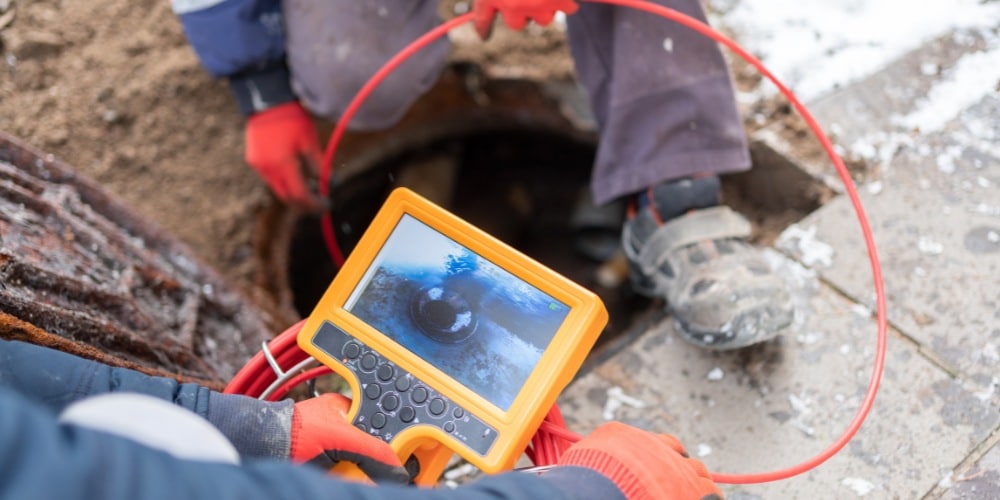
Trenchless sewer repair via pipe bursting follows a set order. Camera inspection always comes first. Nothing is dug until utilities are marked. The pull happens only after everything is confirmed and set up correctly.
A Camera Goes Into the Pipe Before Anything Else
A small camera is fed through the full length of the sewer line to document the condition underground. This confirms whether trenchless sewer line repair through pipe bursting is the right method, how far the damage runs, and where the access holes need to go.
All Underground Utilities Get Located and Marked
A Georgia 811 utility locate is requested before any digging starts. This legally required step identifies and marks all buried gas, water, and electrical lines near the sewer run to confirm the job can be done safely.
Two Small Access Holes Are Dug at Each End of the Line
One hole opens near the home’s foundation at the cleanout point. The other opens near the property boundary at the city main connection. In most Alpharetta properties, both holes are between two and six feet deep. No other excavation is needed.
A Steel Cable Gets Threaded Through the Damaged Pipe
The cable runs through the full length of the old pipe from one hole to the other. At the entry point, the cone-shaped bursting head is attached to the front of the new HDPE pipe, connecting both and making them ready to pull through.
The Bursting Head Breaks the Old Pipe While the New One Follows
The hydraulic machine pulls the cable forward. The bursting head fractures the old pipe outward into the surrounding soil while the new HDPE pipe seats itself in the path created. Pipe sections are heat-welded above ground before the pull, leaving no underground joints.
A Final Camera Run Confirms the Job Is Done Correctly
A camera travels the full length of the new pipe to confirm proper alignment, sealed connection points, and clear flow from end to end. The trenchless sewer line replacement is not signed off until the camera confirms everything is correct.
How Much Will Pipe Bursting Disrupt Your Yard?
Pipe bursting limits yard disruption to the two access hole locations. The ground above the old pipe path between the two holes is not touched.
|
Surface Type |
Impact with Pipe Bursting |
Impact with Open-Cut |
|
Lawn or grass |
Disturbed at 2 hole locations only |
Dug up along the full pipe path |
|
Garden beds or landscaping |
Disturbed at 2 hole locations only |
Full run disrupted |
|
Driveway or concrete |
Cut only if the access hole falls under it |
Full trench cut across the surface |
After the job, both holes are backfilled and compacted. Lawn or surface patching covers the two hole areas only.
Frequently Asked Questions
Does pipe bursting mean digging up the whole yard?
No. Pipe bursting only requires two small holes, one at each end of the sewer line. No trench is dug between them. The yard above the old pipe stays untouched throughout the job.
What is the difference between pipe bursting and pipe lining?
Pipe lining leaves the old pipe in place and installs a new sleeve inside it. Pipe bursting removes the old pipe entirely by breaking it apart underground and replacing it with a new one. Lining requires the existing pipe to still be in one piece. Pipe bursting is used when the pipe is too damaged for lining to work.
Can pipe bursting install a wider pipe than the one being replaced?
Yes. One advantage of pipe bursting over pipe lining is that the replacement pipe can be slightly larger in diameter than the original. Pipe lining slightly reduces the pipe’s inner opening because of the liner thickness. Pipe bursting does not have that limitation.
What conditions make a sewer line a candidate for trenchless sewer line replacement?
The main ones are full pipe collapse, joints that have shifted too far apart, root damage that has broken down the pipe material throughout the run, and repeated failures on the same line. A sewer camera inspection confirms which of these conditions are present before any method is chosen.
How long does a pipe bursting job take?
Most residential pipe bursting jobs take 1 to 3 days. Camera inspection and utility locating are completed before that window starts.
Not Sure Whether Your Sewer Line Needs Repair or Full Replacement?
The condition of the pipe determines the solution, and a sewer camera inspection is the only way to assess that condition accurately. A camera inspection reveals what is happening underground before any digging or repair work begins.
Zippy Plumber provides camera-first sewer diagnostics and trenchless sewer repair throughout Alpharetta and North Atlanta. Every project starts with a full sewer line inspection to identify the most appropriate solution.
If you are unsure whether your sewer line needs repair or replacement, schedule a camera inspection for a clear diagnosis.