What’s In This Guide
- When Is a Slow Drain Actually a Main Line Problem?
- What Are the Warning Signs Your Drains Need a Pro?
- How Does Professional Drain Cleaning Near Me Actually Work?
- When Does a Drain Problem Require Sewer Line Repair Instead of Cleaning?
- Frequently Asked Questions
- Ready to Schedule a Drain Inspection Near Alpharetta, GA?
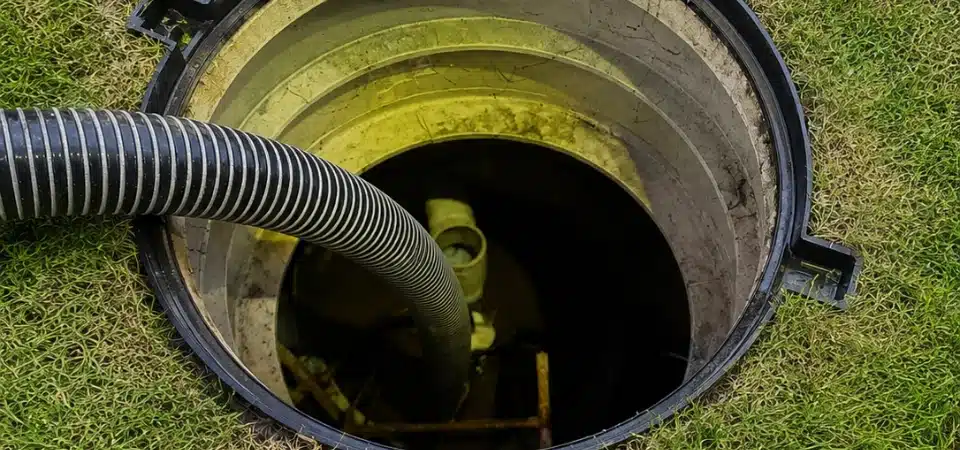
A slow drain isn’t always a fixture problem. When drains back up repeatedly, affect multiple areas of the home at once, or produce sewage odors, the cause may be a restriction in the main sewer lateral underground rather than an isolated sink or tub clog. Knowing when to call a professional saves time, avoids property damage, and prevents a manageable problem from becoming a full sewer backup.
Quick Facts
- A slow drain affecting two or more fixtures at the same time often points to a main sewer lateral restriction.
- Recurring clogs that return within 2 to 4 weeks of clearing may indicate root intrusion, buildup, or another main line issue that basic snaking does not fully resolve.
- Gurgling toilets, sewage odors at floor drains, and water backing up into a tub are clogged drain warning signs that indicate an underground main line problem
- For recurring or suspected main line problems, professional drain cleaning nearby should begin with a sewer camera inspection before a clearing method is selected.
When Is a Slow Drain Actually a Main Line Problem?
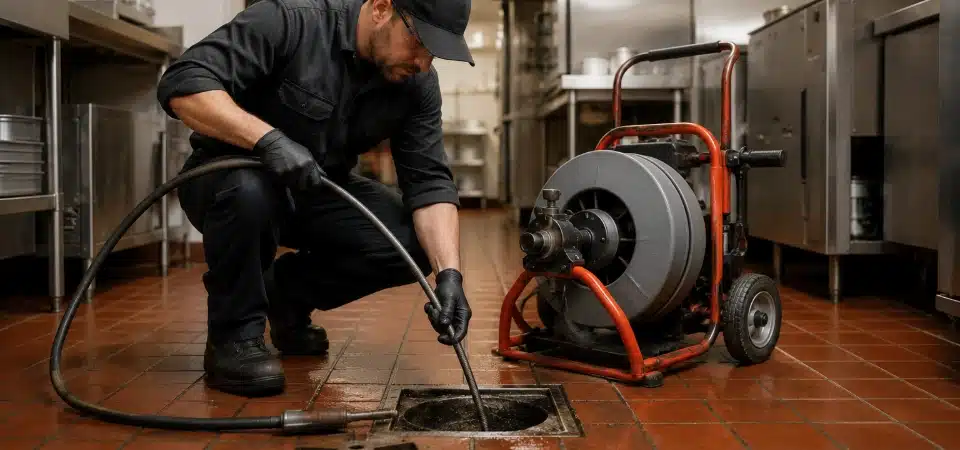
A drain that clears with basic treatment and stays clear is likely a localized fixture issue. A drain that returns within weeks, slows down alongside other fixtures simultaneously, or produces sewage odors points to a restriction in the main sewer lateral.
The main sewer lateral is the underground pipe carrying all wastewater from the structure to the municipal connection at the street. A blockage in that lateral affects every drain in the building.
|
Symptom |
Likely Source |
Call a Pro? |
|
One slow drain, clears and stays clear |
Fixture trap or branch line |
Usually not |
|
One slow drain, returns within 2-4 weeks |
Main line buildup or root intrusion |
Yes |
|
Two or more drains slow simultaneously |
Main sewer lateral restriction |
Yes |
|
Sewage odor at floor drain or cleanout |
Lateral restriction or venting failure |
Yes |
|
Water backs up into tub when toilet flushes |
Severe main lateral restriction or blockage |
Yes, urgent |
What Are the Warning Signs Your Drains Need a Pro?
Certain drainage issues can signal a problem that extends beyond a single fixture. Common clogged drain warning signs include recurring backups, multiple slow drains, unpleasant odors, unusual sounds from plumbing fixtures, and water pooling where it shouldn't. When these symptoms persist, professional inspection may be needed to identify the underlying cause.
Multiple Drains Slowing Down at the Same Time
Simultaneous slowdown across two or more fixtures means the shared main sewer lateral is restricting flow. A single slow bathroom drain is usually localized. When the kitchen, laundry, and bathrooms all slow down together, the problem is underground.
- One fixture slow: Localized trap or branch line issue
- Two or more fixtures slow simultaneously: Main lateral restriction
- All fixtures affected at once: Severe blockage or structural failure in the lateral
A Clog That Keeps Returning Within 2 to 4 Weeks
A drain that returns to a clogged state within 2 to 4 weeks after clearing has not been fully resolved. Cable snaking opens a temporary path through a blockage but does not remove root mass attached to joint gaps or strip accumulated scales from the pipe wall.
Common causes of recurring main line clogs:
- Root intrusion growing back through pipe joint gaps
- Heavy grease or mineral scale along interior pipe walls
- Partial pipe collapse creating a recurring catch point for debris
- Incomplete clearing that moves the blockage rather than removing it
Gurgling Sounds from Toilets or Lower Floor Drains
Gurgling in a toilet or floor drain while another fixture is running signals trapped air displaced by a downstream restriction. Air inside a partially blocked sewer lateral escapes back through the lowest available fixture connections.
Gurgling typically surfaces first in:
- Ground-floor toilets
- Basement floor drains
- Utility sink drains near the main cleanout
A toilet that gurgles while the washing machine drains can be a strong indicator of a main lateral restriction, not just a toilet problem.
Sewage Smell at Floor Drains, Cleanouts, or in the Yard
Persistent sewage odor at floor drains, outdoor cleanout covers, or low-lying yard areas indicates sewer gas escaping from a restricted or damaged underground lateral.
Sewer gas contains hydrogen sulfide and methane. U.S. OSHA guidelines on hydrogen sulfide exposure in confined and enclosed spaces note that concentrations as low as 2 parts per million can cause eye irritation and respiratory symptoms. Odor at a cleanout or floor drain should not be masked. It should be investigated.
Sewage odor sources that indicate a main line issue:
- Floor drain emitting odor without recent water use
- Cleanout cover with persistent gas smell
- Soft, wet, or foul-smelling soil patches directly above the lateral path
Water Backing Up Into a Tub or Floor Drain
Water appearing in a tub drain, floor drain, or utility sink during toilet use confirms a main lateral blockage. Wastewater under pressure inside a fully blocked lateral seeks the lowest available exit point, typically a floor-level drain.
Cross-fixture backup should be treated as urgent because wastewater may reach living or utility areas. Wastewater reaching living or utility areas creates immediate sanitation risk and requires same-day service.
How Does Professional Drain Cleaning Near Me Actually Work?
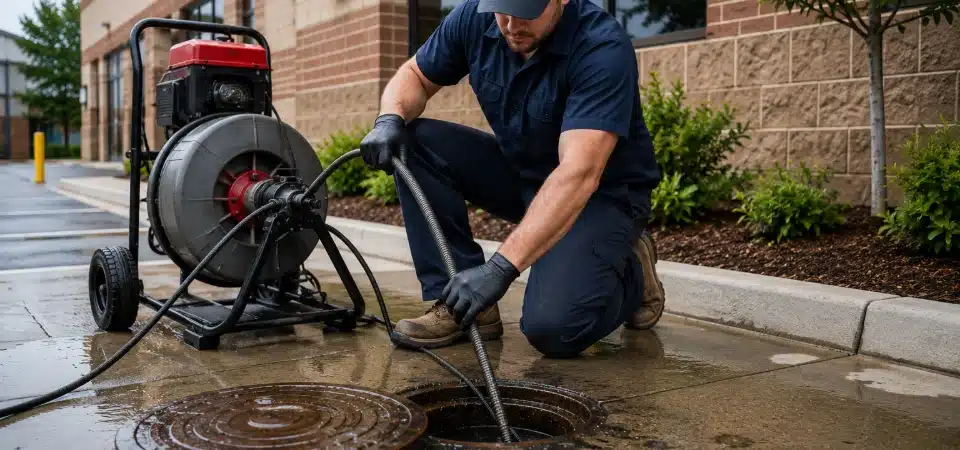
Professional drain cleaning starts with a camera inspection before any clearing begins. The inspection determines the method. Applying pressure or mechanical force to a pipe without knowing its condition first can cause additional damage.
Step 1: Sewer Camera Inspection of the Main Lateral
A waterproof inspection camera enters the main sewer lateral through the cleanout access point. The camera records live video, locates the blockage, identifies the pipe material, and flags structural concerns such as root intrusion, joint separation, or wall deterioration.
Camera inspection deliverables:
- Live video footage of the full lateral
- Blockage location measurement from the cleanout
- Pipe material identification (cast iron, clay, or PVC)
- Written notes on pipe wall condition and structural findings
Step 2: Clearing Method Matched to Pipe Condition
The camera findings determine whether hydro jetting or snaking is appropriate. Each method serves a different pipe condition and blockage type. The right choice depends on what the inspection footage shows, not a default procedure applied to every job.
Step 3: Flow Testing and Post-Service Documentation
Post-service flow testing confirms drainage is restored. On main line jobs involving heavy buildup, a second camera pass after hydro jetting provides an accurate view of the actual pipe wall condition.
Heavy buildup can conceal underlying pipe thinning or corrosion. Removing the buildup reveals the structural state of the lateral and determines whether any repair conversation is warranted.
Post-service documentation typically includes:
- Flow test confirmation
- Post-jetting camera footage where warranted
- Written summary of findings and pipe condition
When Does a Drain Problem Require Sewer Line Repair Instead of Cleaning?
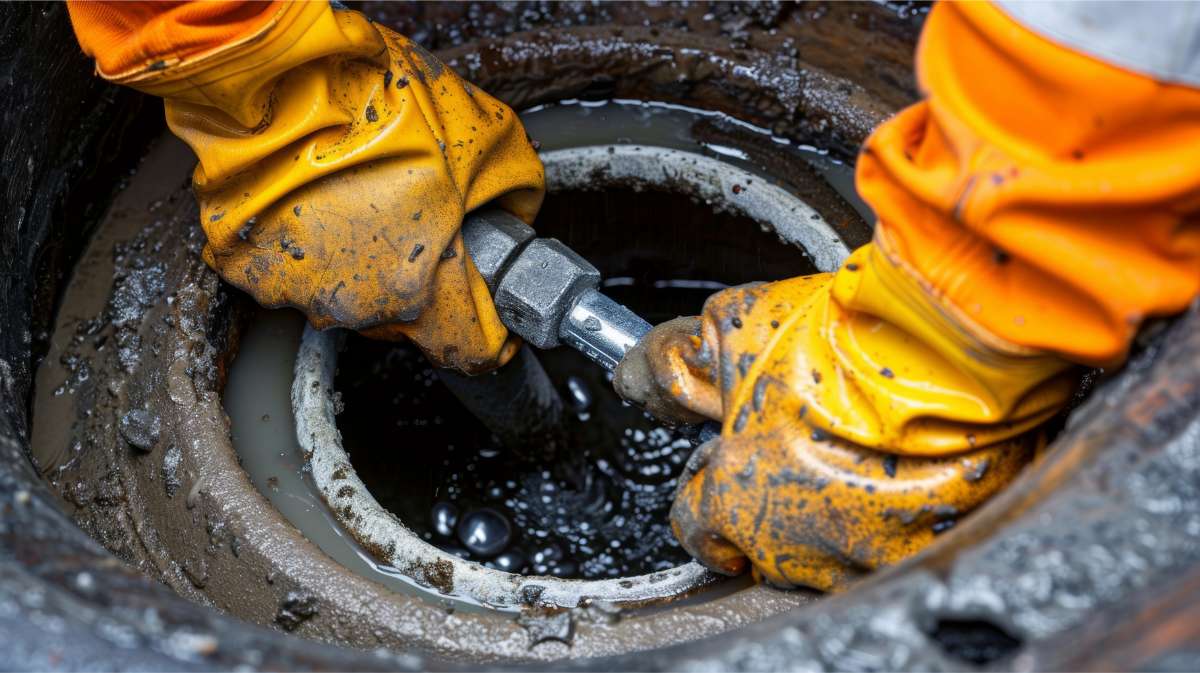
Drain cleaning can resolve common blockages and support slow drain repair, but structural issues may require sewer line repair. A camera inspection helps determine which solution is needed.
Pipe Has Collapsed or Lost Its Shape
A lateral that has collapsed, buckled, or shifted out of alignment cannot be restored by cleaning. Wastewater cannot move through a deformed pipe regardless of how thoroughly the blockage is cleared. Camera footage showing a crushed or displaced section indicates a repair is needed before service continues.
Root Intrusion Has Caused Joint Separation
Root intrusion at a joint gap is a cleaning candidate when the pipe wall is intact. When root mass has widened the gap enough to separate the joint or allow soil infiltration into the line, cleaning alone does not resolve the underlying structural failure.
Same Section Fails Repeatedly After Cleaning
A lateral section that blocks again within a short period after proper hydro jetting typically has a structural cause. Recurring failure in the same location points to a pipe condition that cleaning cannot correct on its own.
Pipe Wall Deterioration Is Visible on Camera
If an inspection reveals significant pipe deterioration, the issue may extend beyond routine maintenance. In these cases, slow drain repair may not be enough, and repair or replacement could be necessary to restore long-term system performance.
➤ RELATED ARTICLE: Signs Your Buried Water Line in Alpharetta Needs Attention
Frequently Asked Questions
How often should Alpharetta homeowners schedule drain cleaning?
A main sewer line inspection and cleaning every 18 to 24 months is a reasonable baseline for most residential properties in the North Atlanta area. Homes with mature tree canopy over the lateral route, older cast iron or clay pipe, or a history of root intrusion may benefit from annual service. Prior camera footage is the most accurate guide for setting the right interval.
Is hydro jetting safe for older pipes?
Hydro jetting is safe for pipes that are structurally sound, regardless of age. A camera inspection completed before every jetting service confirms whether the pipe can handle the pressure. Pipes with visible fractures, severely corroded sections, or displaced joints are not candidates for hydro jetting until structural repairs are completed first.
What is the difference between drain snaking and hydro jetting?
Cable snaking uses a rotating mechanical cable to punch through or pull out a discrete blockage. Hydro jetting uses high-pressure water delivered through a nozzle inside the pipe to strip buildup from the pipe wall along the full length of the lateral. Snaking solves a localized obstruction. Hydro jetting cleans the pipe.
Can store-bought drain cleaners fix a main sewer line problem?
Chemical drain cleaners dissolve soft organic material near individual fixture openings. Chemical products do not reach main sewer lateral obstructions located 20 to 50 feet underground from the building. Repeated use of chemical cleaners may damage or accelerate wear in older pipe materials and should not be relied on for suspected main sewer line problems.
How do I know if my drain problem is in the main line or a single fixture?
A single drain that clears and stays clear is usually a fixture-level issue. When two or more drains slow down at the same time, a clog returns within weeks of clearing, or wastewater backs up through a floor drain or tub, the problem is in the main sewer lateral underground.
Ready to Schedule a Drain Inspection Near Alpharetta, GA?
Recurring backups, gurgling drains, and sewage odors are not maintenance quirks. They are symptoms of a main sewer lateral problem that worsens without a proper diagnosis. A camera inspection is the only way to confirm what is happening underground before any cleaning method is applied.
Zippy Plumber serves Alpharetta and the greater North Atlanta area. Every service begins with a sewer camera inspection, and no clearing method is selected until the pipe condition is documented on video.
Request an estimate or schedule an inspection.