
What’s In This Guide
- What Are the Warning Signs You Need Sewer Line Repair?
- What Causes Sewer Line Damage in North Atlanta Homes?
- How Do Plumbers Diagnose a Sewer Line Problem?
- Sewer Line Repair vs. Replacement: How Is the Decision Made?
- Trenchless Sewer Repair vs. Traditional Excavation: What Are the Options?
- What Affects the Cost of Sewer Line Repair?
- When Should You Call a Professional for a Sewer Line Issue?
- Frequently Asked Questions
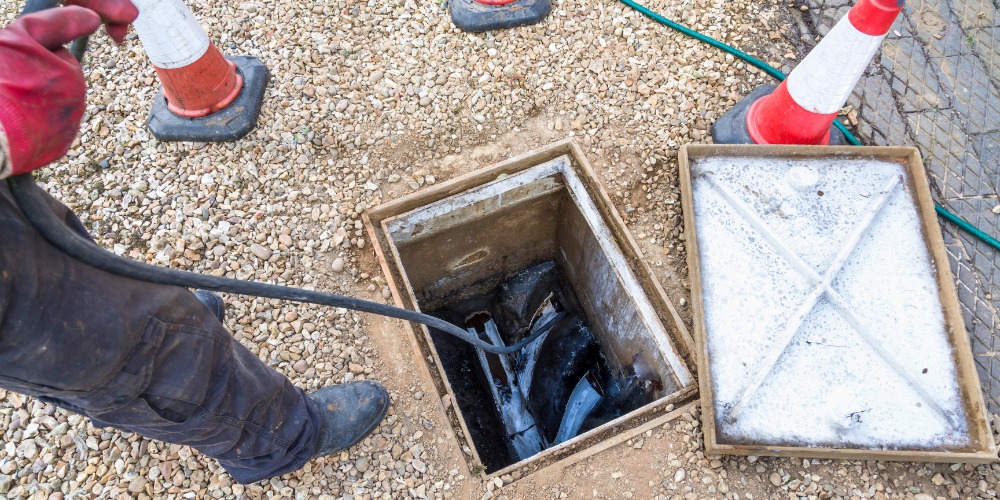
A sewage smell drifting across the yard, a drain that gurgles every time the washing machine runs, or backups that keep coming back after snaking are all worth taking seriously. In North Atlanta, issues like these often trace back to the main line running from the house to the street rather than a single fixture inside. Sewer line repair addresses that exact stretch of pipe, the underground lateral that carries wastewater away from the home and into the municipal system. Homeowners across Alpharetta, Roswell, East Cobb, Sandy Springs, Milton, Johns Creek, and Dunwoody deal with this pipe differently depending on soil, tree cover, and neighborhood age, but the warning signs and diagnostic steps stay consistent.
This guide covers what to watch for, what typically causes the damage, and how professionals confirm the problem before recommending a fix.
Quick Facts
- Recurring clogs, yard odors, and backups at multiple drains often point to sewer line damage, not an isolated fixture problem.
- Root intrusion, aging cast iron, joint corrosion, and shifting clay soil rank among the leading causes of line failure across North Atlanta.
- Camera inspection identifies pipe material, location, and damage extent before any repair method gets recommended.
- Trenchless repair options depend on pipe condition, access, and the length of the damage, not on availability alone.
- Georgia law requires a utility locate through Georgia 811 before digging begins, protecting crews and buried lines alike.
What Are the Warning Signs You Need Sewer Line Repair?
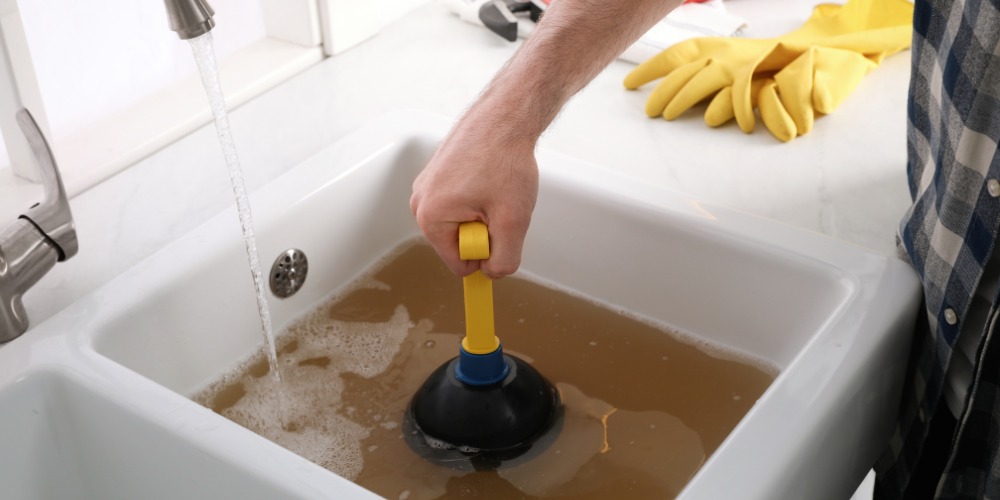
Recurring backups, slow drains at more than one fixture, gurgling sounds, sewage odor near the yard or an outdoor cleanout, and wet or unusually green patches of lawn are the clearest indicators of sewer line damage. When a single blockage affects several drains at once, the problem usually sits in the main line rather than one isolated fixture.
Common signs include:
- Backups at the lowest drain in the house, often a basement drain, floor drain, or ground-level tub
- Multiple slow drains that resist snaking and return within days or weeks
- Gurgling toilets or tubs when another fixture runs nearby
- Sewage odor near an outdoor cleanout or a low point in the yard
- Wet, spongy, or unusually green patches of lawn that persist regardless of recent rainfall
- Sunken or settled areas of lawn that were not there previously
If you searched for sewer line repair near you because one or more of these signs sound familiar, the next section explains what typically causes them.
What Causes Sewer Line Damage in North Atlanta Homes?
Most sewer line failures come down to four factors: pipe material and age, root intrusion, soil movement, and physical damage from nearby digging or heavy surface loads. North Atlanta's mix of aging cast iron, clay, and PVC pipe, combined with regional clay soils and mature tree canopy, creates conditions that wear on buried lines faster than newer, single-material developments.
- Root intrusion: Tree roots seek out the moisture inside a sewer line and can work into small cracks or loose joints. Once established, root growth widens the opening and restricts flow further over time.
- Pipe material and age: Cast iron corrodes and develops rough interior scale over decades. Clay pipe cracks and shifts at the joints. PVC holds up well overall but can still fail at fittings or where ground movement puts stress on a connection.
- Soil movement: Expansive clay soil common in parts of North Atlanta swells and contracts with moisture, which stresses aging pipe and joints over repeated cycles. Homes in Alpharetta and Milton often sit on this type of clay, while many East Cobb properties still run on cast iron installed decades ago.
- Bellies and offsets: Sections of pipe sink or shift out of alignment, creating low spots where waste and debris collect and slow drainage over time.
- Physical damage: Nearby construction, heavy vehicle loads over shallow lines, or older repairs completed without proper bedding can crack or crush a buried pipe.
How Do Plumbers Diagnose a Sewer Line Problem?
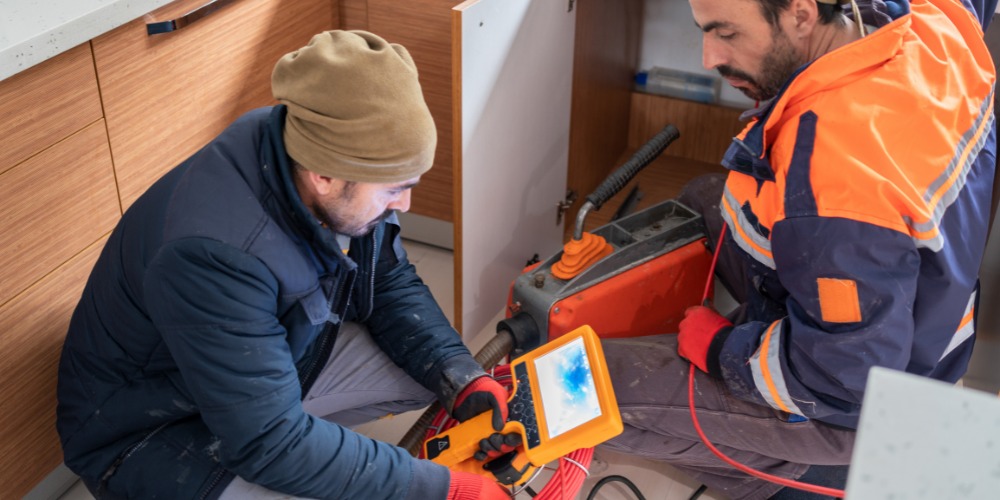
Diagnosis starts with a sewer camera inspection, not guesswork. A small camera travels through an accessible cleanout or fixture to record the interior of the line, while locating equipment marks the exact depth and surface position of any problem area.
- Initial camera pass. A push camera moves through the accessible length of the line, recording cracks, root intrusion, bellies, offsets, and blockages as it travels.
- Locating and marking. A transmitter built into the camera head lets technicians mark the depth and surface position of any damaged section, narrowing the work area before any digging gets considered.
- Clearing the line if needed. When grease, scale, or roots block the view, hydro jetting clears the pipe so the camera can capture an accurate picture of the interior wall.
- Reviewing the findings. Video, measurements, and written notes give the homeowner or property manager a clear record of what was found and why a specific repair approach makes sense.
Sewer Line Repair vs. Replacement: How Is the Decision Made?
Repair is usually enough when damage is isolated to a short section and the surrounding pipe remains in reasonably sound condition. Replacement becomes the more reliable path when a line shows multiple failure points, a collapsed section, or damage running along a longer stretch of pipe.
|
Factor |
Repair may fit |
Replacement may fit |
|
Damage extent |
Single crack, offset, or root intrusion point |
Multiple cracks or repeated failure points |
|
Pipe condition |
Surrounding pipe structurally sound |
Widespread corrosion, scaling, or deterioration |
|
Pipe age |
Newer PVC with a limited problem area |
Original clay or cast iron nearing the end of its service life |
|
Length of damage |
Short, well-defined section |
Long stretches or damage near several joints |
The camera inspection findings, not assumptions about pipe age alone, ultimately guide this decision.
Not sure whether your line needs a repair or a full replacement?
A camera inspection settles the question with evidence instead of guesswork.
Call for an Inspection
Trenchless Sewer Repair vs. Traditional Excavation: What Are the Options?
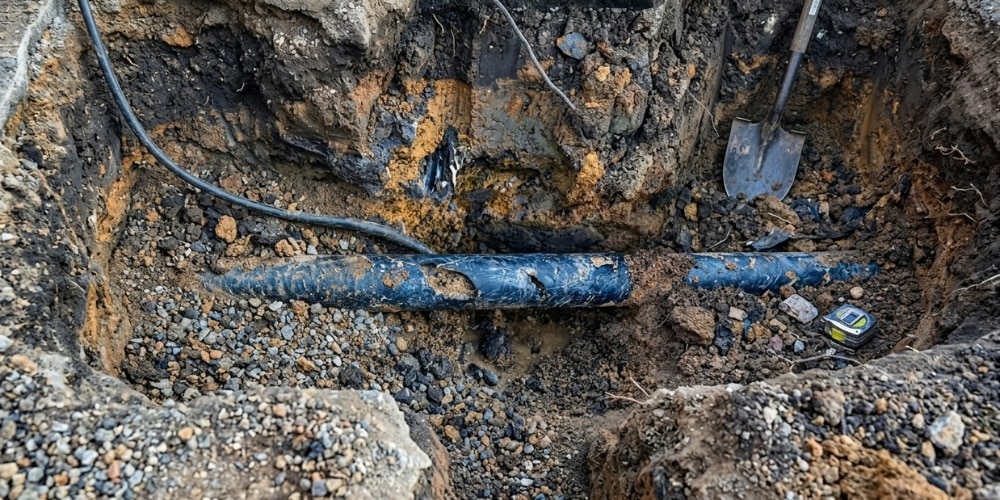
Trenchless methods, including pipe lining and pipe bursting, rebuild or replace a damaged line through one or two small access points instead of a long trench. Traditional open-cut excavation remains the right choice when pipe condition, depth, or access does not support a trenchless approach.
- Pipe lining (CIPP): A resin-coated liner is pulled or inflated into the existing pipe and cured in place, sealing cracks and root entry points while using the original pipe as a host.
- Pipe bursting: A bursting head breaks apart the old pipe while pulling a new one into the same path, typically used for longer stretches of damage or a badly deteriorated line.
- Traditional open-cut excavation: Crews dig a trench to expose and replace the damaged pipe directly. This method still has a place when trenchless options do not suit the line’s condition or depth.
Whether trenchless sewer repair is possible depends on pipe material, the extent of the damage, and what the camera inspection actually shows. It is not guaranteed for every line.
What Happens Before Any Digging Begins?
Georgia law requires contacting Georgia 811 before any digging begins, so member utility companies can mark buried gas, electric, water, and communication lines ahead of time. For trenches that require a crew to enter, OSHA’s trenching and excavation safety standards for cave-in protection cover sloping, shoring, shielding, and safe entry and exit for excavations five feet or deeper. These steps apply anytime an open-cut repair is the right fit for a damaged line.
What Affects the Cost of Sewer Line Repair?
Sewer line repair costs vary widely because no two lines fail the same way. Pricing depends on the specific scope of work and site conditions, so an accurate figure only comes after inspection, not before.
Factors that shape an estimate include:
- Scope of the repair or replacement needed
- Pipe depth, length, and material
- Site access and obstacles like driveways, patios, or mature landscaping
- Soil conditions and overall site complexity
- Repair method: trenchless lining, pipe bursting, or open-cut excavation
- Permitting, utility coordination, and urgency of the repair
Because these factors interact differently on every property, the most reliable way to understand cost is a camera inspection paired with a written estimate that reflects the actual condition of the line.
Want a clear picture of your repair cost?
An on-site inspection and a written estimate reflect the real scope of the job, not a guess.
When Should You Call a Professional for a Sewer Line Issue?
Call a professional as soon as multiple drains back up together, sewage odor appears outside, or a section of the yard stays wet without recent rain. Waiting typically allows a small crack or root intrusion point to widen into a larger, more disruptive repair.
- Recurring backups that return soon after DIY snaking
- Sewage odor near a cleanout or a consistently low point in the yard
- Any sign of a crushed or collapsed section, since this affects wastewater flow for the entire property
- Commercial properties, HOAs, and multifamily buildings, where a shared lateral failure can affect several units or tenants at once
Ready to Have Your Sewer Line Inspected?
North Atlanta homeowners, property managers, and commercial operators dealing with sewer line issues need a clear answer before committing to a repair method. Zippy Plumber works from camera inspection first, documents findings with video and measurements, and outlines trenchless and traditional repair options based on what the line actually shows.
- Camera inspection completed before any digging is planned
- Video and written documentation provided for every finding
- Trenchless options considered whenever pipe condition and access allow it
Reach out for an inspection and a clear plan for your sewer line.
Frequently Asked Questions
How do I know if I need sewer line repair or replacement?
The camera inspection is the deciding factor. A short, isolated crack or offset often supports repair, while multiple failure points, a collapsed section, or pipe nearing the end of its service life usually points toward replacement.
Can tree roots really cause sewer line damage?
Yes. Roots are drawn to the moisture and nutrients inside a sewer line and can enter through small cracks or loose joints. Once inside, continued root growth can widen the opening further and eventually block flow entirely.
Is trenchless sewer repair always an option?
No. Trenchless methods depend on the pipe's material, the extent of the damage, and how much of the line needs attention. A camera inspection confirms whether pipe lining, pipe bursting, or a traditional open-cut repair fits the situation.
Do I need a permit or utility locate before sewer line work?
A utility locate is required before any digging project in Georgia, regardless of scope. Permit requirements can vary by city and by the type of work involved, so it is worth confirming local requirements for the specific property before work begins.
How long does sewer line repair typically take?
Timing depends on the repair method, the extent of the damage, and site access. Trenchless methods are often faster since they avoid a long trench, while traditional excavation and larger replacement projects can take longer to complete.