
What’s In This Guide
- What Types of Pipes Are Used for Underground Plumbing in Residential Properties?
- Which Underground Pipe Materials Are Most Common in Alpharetta and North Atlanta Homes?
- How Long Do Underground Pipe Types Last Before Repair or Replacement Becomes Necessary?
- How Do You Find Out What Kind of Pipes Are Buried Under Your Property?
- What Are the Warning Signs That Your Buried Pipes Are Failing?
- What Repair Options Are Available for a Damaged Underground Plumbing Pipe?
- Frequently Asked Questions (FAQs)
- Get a Definitive Answer About Your Buried Lines
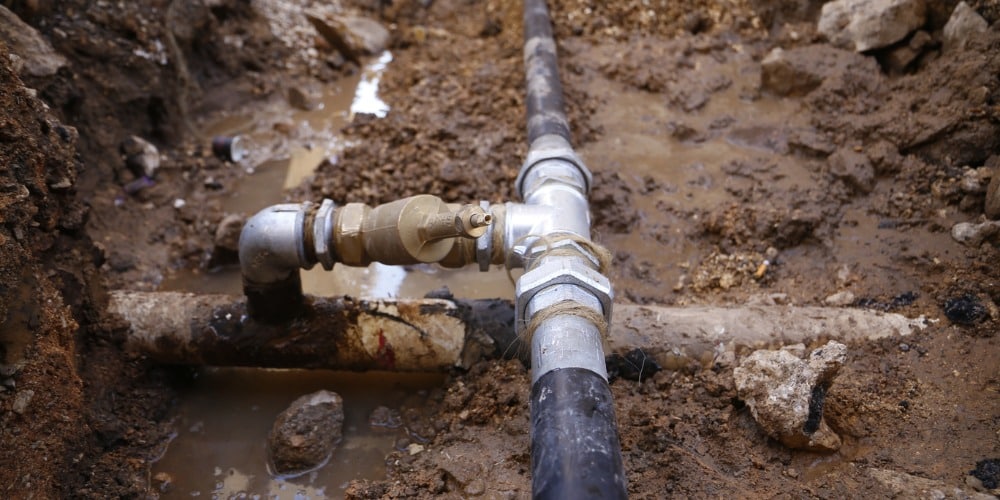
Buried plumbing is rarely top-of-mind until a crisis strikes. A soggy patch in the yard or a persistent, slow-draining sink often raises the same urgent question: what is actually happening beneath the surface? The material your underground plumbing pipe is made of dictates how a line fails, which repair methods are viable, and whether the situation requires an emergency response or simple maintenance. Alpharetta’s residential buildout accelerated through the 1980s and 1990s, placing much of the local housing stock at the transition window between older metal pipe systems and modern PVC. Understanding your pipe type is the first practical step before any repair conversation begins.
Understanding your pipe type is the first practical step before any repair conversation begins.
Quick Facts
- Pre-1985: Cast iron lines, 50 to 100-year lifespan.
- Pre-1970: Clay tile or Orangeburg, both near the end of their service life.
- Post-1990: PVC becomes the standard, rated 100+ years.
- Georgia’s clay soil accelerates corrosion in older metal pipes.
- Camera inspection is the only way to confirm the material and condition.
What Types of Pipes Are Used for Underground Plumbing in Residential Properties?
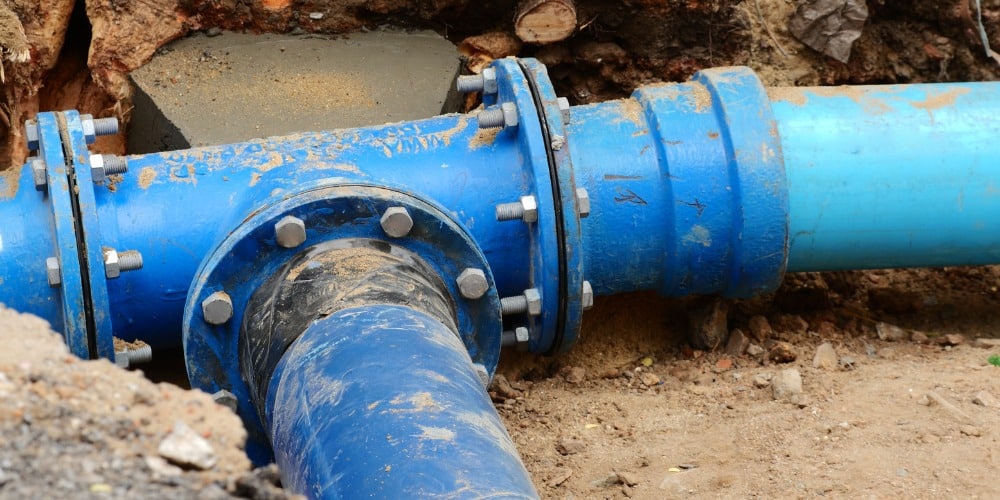
Two primary lines run underground from a residential property: the sewer lateral, which carries wastewater from the home to the municipal main, and the water service line, which delivers potable water from the street to the structure.
The type of pipe buried beneath your property depends primarily on your home’s build year and the regional materials available at that time.
Six materials are most commonly found in residential underground plumbing systems:
|
Pipe Material |
Common Installation Era |
Expected Lifespan |
Primary Failure Mode |
|
Cast Iron |
Pre-1985 |
50 to 100 years |
Interior corrosion, joint separation |
|
Clay Tile |
Pre-1970 |
50 to 60+ years |
Root intrusion at open joints, cracking |
|
Orangeburg |
1940s to late 1960s |
30 to 50 years |
Inward wall collapse, delamination |
|
ABS |
1970s to 1980s |
50 to 80 years |
Joint failure, UV degradation in exposed sections |
|
PVC |
1990s to present |
100+ years |
Mechanical damage, sagging from improper bedding |
|
HDPE |
2000s to present |
50 to 100+ years |
Rare; improper fusion joints are the main risk |
The sewer lateral and water service line on the same property can be two entirely different materials. Inspecting one does not tell you the condition of the other.
Which Underground Pipe Materials Are Most Common in Alpharetta and North Atlanta Homes?
Pipe material correlates directly with a home's construction year. Identifying your build decade narrows the likely material range before a camera inspection confirms the answer.
By build decade:
- Pre-1960s: Clay tile sewer laterals are most common in the original Alpharetta township area. Orangeburg pipe is possible in lower-cost construction from this period. Both materials are at or past their expected service life.
- 1960s to early 1970s: Cast iron dominates sewer lines. Orangeburg use persisted through the early part of this era in certain construction types.
- Late 1970s to mid-1980s: Cast iron remains the standard for sewer laterals. ABS appears in some drain and lateral systems from this window.
- Late 1980s to 1990s: A transitional period. Some builders switched to PVC while others continued with cast iron. Both materials appear in homes from this era, sometimes on the same street.
- 2000s to present: PVC is the standard residential material. HDPE is used in newer installations and in trenchless repair applications.
Georgia's red clay soils are notoriously acidic, often requiring lime applications to raise soil pH to levels suitable for healthy landscapes. This acidic environment accelerates electrochemical corrosion in uncoated iron pipes, shortening their practical service life compared to those installed in neutral-pH soil."
A 1978 home may have a cast-iron sewer lateral and a copper water service line installed in the same year. Each buried line should be assessed independently.
How Long Do Underground Pipe Types Last Before Repair or Replacement Becomes Necessary?
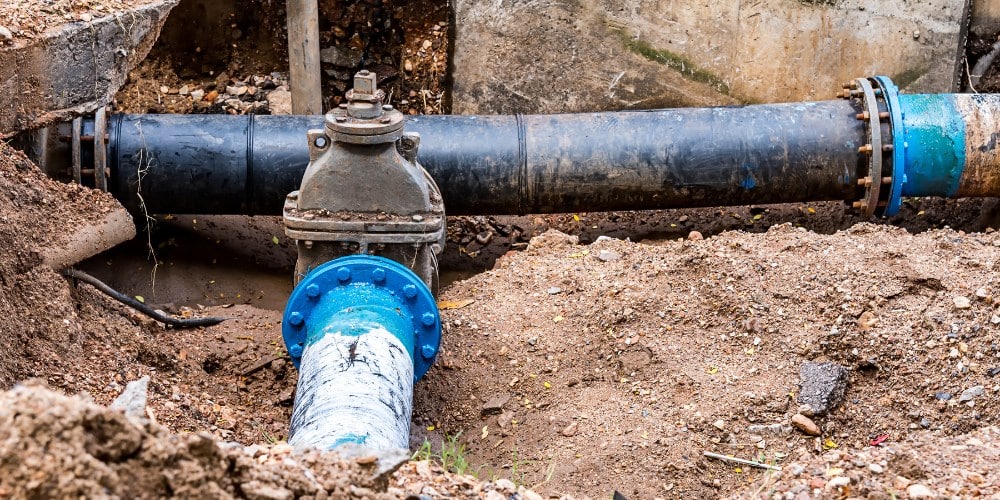
Lifespan ranges are guidelines, not guarantees. Actual pipe condition depends on installation quality, seasonal ground movement, root activity, and water chemistry, regardless of age alone.
|
Pipe Type |
Realistic Lifespan |
What Accelerates Failure |
Repair or Replace? |
|
Cast Iron |
50 to 100 years |
Interior scale buildup restricts flow before structural failure |
Spot repair for isolated damage; widespread corrosion warrants full-line replacement |
|
Clay Tile |
50 to 60+ years |
Root infiltration at every joint; ground movement shifts alignment |
Joint failure typically requires section or full-line replacement |
|
Orangeburg |
30 to 50 years |
Moisture absorption causes progressive inward wall deformation |
Full replacement is often recommended once significant deformation or deterioration is confirmed |
|
PVC |
100+ years |
Improper bedding causes sagging; misaligned joints collect debris |
Spot repair viable unless the pipe is structurally compromised |
|
HDPE |
50 to 100+ years |
Rare; mainly related to improper heat fusion at installation |
Spot repair typically sufficient |
When in doubt, a camera inspection takes the guesswork out of the equation.
Georgia’s expansive clay soils shift seasonally with moisture changes, placing mechanical stress on rigid pipe joints over decades. This drives joint separation in cast iron and clay tile systems independent of corrosion or root activity, and it is a factor specific to the North Atlanta region that accelerates deterioration timelines relative to national averages.
How Do You Find Out What Kind of Pipes Are Buried Under Your Property?
A sewer camera inspection is typically the most reliable way to confirm the underground plumbing pipe material and current condition. Build-year estimates and visible cleanout material are useful starting points, not conclusions.
Step 1: Pull Your Permit History
Search the City of Alpharetta building permit and inspection records portal or Fulton County’s property database. Original construction permits sometimes specify the pipe material used. Permit records give a baseline estimate but say nothing about the current condition.
Step 2: Examine the Visible Cleanout Stub
The cleanout is the capped access point outside the foundation. Cast iron shows a dull gray-black finish. PVC appears white or light gray. ABS is black. This is a useful clue, not a guarantee that the buried section matches throughout.
Step 3: Schedule a Camera Inspection
A licensed underground plumber inserts a waterproof camera through the cleanout into the sewer lateral. The camera delivers live video showing pipe material, interior condition, active root intrusion, joint gaps, collapse areas, and the measured distance of each problem from the cleanout. This is the step that removes guesswork from the entire conversation.
Step 4: Request Documented Findings
Ask for a video recording along with written notes that identify the pipe material, describe defects observed, and note the distance of each problem area from the cleanout. This record supports insurance claims, home sale disclosures, and future repair decisions.
What Are the Warning Signs That Your Buried Pipes Are Failing?
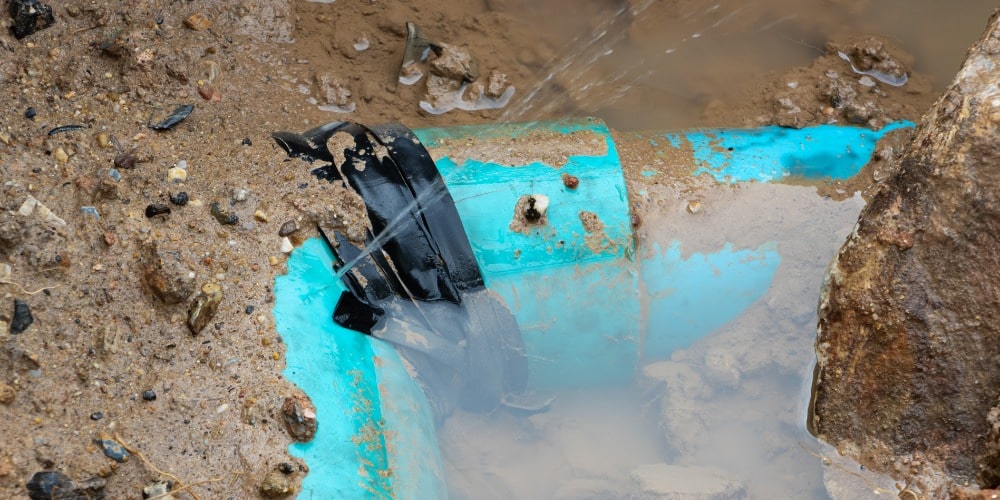
Warning signs appear above ground long before a pipe fails completely. Multiple symptoms occurring together point to a systemic problem in the main lateral rather than an isolated indoor clog.
Signs that point underground:
- Slow drains across multiple fixtures simultaneously: buildup or partial blockage in the main sewer lateral, not a single-fixture issue.
- Recurring backups after routine drain cleaning: a structural defect that the cleaning cannot resolve, such as a collapsed section or established root mass.
- Gurgling sounds after flushing or running sinks: air displacement from a partial underground blockage, disrupting normal flow.
- Soft, wet patches in the yard with no irrigation explanation: a possible sewer lateral or water service line leak below grade.
- Unexplained increases in the water bill: underground water service line leaks can remain invisible at the surface for weeks.
- Sewer odor near the foundation or in the yard: escaping gases from a crack, separation, or open joint in the buried line.
- Mature trees within 10 to 20 feet of the sewer path: consistent root intrusion risk, particularly for clay tile and older cast iron systems.
Homes built before 1985 showing two or more of these symptoms warrant a camera inspection before further drain cleaning. Repeated cleaning on a structurally compromised underground plumbing pipe clears the immediate blockage without addressing the failure underneath.
MORE ON THIS TOPIC: Signs Your Buried Water Line in Alpharetta Needs Attention
Not sure what your pipes look like?
What Repair Options Are Available for a Damaged Underground Plumbing Pipe?
The right repair method follows from what the camera finds. Pipe material, damage type, depth, and surrounding surface conditions all factor into the decision.
Common approaches:
- Spot excavation repair: A targeted open-cut repair for isolated damage where the surrounding pipe remains in good condition. The failed section is exposed, removed, and replaced. Appropriate when camera findings show a single cracked joint or isolated collapse.
- Trenchless pipe lining (CIPP): A resin-saturated liner is pulled through the existing pipe and cured in place, forming a new pipe wall from the inside. Effective for cast iron and clay tile lines with widespread interior deterioration but intact outer geometry.
- Pipe bursting: A bursting head fractures the old pipe outward while simultaneously pulling a new line into position. Used when full replacement is needed under driveways, landscaping, or surfaces that open-cut excavation would damage significantly.
- Full open-cut replacement: Required when collapse, severe misalignment, or Orangeburg pipe makes trenchless methods impractical.
A camera inspection should precede any repair recommendation for underground sewer line issues. A plumber advising repair without first inspecting the line is working without the data the decision requires.
Frequently Asked Questions (FAQs)
What is Orangeburg pipe and how serious is it if my home has it?
Orangeburg is a tar-and-cellulose fiber pipe used from the 1940s through the late 1960s that absorbs ground moisture over time, softening the pipe wall until it collapses inward. Full replacement is the standard recommendation once it is confirmed by camera inspection.
Does tree root damage affect all underground pipe types equally?
No. Clay tile is the most vulnerable due to open joints at every pipe section, while HDPE with heat-fused joints offers the highest resistance. Cast iron and PVC fall in between depending on joint condition and installation quality.
Does homeowners insurance typically cover underground sewer line damage?
Most standard homeowners policies exclude sewer lateral repairs outside the foundation. Separate service line or sewer backup endorsements are available through most carriers and worth reviewing before a problem develops.
How disruptive is a sewer camera inspection to my property?
The camera enters through an existing cleanout, so no digging or surface damage is involved. The process typically takes under an hour.
Can I arrange a buried pipe inspection before buying a home in Alpharetta?
Yes. A sewer scope is a separate service from a standard home inspection and can be added during the due diligence period. Findings can support repair negotiations with the seller before closing.
Get a Definitive Answer About Your Buried Lines
A specialist focused exclusively on exterior buried systems brings the right equipment, the right diagnostic process, and the experience to interpret what the camera finds and explain what it means for the property.
Zippy Plumber works with homeowners, property managers, and commercial operators to locate, diagnose, and repair underground sewer and water line problems before they escalate into larger failures.