
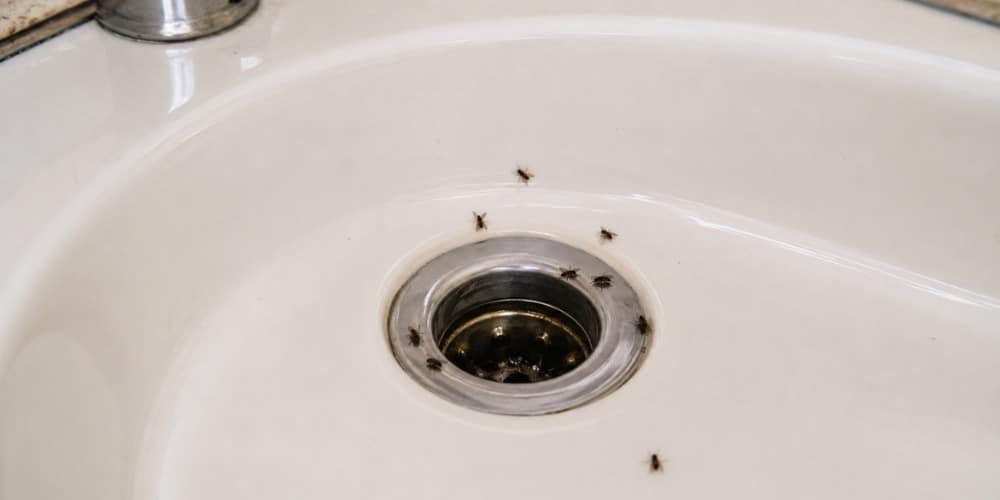
Drain flies originate from organic sludge, standing water, and decaying matter that builds up inside drains, pipes, and sewer lines. Understanding where drain flies come from is the first step to eliminating them. They breed inside the gelatinous film that coats the interior walls of slow or stagnant drains, which is why they keep reappearing even after surface cleaning.
Table of Contents
- What Drain Flies Actually Are
- Where Drain Flies Come From: Real Sources Inside Your Plumbing
- Why Drain Flies Keep Coming Back
- How to Identify Where Drain Flies Come From
- Drain Fly Prevention and Long-Term Control
- When the Problem Points to a Deeper Plumbing Issue
Key Takeaways
- Drain flies breed inside the organic biofilm coating pipe walls, not just in standing water on the surface.
- Slow or infrequently used drains are the most common breeding grounds in residential and commercial properties.
- Surface sprays and store-bought traps do not eliminate the root cause; pipe cleaning is required to break the breeding cycle.
- A recurring infestation after repeated cleaning can indicate a damaged pipe, a partial blockage, or a sewer line issue that needs professional inspection.
- Dry P-traps in guest bathrooms and utility sinks are one of the most overlooked entry points for drain flies.
- Underground sewer line problems can allow drain flies to access your plumbing from outside the building, making indoor treatments alone ineffective.
What Drain Flies Actually Are
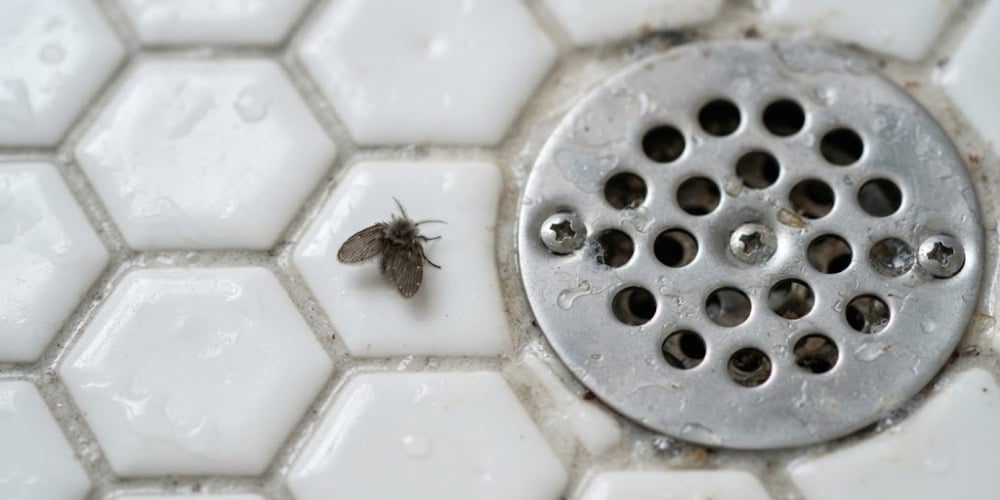
Drain flies (Psychoda spp.) are small, moth-like insects in the family Psychodidae. They are typically 1.5 to 5 millimeters long and covered in tiny hairs that give their wings a fuzzy appearance. This is why they are sometimes called moth flies or sewer gnats.
According to the University of California’s Integrated Pest Management Program, drain flies are not strong fliers. They tend to rest on walls near their breeding sites, making them easier to locate than other small fly species.
Unlike fruit flies, which are drawn to ripe or rotting food left in the open, drain flies are strictly tied to plumbing. They do not bite, they do not sting, and in healthy adults they pose no direct medical threat. However, for individuals with asthma or respiratory sensitivities, large infestations can aggravate symptoms. The insects and their debris become airborne particles in these cases.
From a plumbing standpoint, their presence is always a signal that something inside your drain system needs attention. Therefore, knowing how to hire a licensed drain cleaning company in alpharetta can help address the problem quickly.
Where Drain Flies Come From: Real Sources Inside Your Plumbing
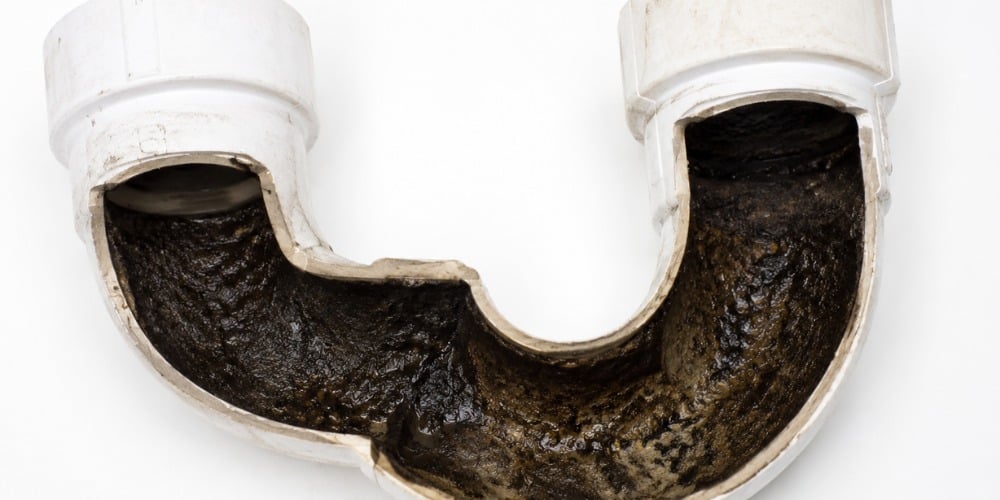
When people ask where drain flies come from, the instinct is to blame the nearest visible drain. However, the fuller answer is more specific. Drain flies come from the decomposing organic material that accumulates as a layer of biofilm on the interior walls of pipes, P-traps, and drain basins.
This film is a mixture of soap scum, hair, grease, food particles, and microbial matter. It holds moisture consistently and provides everything a drain fly needs to complete its life cycle. The life cycle goes from egg to larva to adult in roughly 8 to 24 days depending on temperature and food availability.
Here are the most common source locations in a typical residential or commercial property:
- Bathroom sink and shower drains: Hair and soap residue accumulate quickly in the P-trap and the first few inches of drainpipe, creating an ideal breeding layer.
- Floor drains in basements and utility rooms: These are often ignored for weeks or months. When the P-trap dries out, flies can also enter from the sewer side.
- Kitchen sink drains: Grease and food particles form a particularly nutrient-rich biofilm that supports large fly populations.
- Condensate drain lines: HVAC condensate lines that drain slowly or partially can develop standing organic matter, especially in humid climates like Georgia.
- Infrequently used toilets and drains: Any fixture that sits unused long enough for the P-trap water to evaporate loses its barrier against sewer gases and insects.
- Sump pits and laundry tubs: These fixtures collect standing water and organic debris and are frequently overlooked during routine cleaning.
Additionally, the problem is not always confined to the interior of a building. A drain cleaning service near me what to expect consultation can help distinguish whether your issue is inside or outside the home. If a sewer line has a crack, root intrusion, or joint separation underground, organic matter accumulates at the failure point. Drain flies can then breed outside the building before migrating in. In those cases, no amount of indoor drain cleaning resolves the infestation.
Why Drain Flies Keep Coming Back
The recurring nature of drain fly infestations is one of the most frustrating aspects for homeowners. You clean the drain, pour boiling water down it, and within a week the flies are back. The reason is straightforward: most cleaning methods only address the water in the trap or the surface of the drain cover.
The biofilm deeper in the pipe remains largely untouched. Larvae continue feeding and pupating in these deeper sections. This is why infestations persist despite your cleaning efforts.
Drain fly larvae are unusually resilient. They can survive in conditions with very little oxygen and can withstand brief exposures to bleach poured down a drain in household concentrations. The U.S. Environmental Protection Agency has noted that chemical drain treatments applied casually rarely penetrate the full depth of biofilm buildup inside older pipes. Particularly in cast iron or galvanized steel lines, the rougher interior surfaces hold organic matter firmly.
There is also a timing factor involved. The adult drain fly lives only about two weeks. However, a single female can lay between 30 and 100 eggs. If even a small section of biofilm remains in the pipe, the next generation is already in development before the current adults die off. This is why infestations seem to rebound within days of initial treatment.
How to Identify Where Drain Flies Come From
Before treating drain flies where do they come from becomes a question you can actually answer for your specific situation, you need to confirm which drain is the source. The most reliable method is the sticky tape test.
Follow these steps:
- Place a strip of clear tape or plastic wrap over the suspected drain opening at night when flies are most active.
- Leave small gaps around the edge so airflow is not completely blocked, which would prevent flies from attempting to exit.
- Check the tape in the morning. Flies stuck to the inside surface of the tape confirm that particular drain is an active breeding site.
- Repeat over several drains simultaneously to identify all active sites, especially if the infestation is large.
Once confirmed, inspect the drain visually with a flashlight. A healthy, non-infested drain will show relatively clear pipe walls at the trap. In contrast, a breeding site will show a dark, gelatinous coating on the pipe walls. You may also see visible tiny larvae moving slowly through it.
If you have a floor drain that tests positive but appears clean at the surface, the biofilm may be deeper inside the line. It could also be in a section of pipe below the trap. Additionally, understanding underground plumbing pipe types alpharetta buried lines can help you understand what materials your pipes may be composed of. This knowledge affects how buildup patterns develop. At that stage, a professional drain cleaning service consultation can help determine whether standard drain snaking or hydro-jetting is the appropriate next step.
Drain Fly Prevention and Long-Term Control
Eliminating the current infestation and preventing the next one requires a combination of mechanical cleaning and ongoing maintenance habits. Here is a practical breakdown:
Mechanical pipe cleaning:
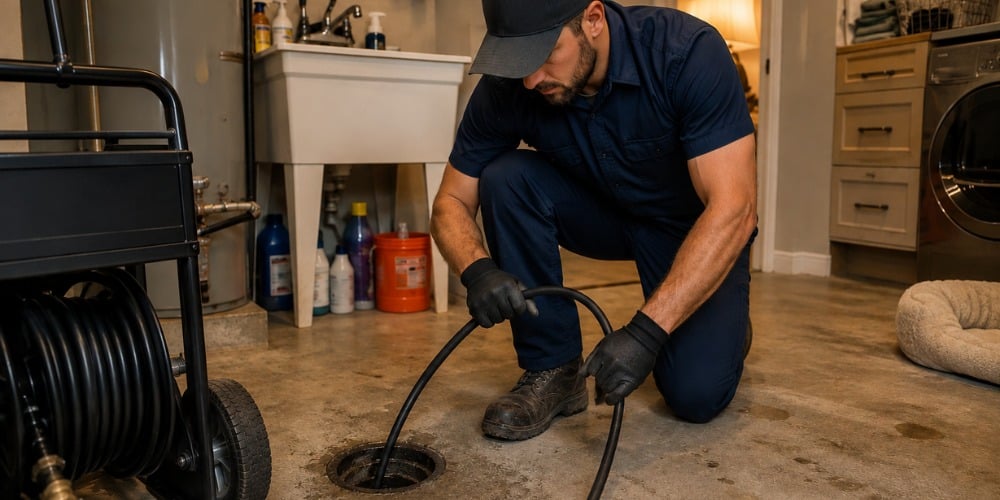
The most effective treatment is physically removing the biofilm. A drain brush, plumber’s snake with a brush attachment, or professional hydro-jetting service breaks the organic layer off pipe walls. This removes both the food source and the current larvae in one step. Furthermore, enzyme-based drain cleaners, which use biological cultures to digest organic material, can be used as a follow-up maintenance treatment rather than a primary solution.
Boiling water and enzyme treatments:
Pouring boiling water down a drain weekly can slow biofilm accumulation in kitchen drains specifically. Moreover, enzyme drain treatments applied monthly in bathroom drains help digest soap scum and hair before it matures into a fly habitat. Neither method replaces mechanical cleaning for an active infestation. However, they work well as preventive measures.
Restoring dry P-traps:
Any drain that has gone unused should have water poured into it monthly to keep the P-trap seal intact. In utility rooms or vacation properties, use a small amount of mineral oil on top of the water to slow evaporation. This simple habit eliminates one of the primary entry pathways for drain flies.
Improving ventilation and reducing humidity:
Drain flies thrive in humid, warm environments. Running bathroom exhaust fans during and after showers helps. Additionally, fixing slow drips under sinks and addressing any standing water under appliances reduces the environmental conditions that sustain infestations.
| Control Method | Effectiveness for Active Infestation | Effectiveness for Prevention | DIY or Professional |
|---|---|---|---|
| Chemical drain cleaner | Low | Low | DIY |
| Enzyme drain treatment | Moderate | High | DIY |
| Mechanical drain brushing | High | Moderate | DIY |
| Professional hydro-jetting | Very High | High | Professional |
| P-trap water maintenance | Low (alone) | High | DIY |
| Sewer line inspection | High (if line damaged) | High | Professional |
When the Problem Points to a Deeper Plumbing Issue
Most drain fly infestations are resolved with thorough pipe cleaning. However, a subset of cases involves a structural plumbing problem. If you have cleaned every drain in your property and restored all P-traps, yet the flies return within two weeks, the breeding source is likely underground. It could also be in a section of pipe you cannot access from inside the building.
Cracked sewer lines, separated pipe joints, and root intrusions create pockets where sewage and organic matter pool. This is especially common in older neighborhoods where clay or orangeburg sewer lines are still in place. Therefore, if you are in the North Atlanta area and dealing with a persistent infestation, reviewing the signs covered in our sewer line repair north atlanta signs fix options resource can help. You can determine whether a professional sewer inspection is warranted.
At Zippy Plumber, we specialize in exterior underground pipe work from the building to the street. We do not handle indoor fixture repairs. However, when drain fly infestations are traced back to a compromised sewer or drain line beneath the property, that is exactly where our work begins.
If you are unsure whether your problem is an indoor cleaning issue or an underground pipe problem, a camera inspection of the sewer lateral is the definitive way to rule out underground causes. The inspection sends a waterproof camera through the pipe from a cleanout access point. It produces real-time video of the pipe’s interior condition. If pooling, cracks, or root intrusion are visible, that footage becomes the basis for a targeted repair rather than repeated guesswork with over-the-counter pest treatments.
Things to Know
- Drain flies are not the same as fruit flies or fungus gnats. Their fuzzy, moth-like wings and their exclusive connection to plumbing environments are the clearest distinguishing features.
- Larvae can survive brief exposure to household bleach poured directly down a drain. A single treatment with bleach does not eliminate an active infestation and may create a false sense that the problem is resolved.
- An infestation limited to one bathroom in an otherwise clean home often points to a single neglected fixture. For example, a guest bathroom drain or a utility sink that rarely gets used and has lost its P-trap seal can harbor the entire population.
- Drain flies are most active at night and rest on walls and ceilings near their breeding source during daylight hours. If adults are clustering near a specific wall, the source drain is usually within a few feet of that spot.
- The complete life cycle from egg to adult can occur in as few as 8 days under warm, humid conditions, which explains why populations appear to explode rapidly after a slow start.
- Not all drain fly problems originate indoors. Broken sewer laterals and cracked underground pipes can create breeding sites that feed the infestation from outside the building. Therefore, professional sewer inspection is the only reliable way to confirm or rule out an exterior source.
Stop Drain Flies at the Source Before They Multiply Again
If drain flies have returned more than once after cleaning, the breeding site is almost certainly deeper in your plumbing than a drain brush can reach. At Zippy Plumber, we inspect and repair the underground pipe systems that standard pest control and indoor plumbing services never touch. Request a pipe inspection today before another breeding cycle completes and the infestation grows harder to control. Contact our team now and tell us exactly what you are seeing so we can determine whether your drain fly problem has an underground cause.
Frequently Asked Questions
Q: Can drain flies come from outside the house through windows or doors?
A: Drain flies almost never enter homes from outdoor environments through windows or doors because they are weak fliers. They are not attracted to outdoor light or food sources the way other insects are.
Their entire life cycle depends on the organic biofilm inside plumbing systems. Therefore, they originate from within your own pipes or from a connected sewer system. If adults appear suddenly in large numbers near a window, the more likely explanation is that a nearby drain, floor trap, or condensate line inside the building is the active breeding site. The adults are simply resting near a light source after emerging.
Q: How long does it take to get rid of drain flies completely?
A: Complete elimination typically takes two to four weeks from the point when the breeding site is fully cleaned. This delay occurs because pupae already present in the pipe at the time of treatment will still develop into adults.
Pupae are more resistant to cleaning treatments than larvae or eggs. Therefore, some adult emergence continues even after a thorough pipe cleaning. The key indicator that treatment has worked is a steady decline in adult numbers each day rather than a sudden complete disappearance. If numbers plateau or increase after two weeks, an untreated breeding site remains active somewhere in the plumbing system.
Q: Are drain flies harmful to people or pets?
A: Drain flies do not bite, sting, or transmit diseases to humans or pets under normal residential conditions.
The primary health concern associated with large infestations is respiratory irritation. Body fragments and fine particles from dense populations of drain flies can become airborne. They trigger symptoms in people with asthma or dust sensitivities. For the vast majority of households, drain flies are a nuisance pest and a plumbing maintenance signal rather than a direct health hazard. If a household member experiences unexplained respiratory symptoms alongside a visible infestation, consulting a physician and addressing the infestation simultaneously is a reasonable precaution.
Q: Do drain flies mean my pipes are dirty or damaged?
A: Drain flies indicate that organic biofilm has accumulated inside your pipes, which is a normal consequence of regular pipe use. However, a persistent infestation that resists cleaning can also point to a structural pipe problem. For example, a crack, root intrusion, or joint separation can cause the problem.
In most cases, the pipes are intact and the issue is simply accumulated buildup that has not been mechanically cleaned in a long time. When repeated thorough cleaning fails to stop the infestation within a few weeks, a camera inspection of the sewer lateral is the appropriate next step. That inspection can confirm whether the pipe itself is compromised or whether a section of line too deep for standard cleaning tools is harboring the breeding colony.
Q: What is the single most effective way to eliminate a drain fly infestation?
A: Mechanically removing the biofilm from the interior walls of the affected pipe is the most reliably effective method. Use a drain brush or professional hydro-jetting to accomplish this. This approach physically destroys the breeding environment rather than attempting to chemically treat it.
Chemical treatments, including bleach, enzyme cleaners, and commercial drain gels, work best as follow-up maintenance tools. Use them after the primary biofilm layer has already been removed. For infestations that have spread across multiple drains or that involve hard-to-reach pipe sections, professional hydro-jetting is the most thorough single-step solution available. It clears the full diameter of the pipe along its entire accessible length rather than addressing only the first few inches below the drain opening.