
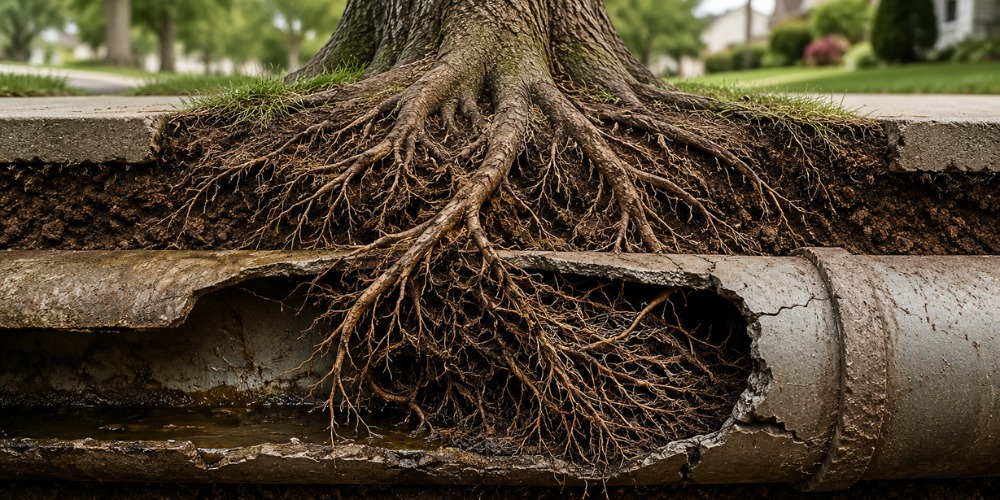
Tree roots in sewer line pipes are one of the leading causes of residential sewer failure across the United States. According to the US Forest Service Research and Development, they account for more than 50% of all sewer blockages. They grow silently beneath your yard, often for years, before the damage becomes expensive enough to notice.
Table of Contents
- Why Tree Roots Target Sewer Pipes
- Warning Signs of Tree Roots in Sewer Lines
- How Professionals Diagnose Tree Roots in Sewer Lines
- Repair Options and What Each One Costs
- Pipe Materials Most at Risk
- Prevention Strategies That Actually Work
Why Tree Roots Target Sewer Pipes
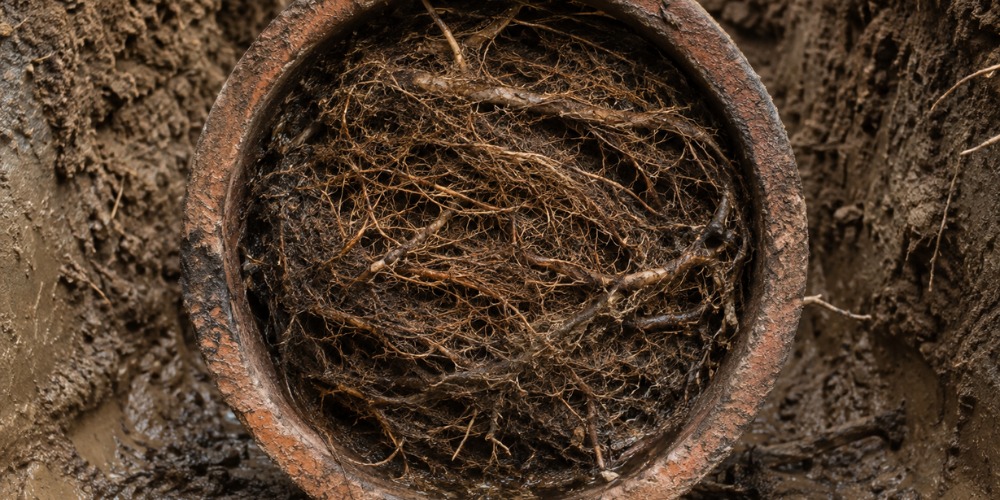
Sewer pipes create an ideal growing environment for tree roots. They carry warm water, oxygen, and dissolved nutrients. When a pipe develops even a hairline crack, roots detect the moisture vapor. They begin migrating toward it immediately. Over time, a root that starts as a fine filament can expand into a dense mass. This mass can fill the interior of a pipe entirely.
The scale of this problem globally provides useful context. A 2012 Swedish study of 33.7 km of sewers detected 2,180 points of root intrusion. This suggests a frequency of 6.47 intrusion points per 100 meters of pipe (ScienceDirect, September 2023). Moreover, surveys conducted in Denmark in 2000 found that 97% of towns and cities reported root intrusion events. A 1998 Swedish survey put that figure at 99%. These are not edge cases. Root intrusion in sewer systems is effectively universal wherever urban trees and aging pipe infrastructure coexist.
In the United States, clay and cast iron pipes installed before the 1980s face particular vulnerability. Additionally, their joints were often sealed with materials that degrade over decades. These degraded seals create entry points that roots exploit readily. Once inside, roots do not simply slow water flow. However, they can collapse a pipe entirely if left untreated.
Warning Signs of Tree Roots in Sewer Lines
Root damage does not always announce itself immediately. The signs tend to build gradually, which is part of what makes the problem so costly when it finally surfaces.
Slow or gurgling drains: If multiple fixtures in your home are draining slowly at the same time, this points to a blockage in the main sewer line. Root intrusion often presents this way. For isolated fixture issues, a bathroom sink clog fix may address the immediate symptom. However, recurring slowdowns across multiple drains warrant a camera inspection of the main line.
Sewage odors in or around your yard: Partial blockages caused by roots allow sewer gases to escape. These gases enter the surrounding soil and sometimes back into your home. If you detect sulfur or sewage smells near your property line or foundation, treat this as a red flag.
Sinkholes or soft spots in your yard: When a sewer pipe cracks significantly, wastewater begins saturating the surrounding soil. This causes gradual settlement that may appear as unexplained depressions in your lawn.
Frequent backups in the same drain: One clog may be coincidental. However, repeated backups in the same fixture, particularly the lowest drain in a home, often indicate something blocking the main line downstream. This lowest drain is usually a basement floor drain or first-floor toilet.
Unexplained drop in water pressure: While pressure issues can have multiple causes, a compromised sewer line may affect surrounding pipe infrastructure. If you are troubleshooting this symptom separately, reviewing what causes low water pressure can help you rule out unrelated factors.
How Professionals Diagnose Tree Roots in Sewer Lines
Visual inspection of the line is the only reliable way to confirm tree roots in sewer line problems and assess their severity. A licensed plumber or underground pipe specialist will run a waterproof camera through your sewer line from a cleanout access point. The camera transmits live footage to a surface monitor.
This camera inspection accomplishes several important things at once. It locates root intrusion and identifies the type and density of root growth. Additionally, it assesses whether the pipe wall is still structurally intact. The inspection pinpoints the exact depth and horizontal position of the problem area. That last detail matters significantly when estimating excavation scope and cost.
At Zippy Plumber, our scope of work covers exterior underground pipe runs from the building foundation to the street connection. This is the section of pipe most commonly affected by tree roots. It runs through your yard where mature trees are most likely to be growing. Indoor fixtures are outside our service area. However, if camera inspection confirms root intrusion in the main exterior line, we can assess the full length of that run. We advise you on the appropriate repair method.
Repair Options and What Each One Costs
Not every root intrusion scenario requires full pipe replacement. The right repair approach depends on how far the roots have progressed. It also depends on whether the pipe itself is still structurally sound.
Hydro-Jetting
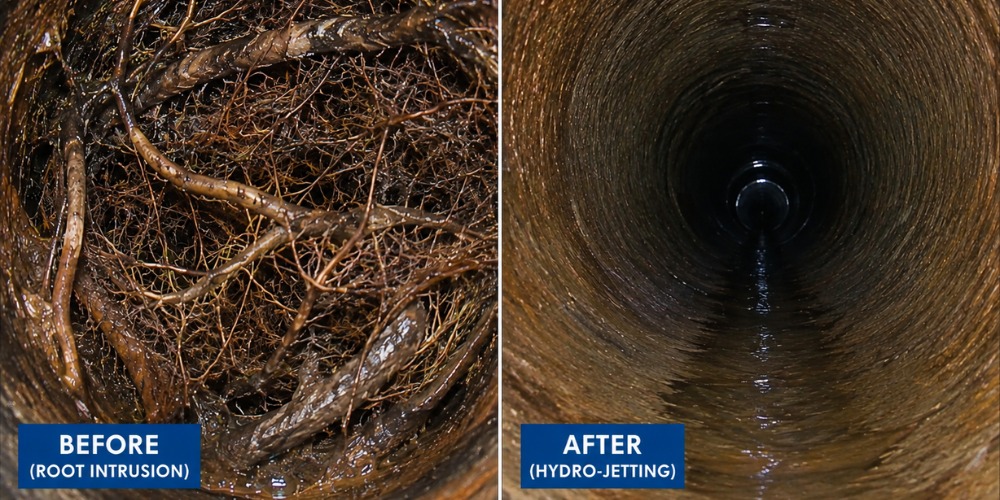
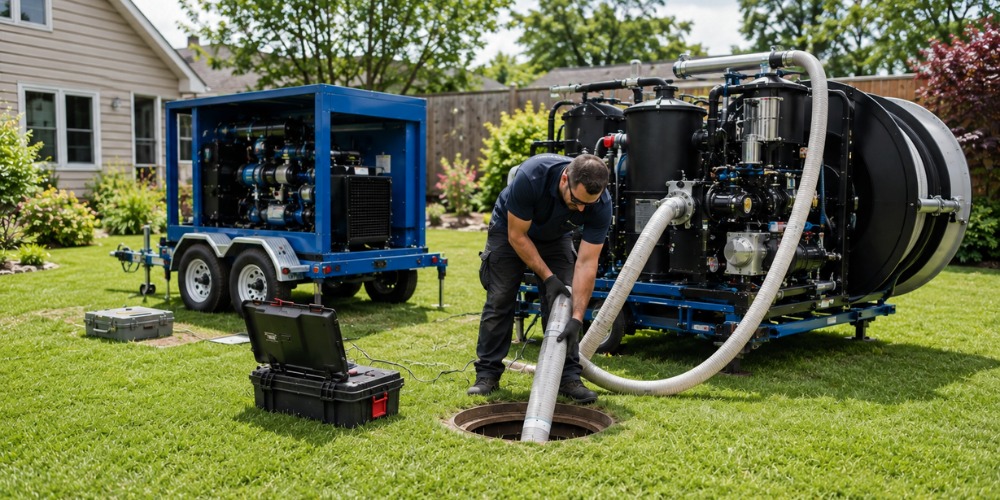
Hydro-jetting uses pressurized water to cut through root masses and flush debris out of the line. Typically, the pressure ranges from 3,000 to 4,000 PSI. It is the most effective cleaning method for established root intrusion and restores flow without requiring excavation. However, it is a maintenance solution rather than a permanent fix.
If roots have penetrated once, they will attempt to re-enter through the same cracks. These cracks require separate treatment unless addressed through preventive approaches. For example, review how to unclog kitchen drain methods and other strategies.
Hydro-jetting typically costs between $300 and $600 for a standard residential sewer line. Pricing varies by region and line length.
Pipe Relining (CIPP)
Cured-in-place pipe lining (CIPP) is a trenchless repair method. A resin-saturated liner is inserted into the existing pipe and then cured. This forms a new, smooth interior surface. The resin effectively seals the cracks or gaps that roots exploited. It creates a pipe-within-a-pipe that is resistant to future intrusion.
CIPP is well-suited for lines where the pipe wall is cracked but still holding its shape. Moreover, it preserves your landscaping and driveway because it requires minimal or no excavation. Costs generally range from $80 to $250 per linear foot. This depends on pipe diameter and access conditions.
Full Pipe Replacement
When pipe sections have collapsed, been crushed, or sustained damage too extensive for relining, full replacement becomes necessary. This can be done via open-cut excavation or directional boring. Open-cut excavation allows direct access to the pipe. However, it disrupts the yard surface above the trench. Directional boring pulls a new pipe through the existing path with minimal surface disruption.
Full replacement costs vary widely depending on depth, soil conditions, and total linear footage. Homeowners should expect a range of $50 to $250 per linear foot for trenchless methods. Open-cut excavation often falls at the lower end of the range before surface restoration costs are factored in.
Pipe Materials Most at Risk
Understanding which materials are most vulnerable helps homeowners in older neighborhoods assess their own risk level. You can identify problems before they develop.
| Pipe Material | Typical Installation Era | Root Vulnerability | Notes |
|---|---|---|---|
| Clay (Vitrified) | Pre-1960s | Very High | Brittle joints, prone to cracking |
| Cast Iron | 1900s-1970s | High | Corrosion weakens joints over time |
| Orangeburg | 1940s-1960s | Very High | Deteriorates rapidly, no longer in use |
| ABS/PVC | 1970s-present | Low | Fewer joints, more flexible |
| HDPE | 1990s-present | Very Low | Continuous pipe, minimal joint seams |
Research from a 2025 Australian case study (Orange City Council) confirmed that asbestos cement pipes were the most negatively impacted pipe material in their infrastructure survey. Roots affected approximately 26.1% of sewer trunk mains. While materials and climate differ in the U.S., the general principle holds. Older, more brittle pipe materials with mechanical joints represent the greatest vulnerability.
Homes built before 1970 in the Alpharetta area and across Georgia are especially worth evaluating. Moreover, this is particularly important if there are mature trees within 30 to 50 feet of the sewer line path.
Prevention Strategies That Actually Work
Prevention is substantially cheaper than repair. Once root intrusion is confirmed and cleared, the following measures reduce the likelihood of recurrence.
Annual or biennial hydro-jetting: Scheduling professional cleaning before roots can establish a significant mass inside the pipe is cost-effective. Think of it as maintenance rather than a reactive repair. This approach saves money in the long run.
Root growth inhibitors: Foaming copper sulfate or dichlobenil-based products can be applied through a cleanout to slow root growth near the pipe. These are not permanent solutions. They need to be reapplied periodically. However, they reduce regrowth rates meaningfully between cleaning cycles. Note that these products should be applied by a professional. This prevents damage to beneficial soil organisms or nearby plants.
Strategic tree placement: If you are adding new trees to your property, consult your landscaping professional. Keep slow-growing, shallow-rooted species at least 10 feet away from your known sewer line path. Aggressive species like willow, silver maple, and cottonwood should be kept well beyond 30 feet.
Lining after cleaning: After hydro-jetting clears existing roots, proactively lining the pipe with CIPP seals the entry points. This prevents roots from re-establishing before they cause problems again. This combination of cleaning plus relining is often the most comprehensive approach for older clay or cast iron lines.
Grease and debris management: Roots alone do not always cause the final blockage. They trap other debris, particularly grease and food solids. This forms composite clogs. Being cautious about how to dispose of bacon grease and other fats keeps the interior cleaner. It reduces the surface area roots have to trap solids.
Identify the Problem Before It Gets Worse
If your home is more than 20 years old, sits near mature trees, and you have noticed any of the warning signs above, a professional camera inspection is the single most valuable step you can take. At Zippy Plumber, we specialize exclusively in exterior underground plumbing in Alpharetta, GA and surrounding communities. That focus means we bring targeted expertise to the part of your system where tree roots in sewer line damage does its most serious structural harm.
Request a free estimate today and let our team assess your exterior line. We can evaluate the situation before a slow drain becomes a collapsed pipe. Call or use the contact form on our website to schedule your camera inspection. Get a clear picture of what is happening underground.
Frequently Asked Questions
Q: How do I know if tree roots are in my sewer line and not just a regular clog?
Regular clogs are typically isolated to one fixture. In contrast, root intrusion affects multiple drains simultaneously. It also causes recurrent backups in the same spot.
If your toilet, shower, and basement drain are all sluggish at the same time, that pattern suggests a main line obstruction. A sewer camera inspection confirms whether roots are the cause. It also rules out other main line problems like grease buildup or pipe collapse.
Q: Can I remove tree roots from my sewer line myself?
DIY root removal is not recommended because it addresses symptoms without resolving the underlying pipe damage. This damage allowed roots to enter in the first place.
Rental store drain snakes can break up soft root masses temporarily. However, without camera confirmation of the damage extent and professional equipment, roots typically return within months. More importantly, aggressive mechanical snaking on a cracked pipe can worsen the fracture. This creates more expensive problems.
Q: How fast do tree roots grow back after they are cleared?
Regrowth timelines vary by tree species and season. However, roots can begin re-entering cracks within 12 to 18 months without follow-up treatment.
Fast-growing species like willow or silver maple can re-establish root presence in a cleared pipe more quickly than slower-growing varieties. Annual maintenance cleaning and root inhibitor applications extend the interval between full blockages.
Q: Does homeowners insurance cover sewer line damage from tree roots?
Standard homeowners insurance policies in the United States typically exclude sewer line damage caused by root intrusion. They treat it as a maintenance issue rather than a covered peril.
Some insurers offer optional sewer line riders or service line endorsements. These cover root damage and related excavation costs. Review your policy declarations page and contact your insurer directly. This helps you understand what your specific coverage includes before assuming protection exists.
Q: Which trees near my house pose the greatest risk to my sewer line?
Willow, silver maple, cottonwood, and elm are among the species known to have the most aggressive root systems. They pose significant risk to sewer lines.
These species produce wide-spreading, moisture-seeking root systems. They can extend well beyond the tree’s canopy radius. If any of these species grow within 30 feet of your known sewer line path, a proactive camera inspection is worth scheduling. Schedule it even if you have not noticed any symptoms yet.
Things to Know
- Tree roots do not need a large crack to enter a pipe. They can squeeze through gaps as small as 1/20 of an inch. This means even pipes that appear intact on the outside may already be compromised internally.
- The sewer lateral, which is the pipe running from your home’s foundation to the municipal main at the street, is your financial responsibility in most U.S. municipalities. If roots damage this section, you bear the entire repair cost.
- Not all root intrusion requires full excavation. Trenchless methods like CIPP relining can restore a structurally compromised pipe without digging up your yard. This protection works provided the pipe still holds its shape.
- Foaming root killers sold at hardware stores may temporarily slow regrowth. However, they will not remove an existing root mass or repair the crack the roots entered through. They work best as a preventive supplement after professional clearing.
- Older neighborhoods in the Alpharetta area and across metro Atlanta face disproportionate impact. This is because many homes built before the 1970s still have original clay or cast iron lateral lines. These lines have never been inspected or relined.
- A sewer camera inspection is not just a diagnostic tool. The footage it produces serves as documentation you can use when negotiating repair bids. Use it when disputing municipal responsibility claims or filing for a service line insurance endorsement.
Schedule Your Sewer Line Inspection Before Roots Take Over
Root intrusion rarely stops on its own. Every season you delay gives roots more time to expand inside the pipe. They widen existing cracks and trap debris that accelerates blockage. The difference between clearing roots early and replacing a collapsed pipe can run into thousands of dollars.
At Zippy Plumber in Alpharetta, GA, we specialize exclusively in exterior underground plumbing from the foundation to the street connection. That is precisely where tree roots in sewer line pipes cause the most structural damage. It is where our expertise is focused. Request a free estimate now and get a camera inspection scheduled. Do this before a slow drain turns into an emergency excavation.
Call us or submit your information through our website today. We will assess your exterior line and give you a clear, honest picture of what is happening underground.
Additional Frequently Asked Questions
Q: How do I know if tree roots are in my sewer line and not just a standard clog?
The clearest indicator is that multiple drains in your home are slow or backing up at the same time. This differs from a single isolated fixture.
A standard clog caused by grease or hair typically affects one drain. When the main sewer lateral is partially blocked by roots, all fixtures that drain into it are affected simultaneously. The definitive confirmation comes from a camera inspection. This gives a real-time view of the interior and removes any guesswork about the cause.
Q: Can I use store-bought root killer products instead of calling a plumber?
Store-bought copper sulfate or foaming herbicide products can slow root regrowth. However, they cannot remove an existing mass or repair the crack that allowed roots to enter.
These products are most useful as a periodic preventive measure after a professional has already cleared the line. Using them as a primary treatment on an active blockage is unlikely to restore flow. It will not prevent the crack from widening further. A professional hydro-jetting service followed by a relining assessment is the appropriate first response to confirmed intrusion.
Q: How much does it typically cost to repair a sewer line damaged by tree roots?
Costs vary significantly based on the method used, ranging from a few hundred dollars for hydro-jetting to several thousand dollars for full pipe replacement.
Hydro-jetting to clear an active root blockage generally runs between $300 and $600 for a standard residential line. Trenchless CIPP relining typically costs between $80 and $250 per linear foot. Full pipe replacement via open-cut excavation or directional boring can exceed those figures. Surface restoration is included in those costs. Getting a camera inspection first helps you understand exactly what repair scope is necessary. You can commit to any method with confidence.
Q: Which trees are most likely to damage my sewer line?
Willow, silver maple, cottonwood, elm, and poplar are among the species with the most aggressive, moisture-seeking root systems. They pose the highest risk to nearby sewer pipes.
These trees produce wide lateral roots that can extend well beyond the canopy radius. Sometimes they reach 50 feet or more from the trunk. If any of these species are growing within 30 to 50 feet of your known sewer line path, a proactive camera inspection is worth scheduling. Schedule it even if you have not noticed any symptoms yet. Slower-growing, shallow-rooted species generally present lower risk when planted at appropriate distances.
Q: Does homeowners insurance cover sewer line damage from tree roots?
Standard homeowners insurance policies in the United States typically exclude sewer lateral damage caused by tree root intrusion. They classify it as a maintenance issue rather than a sudden covered peril.
Some insurers offer optional service line or sewer backup endorsements that extend coverage to root-related damage and excavation costs. These riders are relatively affordable and worth reviewing. They are valuable if your home sits near mature trees or has older pipe infrastructure. Contact your insurer directly. Review your declarations page and confirm whether a service line endorsement is available on your policy. This ensures you understand what coverage applies before assuming protection exists.