
Quick Facts
- Most underground leaks can be detected without excavation using acoustic equipment or camera inspection.
- A spinning water meter with all fixtures off is an early homeowner self-check.
- Leak correlators use sound timing between two sensors to pinpoint buried leaks on long main runs.
- Trenchless repair can often protect driveways, landscaping, and hardscape after detection.
- 811 utility locating is required before open-cut work to protect the crew and property.
What’s In This Guide
- Why Underground Water Leaks Are Easy to Miss
- Signs You May Have an Underground Water Leak
- How Does a Plumber Find a Water Leak Underground?
- The Equipment Behind Accurate Underground Plumbing Leak Detection
- Once the Leak Is Located, What Comes Next?
- Frequently Asked Questions
- Suspect a Buried Leak? Get a Camera Inspection First
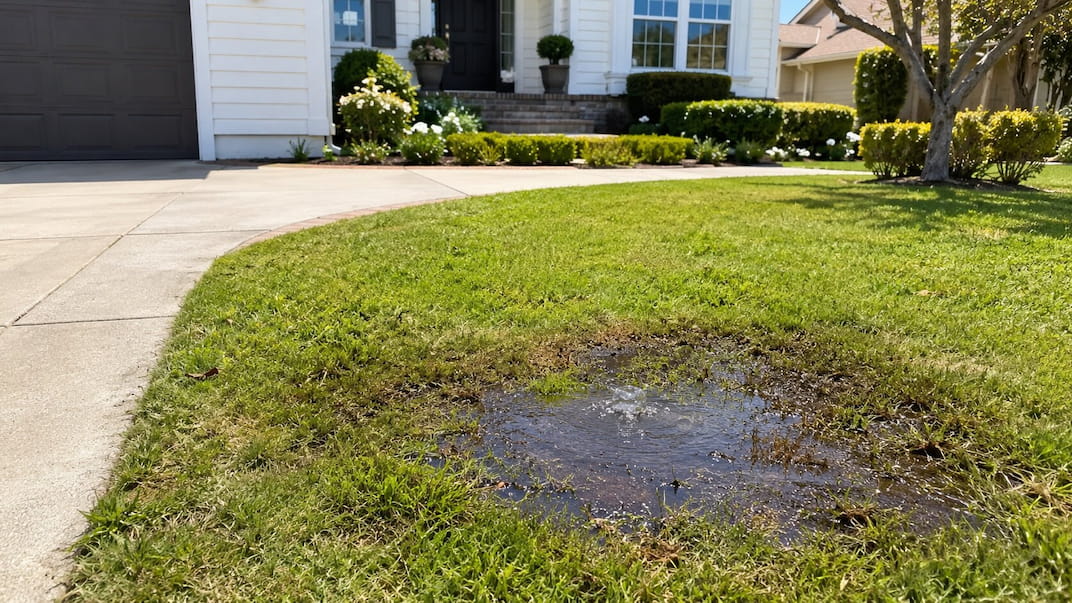
Your water bill jumped last month, and nothing changed in your household routine. There is a patch of grass in the backyard that stays soggy no matter how dry the week has been. Water pressure throughout the house feels softer than it used to. You have checked every faucet, every toilet, every fixture indoors.
Nothing is dripping. Nothing looks wrong.
The problem is not inside your home. It is buried.
Underground water line leaks are among the most disruptive plumbing issues a homeowner or property manager can face, precisely because there is nothing visible to point to. The damage accumulates silently while water saturates the surrounding soil, and in some cases, begins affecting the structural integrity of what sits above it.
The good news is that locating a buried leak does not require tearing up your yard first. Modern underground plumbing leak detection relies on diagnostic equipment that pinpoints the problem before any excavation decision is made.
Why Underground Water Leaks Are Easy to Miss
The Pipe Is Too Deep to See and Too Shallow to Be Safe
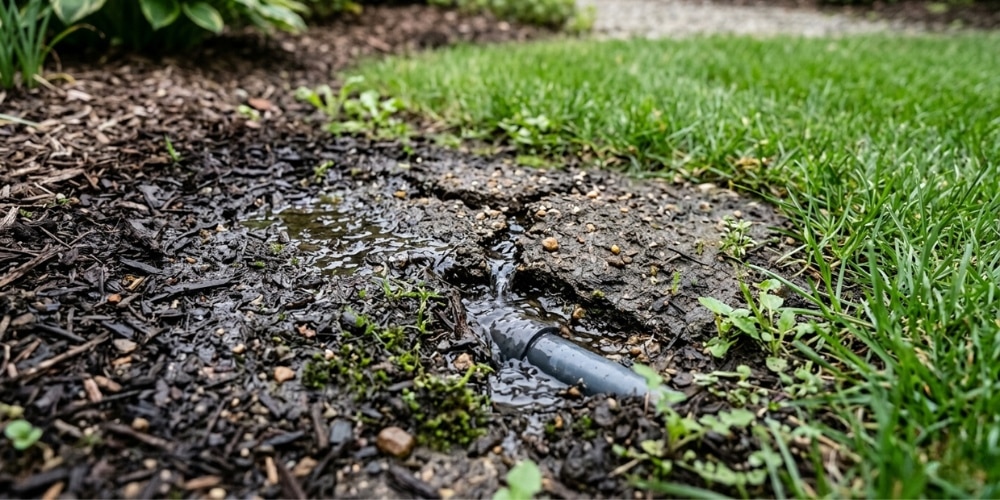
Residential and commercial water supply lines are usually buried 18 inches to several feet below grade. In North Atlanta, where frost depth is less of a concern, lines in Alpharetta, Roswell, and Sandy Springs often sit shallower than those farther north, making them more exposed to soil movement, root intrusion, and gradual corrosion.
Surface Signs Take Weeks or Months to Appear
Small buried leaks can run for weeks or months before visible signs appear. During that time, water can move through soil toward foundations, crawl spaces, or below-slab areas, creating moisture problems away from the actual pipe failure.
The Loss Is Happening at a Scale Most Homeowners Underestimate
Underground water loss is significant nationwide. The United States Environmental Protection Agency’s (EPA) WaterSense program reports that household leaks waste nearly 1 trillion gallons of water each year, while ASCE’s 2021 Infrastructure Report Card estimates 6 billion gallons of treated water are lost daily through leaking pipes. For homes and commercial properties, that means higher utility bills and underground damage that worsens over time.
Signs You May Have an Underground Water Leak
Not every buried leak announces itself the same way. Some homeowners notice one sign clearly. Others notice several at once. The following indicators consistently point toward a potential underground supply line or sewer line issue.
Your Water Bill Spiked Without Any Change in Usage
An unexplained water bill increase is often an early sign of a buried leak. If usage habits, irrigation, and occupancy have not changed, the extra water may be escaping outside.
Yard Patches Stay Wet Even Without Rain
Muddy or waterlogged spots, especially between the building and street, can signal water escaping from a buried supply line. If the same area stays soft or spongy without rain, it is worth checking.
Water Pressure Drops Throughout the Whole House
Whole-house pressure loss is different from one weak fixture. If every tap, shower, and appliance has reduced pressure, the issue may be along the main supply line before it reaches the building.
You Can Hear Water Running With Everything Turned Off
Running or trickling sounds near the meter box or pipe path, while all fixtures are off, mean water may still be moving through the system. This is often easiest to hear near the meter or where the line enters the building.
Driveways or Walkways Are Cracking or Shifting
Leaks beneath concrete can saturate soil and weaken support below driveways, sidewalks, or patios. Cracking, heaving, or soft spots over a pipe path should be investigated, especially without another clear cause.
A Strip of Grass Is Noticeably Greener Than the Rest
A slow underground leak can feed the soil above it, creating a greener or faster-growing strip of grass. If the line follows the buried pipe route, the cause may be below the surface.
The Water Meter Keeps Moving With the Supply Shut Off
Turn off every fixture, appliance, and irrigation zone, then watch the meter dial or digital flow indicator for 10 to 15 minutes. Any continued movement means water is leaving the system somewhere it should not be.
How Does a Plumber Find a Water Leak Underground?
Step 1: Meter Test and Flow Isolation
With all fixtures, appliances, and irrigation turned off, the plumber checks whether the meter dial or digital flow indicator is still registering movement. Any continued movement confirms water is escaping the system. This baseline check determines whether the issue is on the supply side before any equipment is deployed.
Step 2: Pressure Testing the Line
The suspected line is isolated, pressurized to a controlled level, and monitored. A measurable pressure drop over a set time interval confirms the pipe is compromised and helps narrow whether the failure is in the main supply run, a branch line, or a connection point.
Step 3: Sewer Camera Inspection
When the suspected issue involves the sewer or drain line, a flexible camera is fed directly into the pipe through an access cleanout. It transmits live video to a surface monitor, making cracks, root intrusion, joint separation, collapsed sections, and corrosion visible in real time. Findings are documented with video footage, measurements, and written notes before any repair recommendation is made.
Step 4: Acoustic Leak Detection
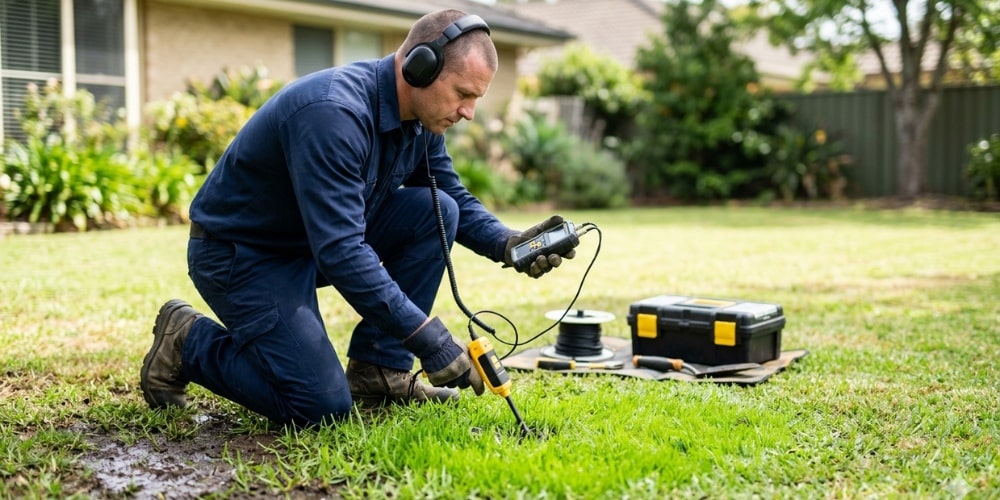
Acoustic listening equipment is placed on the ground surface above the suspected pipe path. Pressurized water escaping through a pipe defect generates a sound frequency and vibration pattern that travels through the soil to the surface. The technician maps signal intensity along the pipe route, and the peak point identifies the leak location below.
Step 5: Leak Correlators on Longer Pipe Runs
On longer water main or supply runs, two sensors are placed at different points along the pipe. The correlator calculates the exact leak location based on the time difference in sound arrival between the two sensors. For commercial properties, multifamily complexes, or municipal water mains in areas like Johns Creek or Dunwoody, this method delivers precise, non-invasive results.
Step 6: Utility Locating Before Any Excavation
If excavation becomes necessary, utility lines must be marked before digging begins to avoid damaging buried gas, electrical, or communication lines.
The Equipment Behind Accurate Underground Plumbing Leak Detection
Understanding the tools involved helps clarify why professional underground leak detection plumbers use precise, non-destructive diagnostic methods.
- CCTV pipe inspection camera: A flexible rod-mounted camera fed into the pipe through an access point. Transmits live interior video to a surface monitor and records findings for documentation.
Learn when a sewer camera inspection can reveal roots, cracks, buildup, or hidden pipe damage before repairs begin.
Read Here →- Acoustic ground microphone: Detects the vibration and sound signature produced by pressurized water escaping through a pipe defect. Allows the technician to map the leak zone at the surface.
- Leak correlator: Two sensors placed at separate points on the line. Uses the time differential of the sound signal arrival to calculate precise leak location, particularly useful on runs longer than 50 feet.
- Pressure gauge and isolation fittings: This confirms pressure loss within a defined section of pipe, separating the affected segment from the rest of the system.
- Pipe and line locator: Traces the exact path of a buried pipe before surface marking or excavation. Used alongside 811 utility flagging on all open-cut work.
Once the Leak Is Located, What Comes Next?
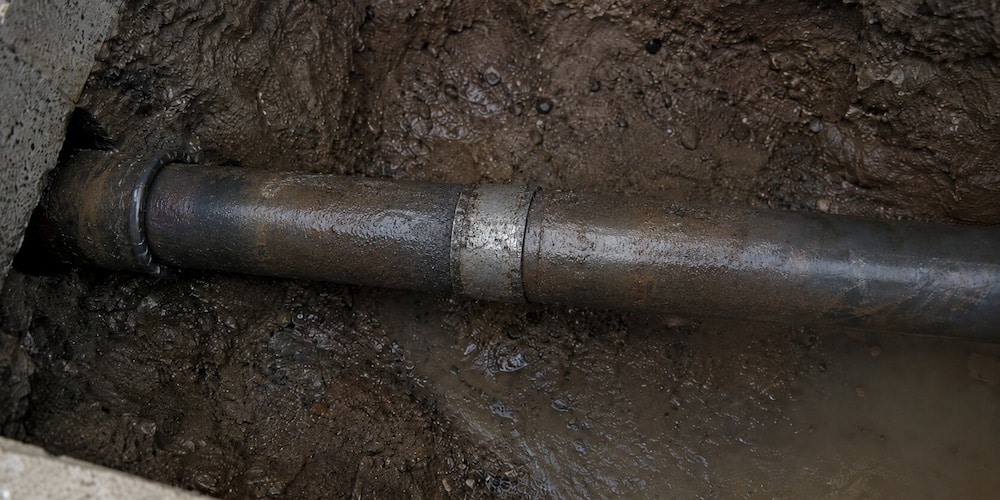
Detection determines the repair path. After the camera inspection and acoustic findings are documented, the technician reviews the pipe’s interior condition, the failure point, and the surrounding soil conditions before any repair method is selected.
Trenchless Repair: When the Pipe Structure Supports It
Where the pipe condition allows, trenchless methods are used to avoid excavation entirely. Pipe lining inserts a resin-saturated liner that cures in place to form a new pipe wall, while pipe bursting pulls a replacement pipe through the existing path, both protecting driveways, landscaping, and hardscaped surfaces above the line.
Open-Cut Repair: When Full Access Is Required
When pipe damage is too severe for trenchless methods or full replacement requires direct access, open-cut repair is the correct approach. All utility locates are coordinated in advance, and trench safety requirements are followed throughout the job.
Slab Leak Repair: Targeted, Not Exploratory
For properties where the water line runs beneath a concrete slab, the diagnostic findings determine exactly where access is needed. Repair is focused on that confirmed point rather than broad excavation across the slab.
Frequently Asked Questions
How do I know if I have a leak underground versus a leak inside my house?
Indoor leaks typically produce visible signs: water stains on ceilings, wet areas under sinks, running toilet sounds, or dripping fixtures. Underground leaks show up differently, through wet yard patches, whole-house pressure loss, or a meter that keeps moving with everything inside turned off. If you cannot find a source indoors and the meter is still registering flow, the leak is likely outside.
How long does underground leak detection take?
Most residential detections are completed within a single site visit. Larger commercial or municipal line diagnostics, particularly those requiring correlator equipment across extended pipe runs, may take longer depending on line length and access conditions.
Can a small underground leak become a major plumbing problem?
Yes. Even a slow leak can gradually saturate soil, weaken surrounding support, and increase water waste over time. Left untreated, small leaks can eventually damage foundations, driveways, landscaping, or underground utility areas. Early detection helps limit both repair costs and property damage.
Does homeowners’ insurance cover underground water leaks?
Coverage depends on the policy and the cause of the leak. Some policies may cover resulting property damage but not the pipe repair itself. Others may exclude underground utility lines entirely. Homeowners should review their policy details or contact their insurance provider directly.
Can tree roots cause underground pipe leaks?
Yes. Tree roots naturally seek moisture and can grow toward small cracks or joints in underground pipes. Over time, roots may widen openings, restrict flow, or break sections of pipe completely. Sewer lines are especially vulnerable to root intrusion.
Suspect a Buried Leak? Get a Camera Inspection First
Underground leaks do not wait. The longer a buried pipe failure goes undiagnosed, the more saturated the surrounding soil becomes, and the more the damage spreads into areas that are harder and more costly to address later.
The right starting point is always a camera inspection and acoustic evaluation before any decision about excavation is made. That diagnostic process protects your property, produces documented findings, and gives you a clear picture of what the repair actually requires.
Zippy Plumber specializes in underground plumbing diagnostics and repair across Alpharetta, GA.
If something feels off with your water pressure, utility bill, or yard, call us to schedule underground plumbing leak detection before hidden water damage spreads beneath your property.