
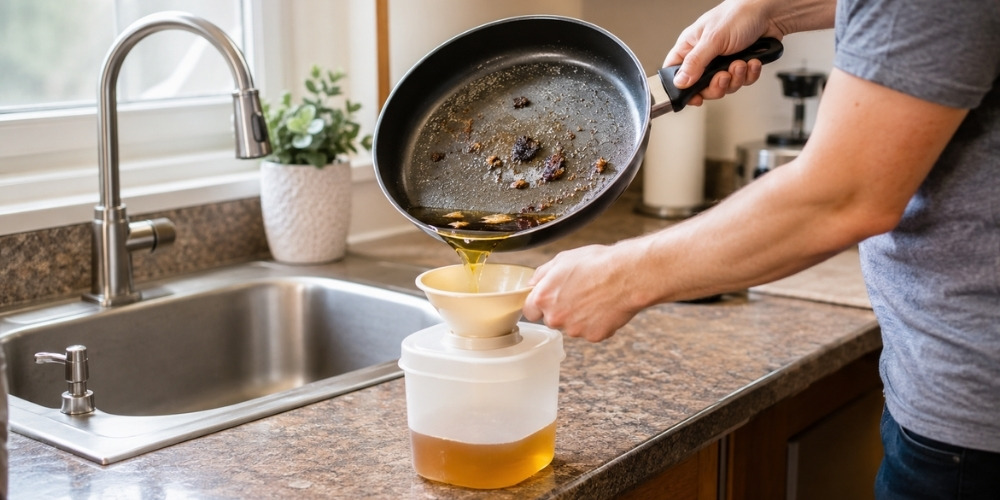
Knowing how to dispose of fats oils grease correctly means keeping those substances out of your drain entirely. Instead, place them in the trash, a sealed container, or a certified recycling program. Knowing how to dispose of bacon grease correctly protects your plumbing. Pouring FOG down the sink is the single most preventable cause of residential sewer backups in the United States.
Table of Contents
- Why FOG Is a Bigger Problem Than Most Homeowners Realize
- What Happens Inside Your Pipes When FOG Enters the Drain
- Safe Disposal Methods for How to Dispose of Fats Oils Grease
- Dishwashers, Hot Water, and Dish Soap: Common FOG Myths
- The Growing Market for Cooking Oil Recycling
- Things to Know
- Protect Your Pipes Before It Costs You More
- Frequently Asked Questions
Why FOG Is a Bigger Problem Than Most Homeowners Realize
Fats, oils, and grease are produced in virtually every American kitchen. You might be pan-frying bacon on a Sunday morning, roasting a chicken, or sautéing vegetables in olive oil. The problem extends far beyond cosmetic or momentary inconvenience. FOG-related blockages in municipal sewer systems cost taxpayers and utility ratepayers real money every year.
To put that in concrete terms, consider this: in 2024 alone, Middlesex and Hudson counties logged more than 400 emergency sewer clear-outs. These clearouts cost ratepayers approximately $3 million, according to Grease Connections (2025). Those costs are driven largely by grease accumulation in pipes. Residential kitchens are a significant contributor alongside commercial sources.
FOG isn’t limited to obvious culprits like frying oil or beef tallow. Additionally, it includes:
- Butter and margarine residue left on pans
- Salad dressings and mayonnaise rinsed off plates
- Dairy fats from cream, cheese, and sauces
- Coconut oil and other plant-based cooking fats
- Meat drippings from roasts and ground beef
Any of these substances can solidify inside your pipes over time. Moreover, they can combine with other waste to form blockages.
What Happens Inside Your Pipes When FOG Enters the Drain
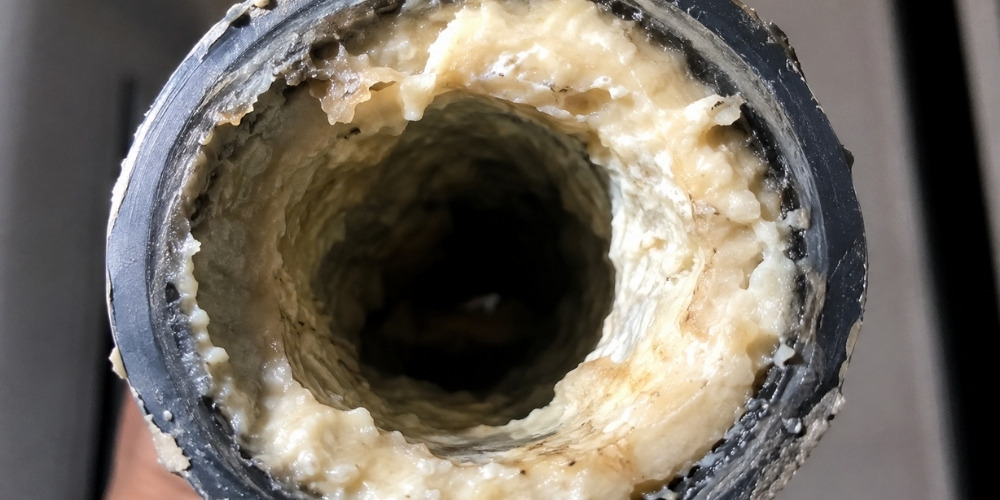
Many homeowners assume that rinsing grease down the drain with hot water is safe. They believe the fat stays liquid during the rinse. However, that assumption is where the damage begins. As soon as the grease moves past the immediate drain, it enters cooler sections of your underground pipe. It then begins to congeal.
Over weeks and months, layers build up. The buildup narrows the pipe’s interior diameter until flow is severely restricted or blocked entirely. What starts as a slow kitchen drain can escalate into a full sewer backup affecting your entire home. At that stage, the clog is no longer inside a fixture trap that you can reach with a plunger. Instead, it may be deep in the underground lateral line running from your home to the street.
Zippy Plumber, based in Alpharetta, GA, specializes in this exact situation. As an underground plumbing specialist, Zippy Plumber handles exterior underground pipe work from the building to the street. Those lateral lines are exactly where accumulated FOG tends to cause the most serious, and expensive, damage.
If you’ve already noticed signs of a slow or backing-up drain, it’s worth reviewing how to unclog kitchen drain before the problem migrates further into your underground system. Catching it early at the fixture level is always less costly than a lateral line excavation.
Additionally, FOG blockages in underground pipes can contribute to pressure irregularities elsewhere in your home’s water system. If you’ve ever wondered what causes low water pressure in your kitchen or bathrooms, partial blockages from accumulated debris should be ruled out. Grease is among the contributing factors.
Safe Disposal Methods for How to Dispose of Fats Oils Grease
There is no single correct method for every type of FOG. The right approach depends on the volume. It also depends on the type of fat or oil and what resources are available in your area. Below is a practical breakdown.
Small Amounts of Solid Fat (Butter, Bacon Grease, Tallow)
For fats that solidify at room temperature, the simplest approach is straightforward. Let the pan cool completely. Then scrape the solidified fat into a sealed container or a lined trash can. Dispose of it with your regular solid waste. Wipe the pan with a dry paper towel before washing to remove any residual film.
If you cook bacon regularly, understanding how to dispose of bacon grease properly is important. Allow it to cool and harden in the pan. Then scoop it into a lidded container and discard it in your trash. Furthermore, some people reuse bacon grease for cooking, which is a practical way to reduce waste.
Larger Volumes of Liquid Cooking Oil
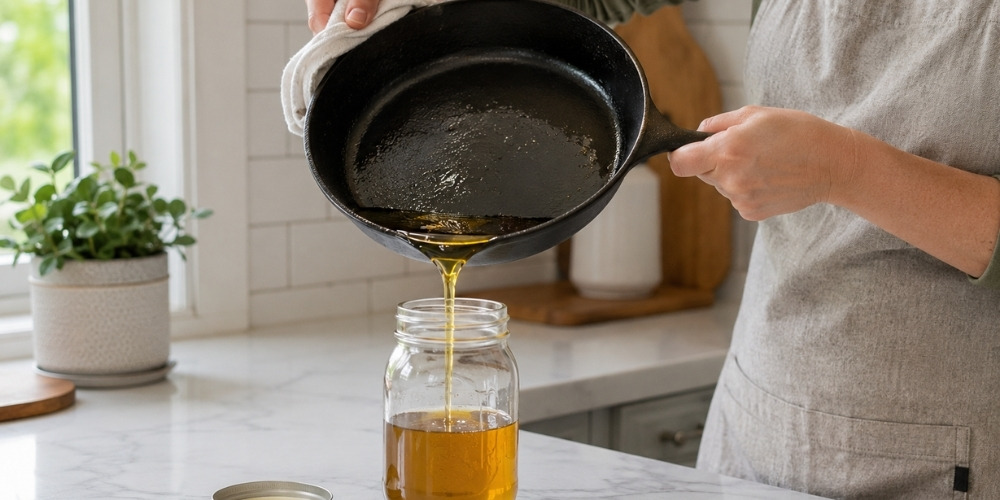
For frying oil that remains liquid at room temperature, such as vegetable, canola, or peanut oil, follow these steps:
- Allow the oil to cool completely before handling.
- Pour it into a sealable container, such as the original bottle it came in or an empty jar.
- Place the sealed container in your regular trash if local guidelines permit.
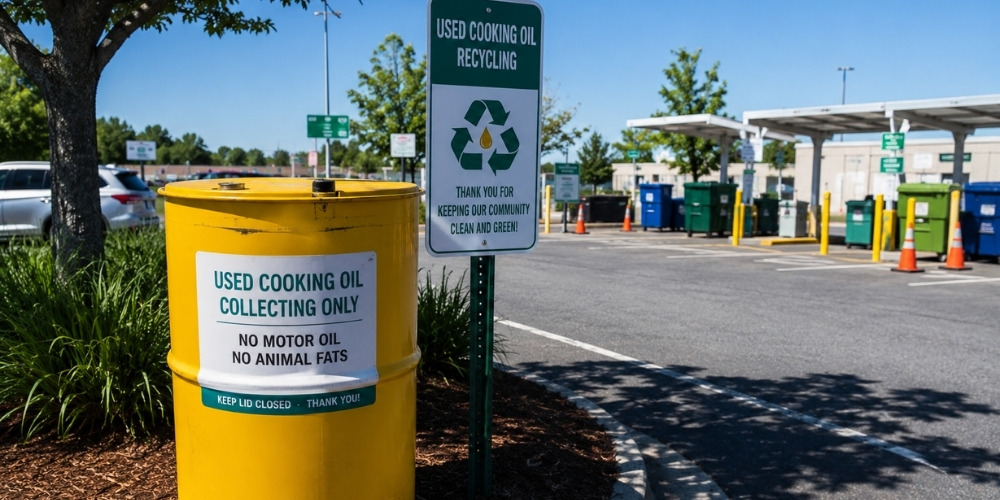
- Alternatively, locate a used cooking oil drop-off site through your municipality or a private recycler.
Many cities, including those in the greater Atlanta metro area, operate household hazardous waste programs. They also conduct cooking oil collection events. Checking your local public works department website is the fastest way to find a site near you.
Grease from Meat Drippings
Meat drippings from roasts or ground beef are a combination of rendered fat and cooking juices. Here’s the proper method: Line a bowl or small container with aluminum foil. Pour the drippings in. Allow them to solidify in the refrigerator. Then wrap up the foil and discard in the trash. Never pour warm drippings directly into a plastic bag, as they can melt through the material.
| FOG Type | Disposal Method | Drain-Safe? |
|---|---|---|
| Bacon grease | Cool, solidify, trash or reuse | No |
| Frying oil (large volume) | Sealed container, trash or recycler | No |
| Butter/margarine residue | Wipe pan, trash | No |
| Meat drippings | Cool, solidify in foil, trash | No |
| Salad dressing residue | Wipe dishes before rinsing | No |
| Used commercial fryer oil | Licensed recycler or renderer | No |
No category of FOG is drain-safe, regardless of temperature or volume.
Dishwashers, Hot Water, and Dish Soap: Common FOG Myths
A persistent belief exists that dish soap and hot water break down grease completely. People assume nothing harmful enters your pipes. However, soap does emulsify grease, meaning it breaks it into tiny droplets suspended in water. It does not eliminate it. Those micro-particles travel into the drain system. They can still accumulate on pipe walls over time, especially in cooler sections of underground laterals.
Research published in ScienceDirect (2024) found important data about grease behavior. Kitchens equipped with dishwashers tend to generate a higher proportion of micro-sized FOG particles compared to those relying solely on handwash sinks. The implication is significant: dishwashers, while effective at cleaning dishes, may actually push more grease into the drain system in a finer, harder-to-trap form.
Similarly, the idea that running very hot water alongside grease “flushes it through” the system is a myth. It may move the grease past your immediate trap. However, it will congeal further down the line where water temperature drops.
If your bathroom drain is running slowly, it may actually be a symptom of a broader blockage. A bathroom sink clog fix can sometimes relieve surface-level symptoms. However, recurring clogs across multiple drains often indicate a deeper obstruction in the main line.
The Growing Market for Cooking Oil Recycling
One encouraging development is that used cooking oil has real commercial value. According to Intel Market Research (2025), the global recycling market for cooking oil and grease was valued at $12.1 billion in 2024. It is projected to grow to $37.4 billion by 2032, reflecting a compound annual growth rate of 18.8%. In the U.S. specifically, America’s cooking oil recycling market already tops $1.6 billion. It is projected to nearly double by 2032, according to Grease Connections (2025).
Much of this demand is driven by the biodiesel and sustainable aviation fuel industries. These industries use recycled cooking oil as a feedstock. That means the oil you’d otherwise pour down your drain has real economic and environmental value. When routed through a proper collection program, it becomes a valuable resource.
Currently, according to IMARC Group (2024), 78.6% of all used cooking oil comes from the commercial sector. This includes restaurants, hotels, and food processing facilities. Residential households are a smaller volume contributor. However, the collective impact of millions of homes is significant, particularly on municipal sewer infrastructure.
For households generating larger volumes, some private recycling companies accept used cooking oil directly from residential customers. Searching for “used cooking oil recycling near me” will surface local options. You can also check with your city’s solid waste department.
The North America FOG market was valued at $10.35 billion in 2024. It is projected to reach $14.35 billion by 2031, growing at a CAGR of 4.6%, according to Verified Market Research (2025). This growth reflects increasing regulatory pressure on municipalities. Pressure on food-service businesses to manage FOG discharge more responsibly is also increasing. A trend will likely filter down to residential compliance requirements in coming years.
Things to Know
- Grease that enters your underground sewer lateral does not just affect your home. It can combine with grease from neighboring properties. Moreover, it creates large-scale blockages in the shared municipal main.
- Running hot water while pouring FOG down the drain delays the problem but does not prevent it. Grease will cool and solidify somewhere in the pipe system.
- Used cooking oil collected through a certified recycler can be converted into biodiesel. This is a cleaner fuel source, giving your kitchen waste a second life.
- Many municipalities fine property owners for grease-related backups that originate from their lateral line. This means the cost is not just a plumbing bill.
- Wiping greasy pans with a paper towel before washing is one of the most effective and lowest-effort ways to reduce FOG entering your drain.
- Gravity separators, which physically separate grease from wastewater before it enters the sewer, are anticipated to hold 41.9% of the FOG removal equipment market share in 2026, according to Persistence Market Research (2026). Residential-scale grease traps are available and worth considering for high-volume cooking households.
Protect Your Pipes Before It Costs You More
When grease builds up in your underground lateral line, the repair isn’t a quick fix. Request a professional assessment from Zippy Plumber if you’re seeing repeated slow drains, gurgling sounds from your fixtures, or sewage backups. These are signs the problem has moved past your indoor plumbing. Instead, it exists in the exterior underground pipe, which is exactly what our team handles. Contact Zippy Plumber today to get a free estimate and protect your underground pipe system before a partial blockage becomes a full emergency.
Frequently Asked Questions
Q: Is it safe to pour grease down the drain if I use boiling water and dish soap?
No, it is not safe to pour grease down the drain even with hot water and dish soap.
Dish soap emulsifies grease into tiny particles. However, those particles remain in the wastewater. They can still accumulate on cooler pipe walls further down your lateral line. Over time, this buildup is just as damaging as pouring undiluted grease.
Q: Can I compost cooking oil or grease?
Small amounts of plant-based cooking oils can be composted, but animal fats should generally be kept out of home compost bins.
Animal fats can attract pests, create odors, and disrupt the composting process. Plant-based oils in small quantities are more manageable. However, large amounts of any oil can coat organic material and slow decomposition. Check your local composting program guidelines before adding FOG to a bin.
Q: What should I do if grease has already been poured down my drain repeatedly?
You should have your drain line inspected as soon as possible, especially if you’ve noticed slowdowns or gurgling.
If the buildup is inside a fixture trap or the first few feet of drain pipe, a professional hydro-jetting service can often clear it. If the blockage has moved into the underground lateral, a more comprehensive inspection is needed. Potentially, pipe rehabilitation may be necessary to fully resolve the issue.