
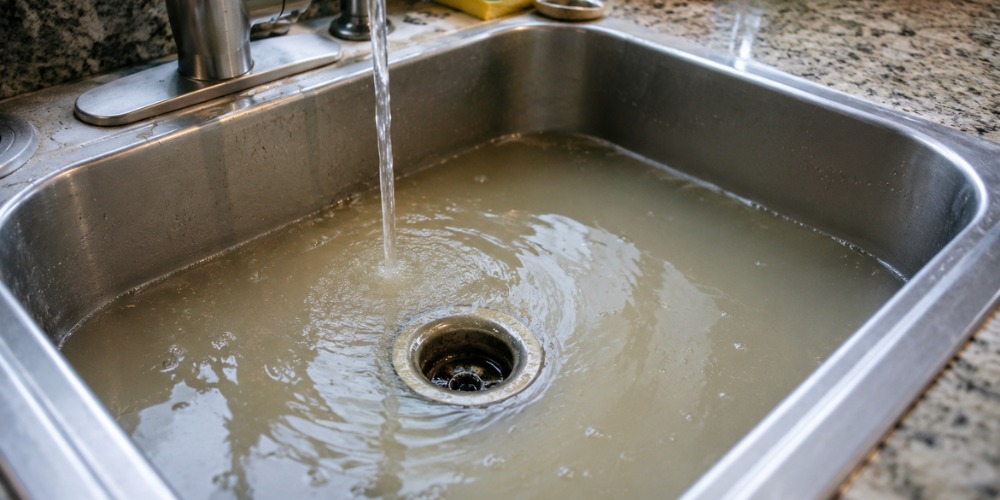
A slow kitchen sink drain is almost always caused by a partial blockage inside the drain line, most commonly from grease, food debris, or soap scum accumulating over time. In some cases, the issue runs deeper into your home’s underground pipe system, where slope problems or root intrusion can restrict water flow.
What’s In This Guide
- What Actually Causes a Slow Kitchen Drain
- The Role of Grease and Food Waste
- Pipe Slope and Underground Drainage Problems
- How to Tell If the Problem Is Inside or Outside
- Things to Know
- Stop Waiting for a Full Backup: Act Before It Gets Worse
- Frequently Asked Questions
What Actually Causes a Slow Kitchen Drain
Before reaching for a bottle of drain cleaner, it helps to understand what is actually happening inside your pipes. A slow kitchen sink drain is typically the result of one or more of the following conditions building up over months or years:
- Grease and fat deposits: Cooking oils, meat fats, and butter solidify inside drain lines as they cool.
- Food particle accumulation: Even with a garbage disposal, small food particles cling to pipe walls and narrow the passage over time.
- Soap scum buildup: Dish soap can combine with hard water minerals to create a sticky residue that coats the interior of pipes.
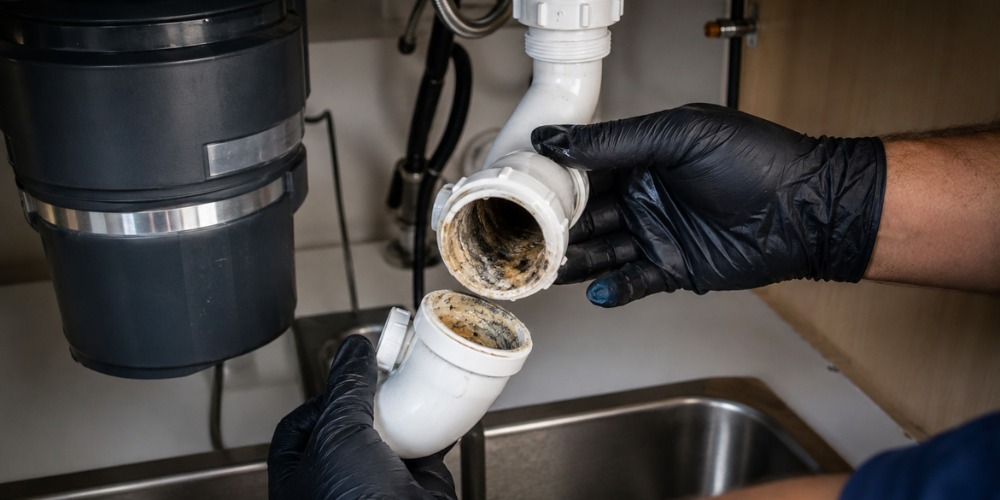
- P-trap blockage: The curved section of pipe beneath your sink traps debris as a design feature but requires periodic cleaning.
- Venting issues: A blocked or improperly installed drain vent can create negative air pressure that slows drainage noticeably.
Each of these causes a different level of urgency. P-trap blockages are a quick DIY fix. Venting problems and deep pipe issues typically need professional evaluation.
The Role of Grease and Food Waste
Grease is the single most common reason a kitchen sink drains slowly. A 2022 UK Drainage Habits Survey found that 65% of respondents admitted to pouring fat or oil down the sink, and 97% expressed concern about putting the wrong things down their drains. While that survey was conducted in the UK, the behavior it captures reflects a widespread habit in American households as well.
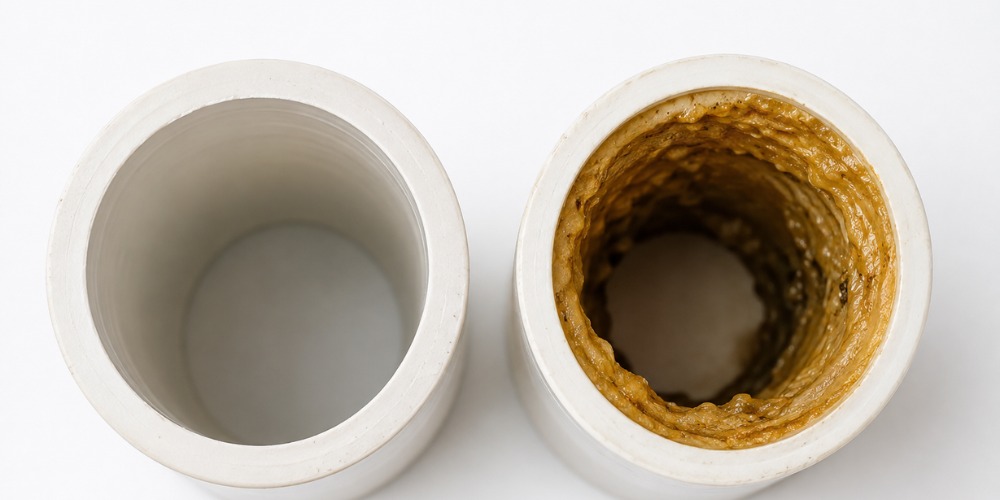
The problem with grease is that it does not stay liquid. Once it travels past the warm water in your sink, it begins to cool and congeal on pipe walls. Over time, repeated pours create a thick, waxy lining that steadily reduces the pipe’s interior diameter. If you want to avoid this entirely, learning how to dispose of bacon grease properly is one of the simplest preventive steps any homeowner can take.
Food debris compounds this problem. Even households with a garbage disposal should avoid sending fibrous vegetables, starchy foods, or coffee grounds down the drain. These materials either pass through the disposal and settle in the drain line, or they combine with grease deposits to accelerate clogging.
The drain cleaning products market tells a revealing story about how common this problem actually is. According to Market Research Future (2024), the global drain cleaners market was valued at $6.796 billion in 2024 and is projected to grow at a 3.91% CAGR through 2035. That level of demand reflects just how routinely residential drains need intervention.
Pipe Slope and Underground Drainage Problems
Not every slow drain is caused by what goes into it. Sometimes the issue is structural, specifically the angle at which your drain pipes were installed or have shifted over time.
Drain pipes require a consistent downward slope to carry wastewater toward the sewer. When that slope is too shallow, water moves slowly and solid material settles inside the pipe rather than being carried out. According to Drains Unlimited (2025), 73% of inspected commercial drainage facilities had slopes below minimum requirements, with another 15% classified as substandard. While this data reflects commercial installations, the underlying physics apply equally to residential drain lines.
Drains Unlimited also reported that incorrect drain slopes are responsible for over $2.8 billion in annual maintenance costs, contamination incidents, and facility shutdowns across North America. For homeowners, the financial consequences are smaller in scale but no less disruptive, especially when a persistent slow drain turns into a full backup.
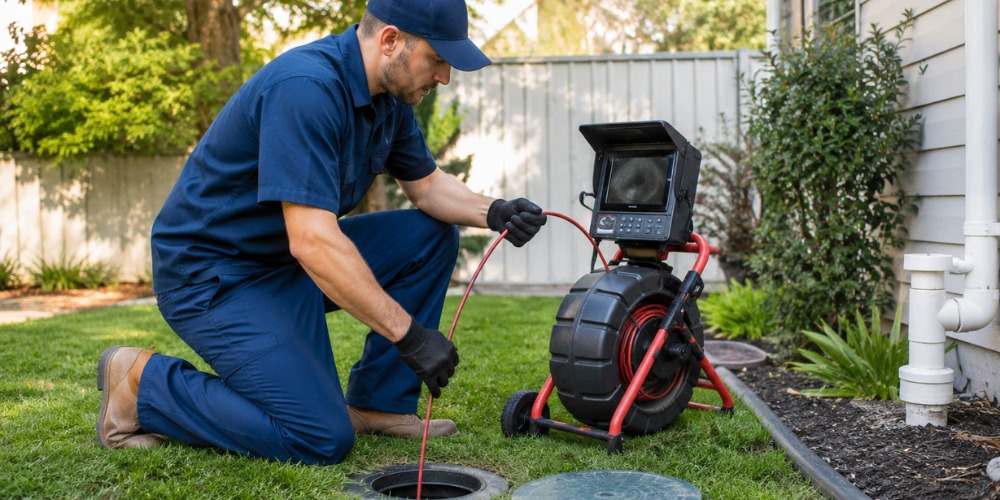
Beyond slope, underground pipes can develop slow drainage due to tree root intrusion, pipe corrosion in older cast iron or clay lines, or joint separations that allow soil to enter the pipe. These are not problems a plunger or chemical cleaner will resolve. This is also precisely the type of exterior underground pipe issue that requires a specialist.
At Zippy Plumber, we focus exclusively on underground pipe work from the building to the street in Alpharetta, GA. If your slow drain is tied to a compromised exterior line, that is the scope we handle. For indoor fixture issues, a general plumber would be the right call first.
How to Tell If the Problem Is Inside or Outside
Diagnosing where a slow drain originates matters because the solution changes completely depending on the answer.
Signs the problem is inside your home:
- Only one sink drains slowly while others work fine
- The P-trap or garbage disposal shows visible buildup
- Pouring boiling water or using a drain snake clears the problem temporarily
Signs the problem may be in the exterior line:
- Multiple drains throughout the house drain slowly at the same time
- You notice gurgling sounds in other fixtures when the kitchen runs
- The slow drain has persisted for months despite repeated cleaning
If you are dealing with a clog confined to the sink itself, we recommend reviewing resources on how to unclog kitchen drain techniques before calling a plumber. Many indoor blockages are manageable with a drain snake or a baking soda and vinegar flush.
It is also worth noting that drainage slowdowns can sometimes be confused with water pressure issues. If water seems slow coming out of the faucet as well as draining, understanding what causes low water pressure may help you separate the two problems clearly. Similarly, if you are also dealing with a bathroom sink clog fix, multiple affected drains are a stronger indicator of a shared underground line issue.
Things to Know
- Chemical drain cleaners can provide temporary relief but may damage older pipes, particularly PVC and metal, with repeated use.
- The sewer and drain cleaning services market is expected to grow from $5.566 billion in 2024 to $8.415 billion by 2031, according to The Insight Partners (2025), reflecting just how frequently professional intervention is needed.
- A slow drain that returns within a few weeks of cleaning almost always points to a deeper structural issue in the line.
- Tree roots are a common but underestimated cause of recurring slow drains, particularly in homes with large trees near the sewer lateral.
- Hard water minerals can accelerate pipe scaling, especially when combined with soap residue and food particles.
Stop Waiting for a Full Backup: Act Before It Gets Worse
A slow kitchen sink drain rarely fixes itself, and waiting usually means a more expensive repair later. If you have tried standard DIY methods without lasting results, it is time to get a professional assessment of your drain line. Request a free estimate from Zippy Plumber today if you suspect the issue runs outside your home’s foundation. Contact us now to schedule your underground pipe inspection before a slow drain becomes a complete sewer backup.
Frequently Asked Questions
Q: Can I fix a slow kitchen drain without calling a plumber?
In many cases, yes, particularly when the clog is in the P-trap or upper drain line.
Start by removing and cleaning the P-trap, then try a drain snake or a baking soda and white vinegar flush. If the drain clears and stays clear for several weeks, a professional visit is likely unnecessary.
Q: How often should I clean my kitchen drain to prevent slow drainage?
A basic preventive cleaning every one to two months is a reasonable schedule for most households.
Pouring boiling water down the drain weekly can help flush minor grease deposits before they accumulate. Homes with heavy cooking activity may benefit from more frequent cleaning.
Q: Why does my kitchen sink drain slowly only at certain times of day?
This can indicate a partial blockage that worsens under high-volume use, or a venting issue that creates pressure problems during peak flow.
If the problem is consistent with meal preparation and cleanup times, food and grease buildup is the most likely cause. A plumber can use a camera inspection to confirm which is responsible.
Q: Is a slow kitchen drain a sign of a bigger sewer problem?
It can be, particularly if multiple drains in the home are affected simultaneously.
A single slow kitchen drain usually points to a localized blockage. When the problem appears across multiple fixtures, a blocked or damaged sewer lateral is a more likely culprit and warrants a professional camera inspection.
Q: Will drain cleaning chemicals actually fix a slow kitchen drain?
Chemical cleaners can dissolve partial blockages temporarily but are not a permanent or structural fix.
They work best on fresh, minor grease clogs and are less effective against compacted debris or root intrusion. Repeated use on older pipes can cause corrosion, so they should be used sparingly and only as a short-term measure.