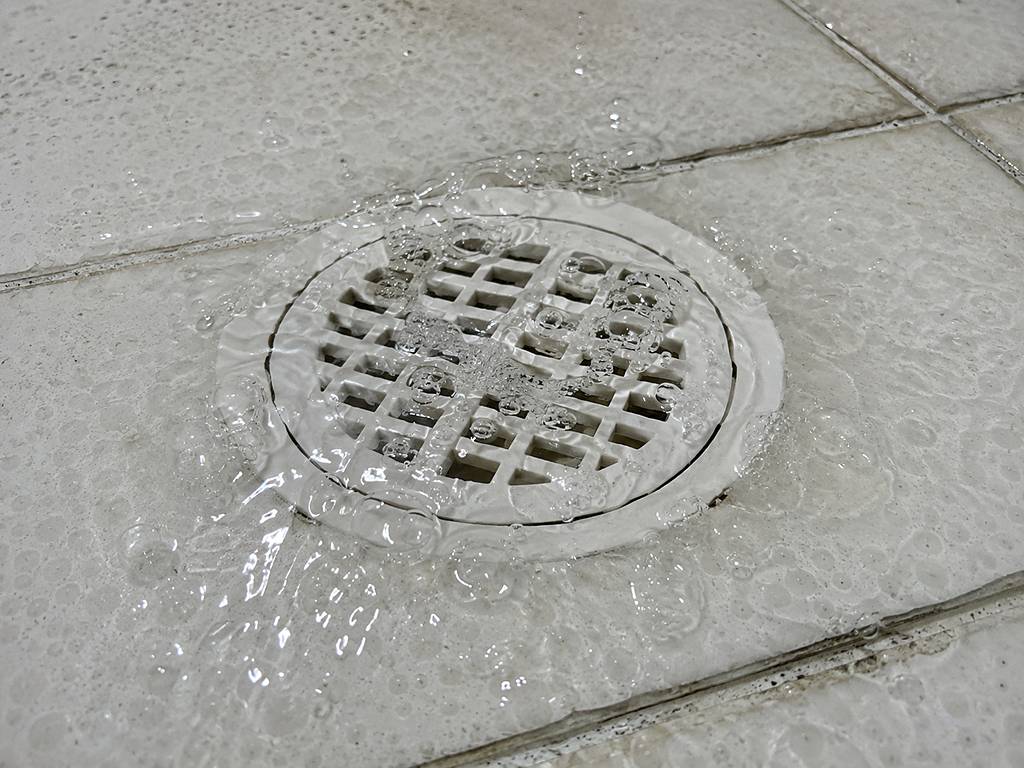
A main sewer line clog is a blockage in the single pipe that carries all wastewater from your home to the municipal sewer system or septic tank. Understanding how to unclog a main sewer line is essential because, unlike isolated drain clogs, a main line blockage affects every fixture in the house simultaneously. This makes it one of the more serious plumbing problems a homeowner can face.
Table of Contents
- How to Spot a Main Sewer Line Clog
- What Causes Main Sewer Line Blockages
- DIY Methods for Unclogging and Their Real Limits
- Professional Methods for Clearing the Main Line
- What It Actually Costs to Fix a Main Sewer Line Clog
- How Underground Pipe Condition Affects Your Options
- Preventing Future Blockages
How to Spot a Main Sewer Line Clog
A single slow drain is usually an isolated problem. However, a main line blockage produces a pattern that is impossible to miss once you know what to look for.
Multiple drains back up at the same time. Flushing a toilet causes water to gurgle up in a nearby tub or shower. Running the washing machine pushes wastewater into a floor drain or toilet.
Additional warning signs include:
- Raw sewage odors coming from floor drains or clean-out access points
- Gurgling sounds in drains when water is used elsewhere in the house
- Sewage backup in the lowest fixtures first, typically a basement toilet or floor drain
- Water pooling around a clean-out cap in the yard
If you are experiencing symptoms across two or more fixtures, stop using water-heavy appliances immediately. Therefore, have the line inspected before the situation worsens.
What Causes Main Sewer Line Blockages
Understanding what triggers a main line clog shapes how you approach clearing it and preventing recurrence.
Grease and fat accumulation is a leading cause. Grease does not travel cleanly through pipes. It coats pipe walls over time, narrowing the interior diameter until flow slows to a trickle. This is exactly why knowing how to dispose of bacon grease correctly matters. Pouring it down any drain eventually contributes to the buildup that reaches the main line.
Tree root intrusion is the other primary culprit in residential settings. Roots follow moisture, and sewer pipes are a reliable moisture source. Clay and cast-iron pipes from older construction are especially vulnerable because their joints are not watertight. Roots enter at joints, then grow inside the pipe until flow is restricted or blocked entirely.
Aging pipe infrastructure compounds both issues. According to ASCE’s 2025 Infrastructure Report Card, over 23% of pipelines in the U.S. are over 100 years old. Deteriorated pipe walls trap debris more readily. In addition, corroded joints create multiple entry points for roots.
Non-flushable items flushed or washed down drains are a third category. Wipes marketed as “flushable,” paper towels, and feminine hygiene products do not break down. Moreover, these items accumulate at bends or partial blockages already forming in the line.
DIY Methods for Unclogging and Their Real Limits
For isolated fixture clogs, DIY methods are often reasonable starting points. A bathroom sink clog fix involving a plunger or drain snake typically takes under an hour. Similarly, knowing how to unclog a kitchen drain with hot water and a drain snake can resolve minor grease buildup without calling anyone.
The picture changes significantly when the main sewer line is involved.
Plungers work on fixture-level clogs by creating pressure differentials in a short section of drain. However, against a blockage 30 to 100 feet away in a 4-inch main line, a standard plunger generates almost no useful force.
Chemical drain cleaners are not appropriate for main line clogs. These products are caustic, and they sit in standing water rather than reaching a deep blockage. They can damage pipe material, particularly older clay or cast-iron pipe. Moreover, they create safety hazards for anyone who later handles the standing water.
Consumer-grade drain snakes (typically 25 to 50 feet) can sometimes reach a partial clog near the clean-out access. However, they lack the torque and length to clear a root mass or hardened grease deposit deep in a main line.
What DIY can reasonably accomplish: locating the clean-out access point in your yard or basement, confirming all fixtures are affected (confirming it is a main line issue rather than a branch line), and stopping water use to prevent sewage from backing up further into the house. Beyond that, professional equipment and diagnosis are the appropriate path.
Professional Methods for Clearing the Main Line
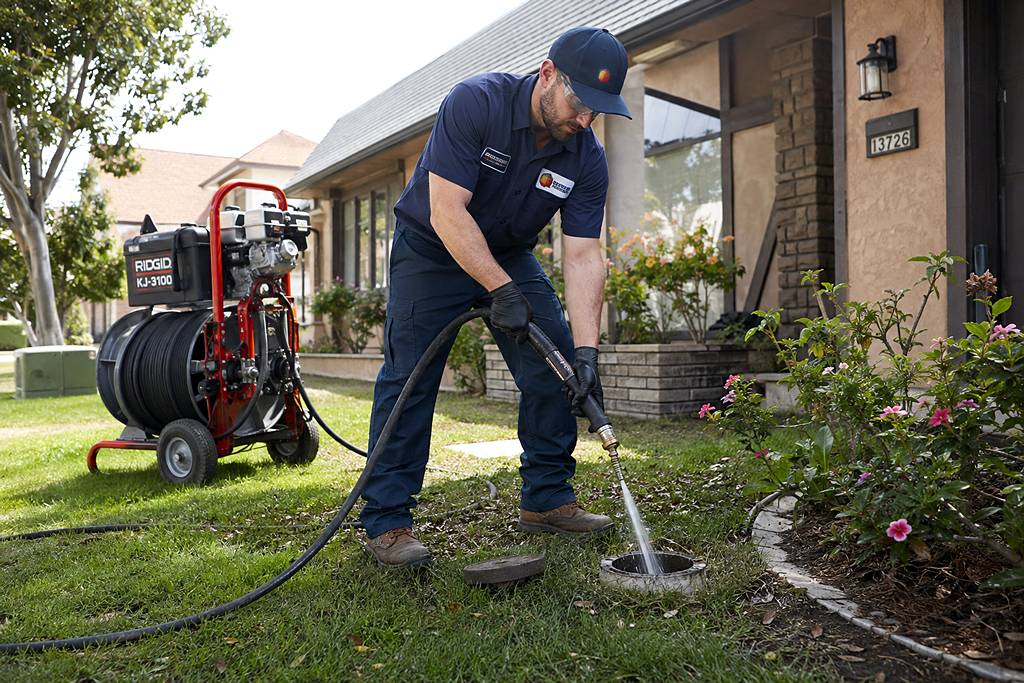
Licensed plumbers and sewer specialists use two primary methods, often in combination.
Mechanical snaking (auger): A professional-grade sewer auger runs a rotating cable through the main line to cut through soft clogs. It removes grease accumulation and smaller root masses. This method is effective for partial blockages. Therefore, it is typically the first step in clearing a main sewer line.
Hydro jetting: High-pressure water, delivered at pressures up to 4,000 PSI, scours the interior walls of the pipe. Hydro jetting removes grease coating, flushes debris, and cuts through established root intrusions more thoroughly than mechanical snaking alone. It is particularly effective for lines that have recurring problems from grease buildup.
Video camera inspection: Before choosing a method or recommending repairs, a reputable plumber should run a camera through the line. Video inspection confirms the blockage type, pinpoints its location, and reveals pipe condition. This step is not optional for anything beyond a straightforward soft clog. According to Angi’s 2026 pricing data, video inspection costs between $200 and $1,300 depending on line length and access difficulty.
Pipe repair or replacement: If the camera reveals collapsed pipe, severe root damage, or pipe displacement, clearing the clog is only a temporary fix. In these cases, the underlying pipe condition requires repair. A specialized underground plumbing specialist typically handles this work rather than a general plumber.
What It Actually Costs to Fix a Main Sewer Line Clog
Cost varies significantly based on the method required, the severity of the blockage, and your location.
According to Angi’s 2026 data, the national average main sewer line clog repair cost is $380. The range spans from roughly $99 for snaking a small, accessible clog to $1,600 for video inspection combined with hydro jetting on a major blockage.
| Method | Typical Cost Range | Best For |
|---|---|---|
| Snaking / Auger | $99 to $250 | Soft clogs, minor grease, accessible blockages |
| Hydro Jetting | $300 to $600 | Grease buildup, recurring clogs, root debris |
| Video Inspection | $200 to $1,300 | Diagnosing blockage type and pipe condition |
| Snaking + Inspection | $300 to $700 | First-time diagnosis on unknown blockage |
| Hydro Jetting + Inspection | $500 to $1,600 | Severe or recurring blockages |
| Pipe Repair / Lining | Varies significantly | Collapsed, cracked, or root-damaged pipe |
Note that these figures represent service costs only. If the main line clog is caused by deteriorated pipe, repair costs will be separate. They depend on the extent of damage, pipe depth, and access requirements.
It is also worth noting that symptoms you might attribute to a clog can sometimes have other explanations. Understanding what causes low water pressure in your home’s system is useful context before assuming the main line is the problem.
How Underground Pipe Condition Affects Your Options
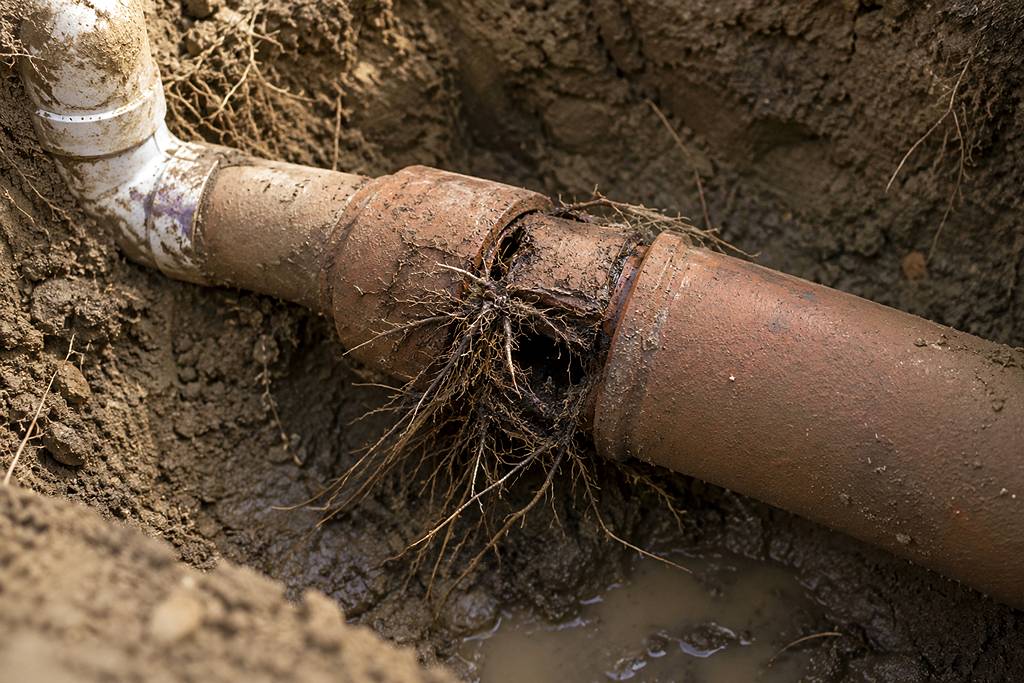
This is where a main sewer line situation differs most sharply from a fixture-level clog. The pipe running from your foundation to the street is underground, typically 4 to 6 feet deep, and not visible without specialized equipment.
At Zippy Plumber, we work exclusively on underground plumbing from the building to the street. That scope exists because exterior underground pipe work requires different equipment, excavation knowledge, and permitting than indoor fixture repairs. General plumbers handle the interior side. Underground specialists handle the lateral running to the municipal connection.
This distinction matters practically: if a video inspection shows that your main line is cleared but the pipe has sustained structural damage, the clearing alone will not hold. Roots will re-enter through cracks. Additionally, debris will continue collecting at compromised sections. In these cases, options include pipe lining (a trenchless method that installs a new interior surface without full excavation), pipe bursting (which replaces the old pipe by pulling a new one through), or traditional open-cut replacement.
The ASCE 2025 Infrastructure Report Card noted that the average number of collection system failures for combined water utilities increased from 2 to 3.3 per 100 miles of pipe over the last decade. That trend reflects the national reality that aging infrastructure is increasingly failing, not just clogging. Homeowners with pipes from pre-1980 construction should treat any main line clog as an opportunity. Therefore, assess overall pipe condition, not simply to clear the immediate blockage.
The sewer repair services market reflects growing demand driven by exactly this reality. According to Report Prime (2024), the Sewer Repair Services Market is projected to grow from $38.23 billion in 2024 to $61.79 billion by 2031, at a CAGR of 7.10%. This growth is driven substantially by aging infrastructure requiring repair and replacement across the U.S.
Preventing Future Blockages
Once the immediate problem is resolved, a few consistent practices significantly reduce the risk of recurrence.
Manage what goes down drains. Grease, oil, and fat should never be rinsed down any drain. Paper products other than standard toilet paper should go in the trash. These are not complicated rules. However, they are consistently ignored, and they cause consistently preventable clogs.
Schedule periodic inspections if your home is older. Homes built before 1970 often have clay or cast-iron sewer laterals. A camera inspection every few years gives you advance warning of root intrusion or pipe degradation before a full blockage develops.
Know where your clean-out is. Having easy access to the main clean-out (usually a capped pipe near the foundation or in the yard) speeds up professional service when you need it. In addition, it helps identify main line problems faster.
Address slow drains promptly. A slow drain that persists after basic cleaning at the fixture level can indicate partial blockage beginning in the main line. Catching it early, before it becomes a complete stoppage with sewage backup, is far less disruptive and less expensive.
Consider a root treatment if trees are near your sewer lateral. A licensed plumber can apply a foaming root inhibitor through the clean-out once or twice a year. This does not kill the tree and does not remove existing roots. However, it slows new root growth into the pipe and reduces how quickly intrusion recurs after mechanical clearing.
Things to Know
- A main sewer line clog affects every drain in the house simultaneously, not just one fixture. If only one sink or toilet is slow, the problem is almost certainly in a branch line, not the main lateral.
- Chemical drain cleaners cannot reach a deep main line blockage. They pool in standing water near the fixture, contribute nothing to clearing a clog 40 to 80 feet away, and can corrode older pipe material in the process.
- Your homeowner’s insurance policy typically does not cover sewer line clogs caused by normal wear, root intrusion, or grease buildup. Some policies offer optional sewer line riders, but coverage for the lateral between your home and the street varies significantly by insurer and policy.
- The clean-out access point is your starting advantage. A plumber working from an accessible clean-out can clear a clog faster and at lower cost than one who has to pull a toilet or locate a buried access point first. Know where yours is before you need it.
- Hydro jetting is effective but not always appropriate. On pipes that are already structurally compromised, high-pressure water can worsen existing cracks or displace fragile joints. A camera inspection before jetting is the responsible sequence, not an upsell.
- A cleared clog is not the same as a repaired pipe. If tree roots or pipe deterioration caused the blockage, the cleared line will clog again on the same timeline unless the underlying structural issue is addressed.
Get a Professional Assessment Before Your Main Line Makes the Decision for You
A main sewer line clog that goes undiagnosed or gets treated with the wrong method can escalate quickly from a slow drain to raw sewage backing up inside your home. At Zippy Plumber, we specialize exclusively in underground plumbing from the foundation to the street, which means we focus entirely on the section most homeowners cannot see and most general plumbers do not handle. Request a free estimate today if you are in the Alpharetta, GA area and suspect your main sewer lateral is the source of your drainage problems. Call or submit your information online and we will get back to you with an honest assessment of what your line actually needs.
Frequently Asked Questions
Q: Can I unclog a main sewer line myself without calling a plumber?
In most cases, a true main sewer line clog requires professional equipment and cannot be effectively cleared with consumer-grade tools.
A homeowner can confirm the problem is in the main line, locate the clean-out access point, and stop water use to prevent backup from worsening. Beyond that, the length of the line and the torque required to cut through grease or roots put this firmly in professional territory. Additionally, attempting to force a consumer snake through a main line without knowing the blockage type can damage fragile pipe. As a result, it may push debris further down the line.
Q: How long does it take a plumber to unclog a main sewer line?
Most main sewer line clogs are cleared within one to three hours once a plumber is on site, though inspection and pipe repair work can extend that timeline significantly.
A straightforward soft clog cleared by snaking is typically the fastest scenario. If the plumber runs a camera first, which is the recommended approach, add 30 to 60 minutes for the inspection. If hydro jetting is required or if the camera reveals structural damage that needs to be addressed separately, the work may span multiple visits. Emergency after-hours service also affects scheduling and total time on site.
Q: How do I know if my main sewer line is clogged or if it is a venting problem?
The key difference is that a venting problem typically causes gurgling and slow drains without sewage backup, while a main line clog almost always produces backup in the lowest fixtures.
A blocked vent stack prevents air from entering the drain system properly. This creates negative pressure that pulls water out of fixture traps and causes gurgling sounds. It can mimic early-stage main line symptoms. However, the reliable distinction is sewage backup: if wastewater is physically coming up through a floor drain, tub, or toilet, the main sewer line is the more likely cause. A camera inspection resolves the question definitively when symptoms are ambiguous.
Q: How often should a main sewer line be cleaned or inspected?
For most homes, a professional inspection every two to three years is a reasonable baseline, with more frequent cleaning if the property has large trees near the sewer lateral or a history of recurring clogs.
Homes built before 1970 with clay or cast-iron laterals warrant closer attention because those materials are more vulnerable to root intrusion and joint deterioration. A proactive camera inspection costs far less than emergency service after a full backup. If your last inspection was more than five years ago and you have never had the line cleaned, scheduling one now is a sound decision regardless of whether you are currently experiencing symptoms.
Q: What is the difference between snaking and hydro jetting for a main sewer line clog?
Snaking uses a rotating cable to cut through or pull out a blockage, while hydro jetting uses high-pressure water to scour the entire interior surface of the pipe.
Snaking is faster, less expensive, and appropriate for soft clogs and most root intrusions that have not yet heavily coated the pipe walls. Hydro jetting is more thorough and is the better choice when grease has accumulated along a long section of pipe. Additionally, it is the better choice when a recurring clog suggests the line was never fully cleared by snaking alone. The two methods are not interchangeable, and the right choice depends on what the camera inspection reveals about the nature and location of the blockage.