
What’s In This Guide
- What Counts as Underground Plumbing?
- Why Exterior Pipe Problems Need Different Equipment Than Indoor Repairs
- Warning Signs of an Underground Pipe Problem
- How Underground Pipe Diagnosis Works
- Repair Methods: Trenchless vs Open-Cut
- What Affects the Cost of an Underground Pipe Repair
- When to Call a Professional for Underground Plumbing Issues
- Frequently Asked Questions
- Ready to Get an Underground Plumbing Estimate?
A slow drain, a soggy patch of lawn, or an unexplained jump in your water bill can point to a problem underground rather than inside the house. When homeowners in Alpharetta search for plumbing services near me, the issue often involves a buried sewer lateral or water service line that requires specialized equipment beyond standard drain clearing tools.
Underground pipe problems don't respond to the same tools used on indoor fixtures. Locating a defect or leak buried several feet underground, under a driveway or mature landscaping, may require camera technology, electronic locating, pressure testing, acoustic leak detection, and repair methods built specifically for exterior work.
Quick Facts
- Camera inspection pinpoints defects in sewer lines before any digging begins.
- Trenchless methods can repair or replace qualifying sewer and water lines with minimal yard disruption.
- Georgia law requires contacting Georgia 811 before mechanized digging or excavation work.
- Cast iron, clay, PVC, copper, and polybutylene pipes age and fail in different ways.
- Sudden water bill spikes can indicate an underground leak, but indoor fixtures and irrigation systems should also be ruled out.
What Counts as Underground Plumbing?
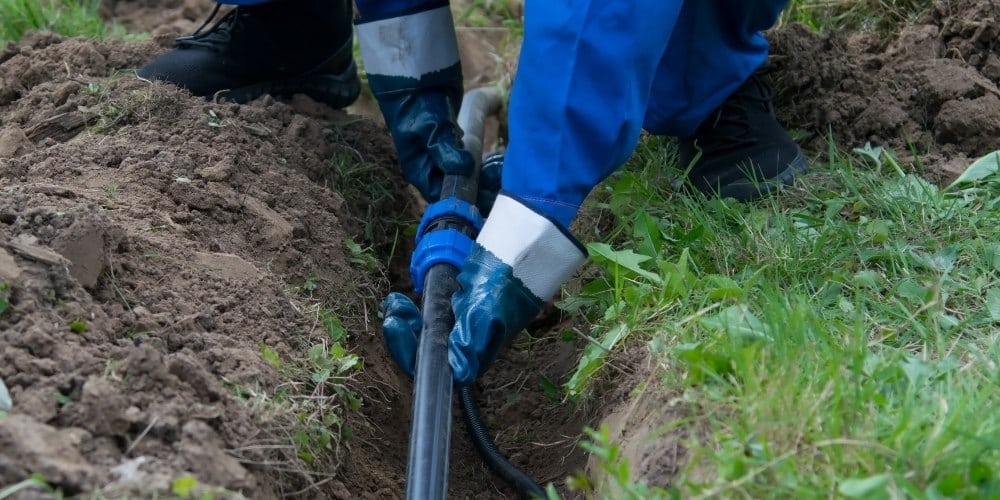
Underground plumbing services focus on exterior buried piping serving a property, including sewer laterals, water service lines, exterior cleanouts, and certain underground yard drainage piping. The exact connection point and responsibility for portions of these systems can vary by utility and municipality.
This infrastructure is fundamentally separate from indoor plumbing fixtures. Fixing a leaking faucet or replacing a toilet valve involves easily accessible internal components. Addressing a collapsed sewer line beneath a paved driveway or remediating a leaking underground water service line requires specialized diagnostic equipment, excavation equipment, and trained professionals experienced in underground utility work and specialized repair technologies.
Properties in North Atlanta and Alpharetta may feature cast iron, vitrified clay, polybutylene, copper, or PVC piping, often reflecting different eras of construction or prior partial repairs. Each material degrades differently under local soil and environmental conditions, directly influencing the choice of diagnostic protocols and restoration methods.
Why Exterior Pipe Problems Need Different Equipment Than Indoor Repairs
Standard residential plumbing tools are built for open, easily accessible spaces inside the home. Underground utility pipes are concealed, buried several feet deep, and subject to external environmental loads. A plumber cannot visually inspect a structural crack in a buried sewer lateral or pinpoint a leak in an underground water service line using basic hand snakes or visual inspection alone.
Three factors make exterior work fundamentally different:
Depth and Access
Buried utility lines lie beneath lawns, hardscaping, driveways, and structural foundations. Inspecting and locating these lines without disruptive digging may require sewer cameras, electronic transmitters (sondes), ground microphones, pressure testing equipment, or acoustic leak detection systems.
Soil and Terrain Conditions
North Georgia commonly has clay-heavy soils that retain moisture and can experience movement as conditions change. Settlement and soil movement can place stress on buried piping and joints. Evaluating pipe offsets, breaks, corrosion, or other underground damage requires diagnostic and repair tools designed for exterior work.
Site Protection
Using diagnostic and locating equipment can help narrow the location and depth of a pipe issue before excavation begins, reducing unnecessary surface disruption and restoration work.
Warning Signs of an Underground Pipe Problem
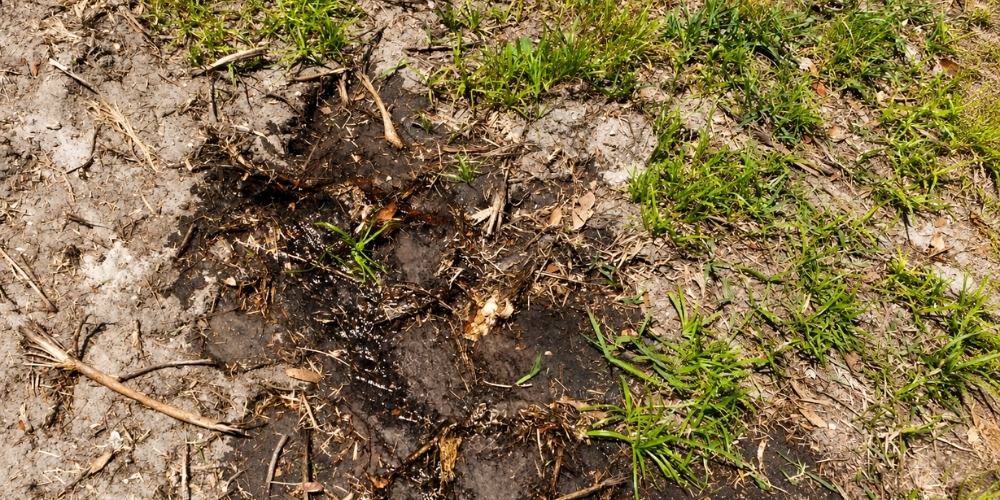
Underground pipe issues can develop gradually or appear suddenly. Homeowners may notice one or more of the following signs:
- Slow drains throughout the house, not just in one fixture
- Sewage odor in the yard, especially near the sewer lateral path
- Wet or unusually green patches of grass with no clear irrigation cause
- Gurgling sounds from drains when water runs elsewhere in the house
- Unexplained spikes in water bills that may indicate a hidden water service line leak
- Soil depression, sinkholes, or settling along the underground pipe alignment
Any one of these can have a simple explanation. Several appearing together, or persisting after a basic clog is cleared, can justify evaluating the property’s sewer or water service line.
Plumbing Services Near Me: How Underground Pipe Diagnosis Works
Accurately diagnosing underground pipe defects requires a methodical process. Bypassing key diagnostic steps risks inaccurate recommendations, unnecessary digging, and unneeded expense.
1. Sewer Camera Inspection
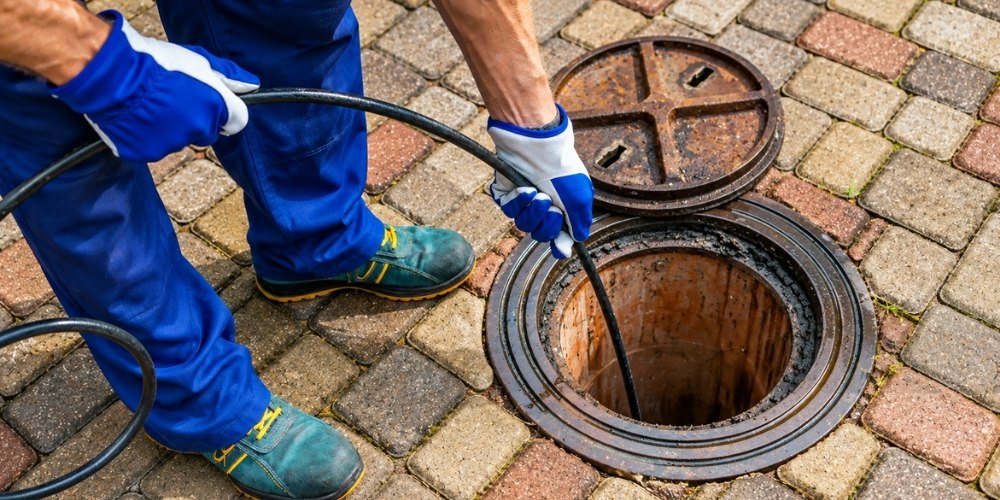
A high-definition camera is inserted through an accessible cleanout to inspect the internal condition of non-pressurized drain and sewer lines. This step visualizes root intrusion, offset joints, cracks, grease accumulation, sagged sections or bellies, and structural damage, while measuring linear distance along the run. Note: Sewer cameras are designed for non-pressurized drainage systems and are not used inside small-diameter, pressurized water service lines.
2. Line Locating & Water Leak Detection
For sewer lines, an electronic locator detects a signal from the camera head or sonde to help identify its surface location and approximate depth. For water service lines, technicians may use pressure testing, ground microphones, or acoustic correlators to narrow the location of hidden leaks without extensive exploratory excavation.
3. Utility Marking Before Mechanized Excavation
Before mechanized digging or excavation work, Georgia law requires contacting Georgia 811 at least three business days in advance so participating utility operators can mark the approximate locations of underground facilities. This safety step helps reduce the risk of utility damage, service interruptions, and line strikes.
4. Documentation
Technicians document relevant camera footage, measurements, and location data to provide homeowners with supporting information about the identified problem and the basis for repair recommendations.
5. Repair Method Evaluation
After diagnostic evaluation, the technician recommends the appropriate next step, such as trenchless pipe lining, pipe bursting, open-cut repair, line replacement, or hydro jetting when the problem involves a removable blockage rather than structural damage. The recommendation depends on the pipe’s material, depth, location, condition, and type of problem.
READ MORE: Signs You Need Sewer Line Repair in Alpharetta, GA
Repair Methods: Trenchless vs Open-Cut
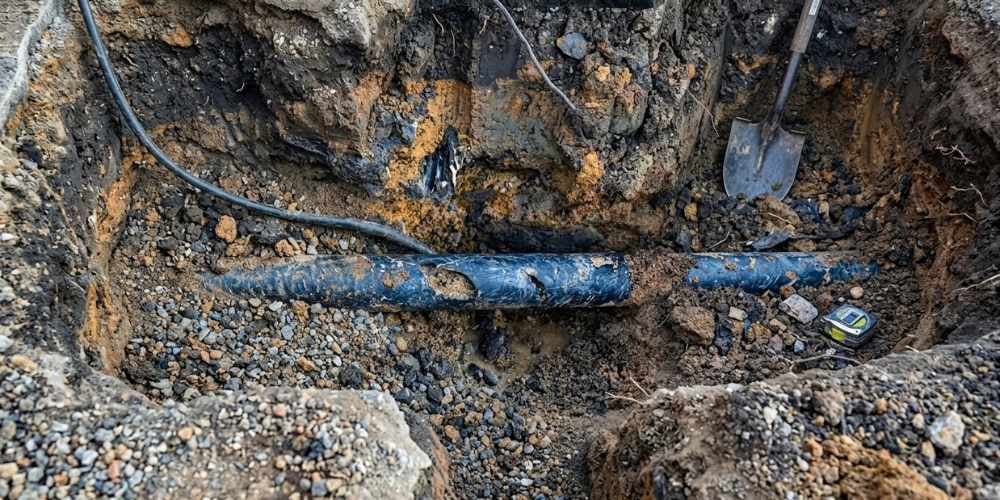
The right repair method depends on whether the line is a sewer lateral or a pressurized water line, as well as its condition, depth, material, and structural integrity. Neither method is universally applicable; each serves distinct scenarios.
|
Factor |
Trenchless Repair |
Open-Cut Repair |
|
Landscaping impact |
Typically limits surface disruption by using smaller access points or pits |
Requires excavation of the affected pipe area |
|
Best for |
Pipes suitable for lining, pipe bursting, or other limited-excavation replacement methods |
Collapsed pipes, severe sags or bellies, localized failures, or conditions that rule out trenchless rehabilitation |
|
Access |
Typically requires limited access points or small excavation pits, depending on the method |
Requires excavation of the affected repair area |
|
Pipe condition considerations |
Suitability varies by trenchless method, existing pipe material, and pipe condition |
Applicable when pipe condition, access, or damage makes trenchless methods unsuitable |
Trenchless repair methods can limit damage to driveways, patios, and landscaping when conditions make them suitable. However, not every pipe qualifies. A severely collapsed sewer line, a heavily sagged section, or certain severe water line breaks may require open-cut excavation. This determination relies on thorough diagnostic testing, not guesswork.
What Affects the Cost of an Underground Pipe Repair
Underground pipe restoration costs vary based on site complexity, pipe depth, structural condition, and repair scope. Understanding the key cost variables helps property owners evaluate written estimates effectively.
- Scope of work. A spot repair on a single cracked joint has different labor, material, and equipment requirements than a full line replacement.
- Site conditions. Depth of the pipe, soil type, and what sits above it all affect access and labor. Obstructions often demand extra time or specialized excavation machinery.
- Pipe material and condition. Cast iron, clay, PVC, copper, and polybutylene each require specific tools and restoration techniques. Deteriorated or fragile pipes may require full replacement rather than localized repair.
- Repair method. Trenchless technology can reduce surface restoration costs, though equipment setup differs from open-cut excavation.
- Accessibility. Tight side-yard access or utility conflicts can add complexity to the job. Navigating confined spaces usually extends setup time and overall labor effort.
- Urgency. An active leak or backup may require faster scheduling than a planned repair. Service timing and response requirements can affect the overall scope and cost of the work.
A reliable quote generally requires an on-site diagnostic evaluation. Estimates provided without evaluating the pipe’s actual condition may not reflect the full repair scope.
When to Call a Professional for Underground Plumbing Issues
Prompt evaluation by a qualified underground utility professional can identify pipe defects before they lead to more extensive backups, leaks, or property damage. Early diagnosis can also help establish the appropriate repair scope before conditions worsen.
Call a professional promptly if:
- Multiple drains are slow or backing up at the same time
- Sewage odor is present in the yard or near an exterior cleanout
- A wet spot or depression in the yard has no clear irrigation source
- The water bill has increased sharply without a change in usage
- A previous repair or camera inspection flagged a pipe nearing the end of its service life
Excavation work near underground utilities carries inherent risk. Compliance with Georgia 811 locate requirements and OSHA excavation safety standards helps reduce the risk of utility strikes, cave-ins, and other excavation hazards.
Frequently Asked Questions
How long does an underground pipe repair typically take?
Timing depends on the repair method, extent of the damage, pipe depth, and site access. A localized repair may take less time than a full line replacement, so the contractor should provide a project-specific timeline after diagnosis.
Do underground pipe repairs require a permit?
Permit requirements depend on the municipality and the type of work being performed. The contractor should confirm applicable plumbing, excavation, and inspection requirements before work begins.
Should an underground pipe be repaired or completely replaced?
That depends on how much of the line is damaged and the condition of the remaining pipe. A localized defect may support a targeted repair, while widespread deterioration or repeated failures can make replacement the more practical option.
Can tree roots cause underground sewer line problems?
Yes. Tree roots seek moisture and can enter small cracks or unsealed joints in underground sewer lines, expanding inside the pipe and causing major blockages or structural failures. A sewer camera inspection can show where root intrusion is occurring and help determine whether cleaning, mechanical root removal, or pipe repair may be appropriate.
Can an underground pipe problem come back after a spot repair?
It can if other sections of the line are also deteriorated or damaged. Reviewing the condition of the surrounding pipe during the initial inspection helps determine whether a spot repair addresses the full problem or only one failure point.
Ready to Get an Underground Plumbing Estimate?
Zippy Plumber specializes exclusively in exterior underground plumbing, the sewer and water lines running from the building to the street, for homeowners, property managers, and commercial operators across Alpharetta and North Atlanta.
A comprehensive evaluation using camera inspection, locating, or leak detection can help identify underground pipe issues and establish an appropriate repair plan.
Related Posts