
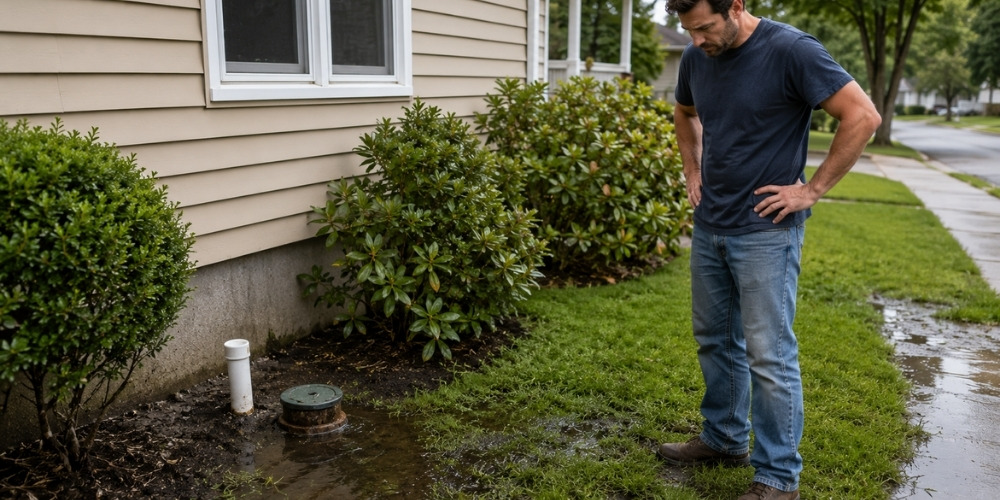
Main sewer line clog symptoms are your home’s earliest warning that the single pipe carrying all wastewater to the street is failing. Recognizing these signs early can mean the difference between a straightforward cleaning and a costly full-line replacement.
Table of Contents
- Why Sewer Line Clogs Are a Growing Problem
- The Most Common Main Sewer Line Clog Symptoms
- What Causes a Main Sewer Line Clog
- How to Confirm a Main Line Clog vs. a Branch Line Clog
- What Sewer Line Repairs Actually Cost
- Things to Know
- Take Action Before a Main Sewer Line Clog Becomes a Catastrophe
- Frequently Asked Questions
Why Sewer Line Clogs Are a Growing Problem
Aging infrastructure is a key driver behind the rising number of sewer-related service calls across the U.S. According to Intel Market Research (2025), over 60% of municipal sewer systems in North America are more than 30 years old. These systems require frequent maintenance and repair. That stat matters to homeowners because the lateral sewer line is typically your responsibility.
The lateral sewer line runs from your foundation to the municipal main under the street. You must maintain and replace this section of pipe at your own expense.
The sewer repair services market reflects how widespread the issue has become. Verified Market Reports (2025) valued the sector at $6.34 billion in 2025. The market is projected to reach $11.18 billion by 2033, growing at a CAGR of 7.34%. This growth is driven partly by deferred maintenance catching up with aging residential pipe systems. Clay and cast-iron lines installed decades ago are particularly vulnerable.
Understanding the warning signs puts you in a position to act before a partial blockage becomes a full backup.
The Most Common Main Sewer Line Clog Symptoms
Multiple drains slowing down at once is the clearest indicator that the problem is not isolated to a single fixture. When a guest bathroom, kitchen sink, and laundry drain all drain sluggishly simultaneously, the obstruction is almost certainly in the shared main line. Therefore, it is not in one branch.
Here are the key main sewer line clog symptoms to watch for:
- Multiple slow drains simultaneously. When more than one fixture backs up at the same time, especially on the same side of the house or the same floor, a main line issue is the likely cause.
- Gurgling or bubbling sounds. Toilets, tubs, or floor drains that gurgle after you run water elsewhere are a telltale sign of trapped air caused by a partial blockage downstream.
- Sewage backing up into the lowest fixtures. First-floor tubs and floor drains are the lowest gravity points. When the main line is nearly blocked, backflow appears here first.
- Toilet water levels that rise or fall unexpectedly. Using the washing machine or dishwasher causes water to push back into the toilet bowl when the sewer line is obstructed.
- Outdoor signs near the cleanout. Wet soil, a foul odor near the ground, or standing water around your sewer cleanout cap indicates a pressurized blockage or cracked pipe underground.
If you notice an unusual smell inside the home, reviewing sewer smell in house causes will help you assess whether the odor is plumbing-related. Additionally, this resource covers whether the issue is a separate ventilation problem.
What Causes a Main Sewer Line Clog
Most main line blockages fall into one of four categories:
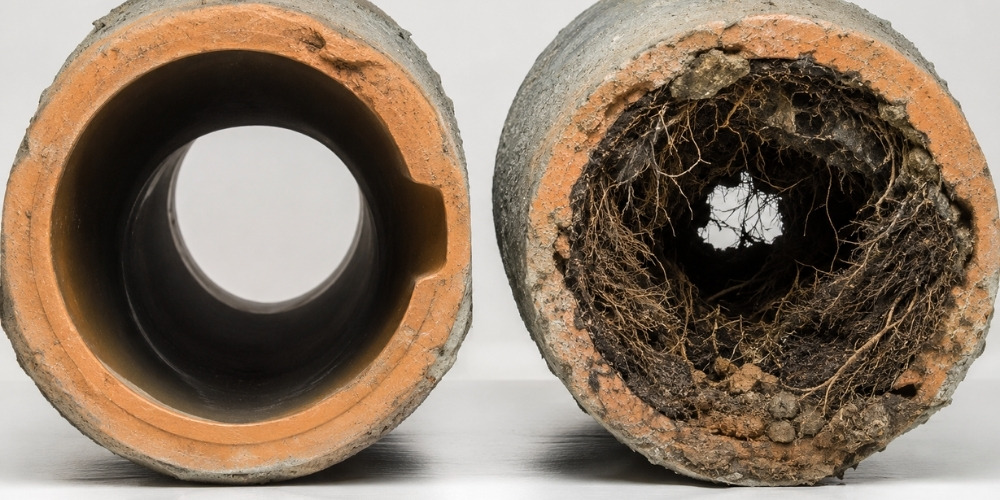
- Root intrusion. Tree roots naturally seek moisture and will infiltrate even small cracks in clay or older PVC pipe. Once inside, roots expand and trap grease, paper, and debris.
- Grease and food waste accumulation. Fats, oils, and grease cool and solidify inside the pipe. They build up layer by layer until flow is severely restricted.
- Non-flushable debris. Wipes labeled “flushable,” paper towels, hygiene products, and excess toilet paper are common culprits that cause main sewer line clog symptoms.
- Collapsed or offset pipe. Ground shifting, soil erosion, or freeze-thaw cycles can cause older pipe to crack, sag, or separate. This creates a dam-like obstruction.
One thing homeowners frequently try before calling a plumber is a chemical drain cleaner. However, you should consider whether is drain cleaner bad for pipes is a concern for your specific pipe material. Caustic chemicals can accelerate corrosion in older metal or clay lines.
How to Confirm a Main Line Clog vs. a Branch Line Clog
The most reliable DIY test is simple: run water in two or more separate fixtures on different sides of the house at the same time. If both back up or if one causes the other to gurgle, the blockage is in the shared main line. In contrast, if only one sink or toilet is slow while others work normally, the clog is localized to that branch.
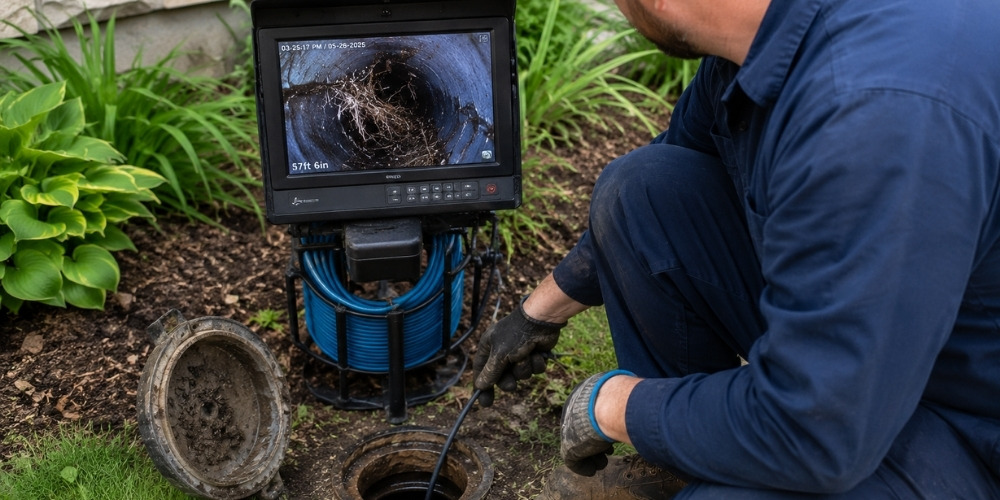
Professionals confirm this with a camera inspection. They thread a waterproof camera through the cleanout access point to visually locate the blockage. This assessment helps determine whether hydro-jetting or excavation is needed.
| Sign | Branch Line Clog | Main Line Clog |
|---|---|---|
| Single fixture affected | Yes | No |
| Multiple fixtures affected | No | Yes |
| Gurgling in other drains | Rarely | Common |
| Sewage backflow in tub/floor | No | Yes |
| Outdoor odor or wet soil | No | Possible |
What Sewer Line Repairs Actually Cost
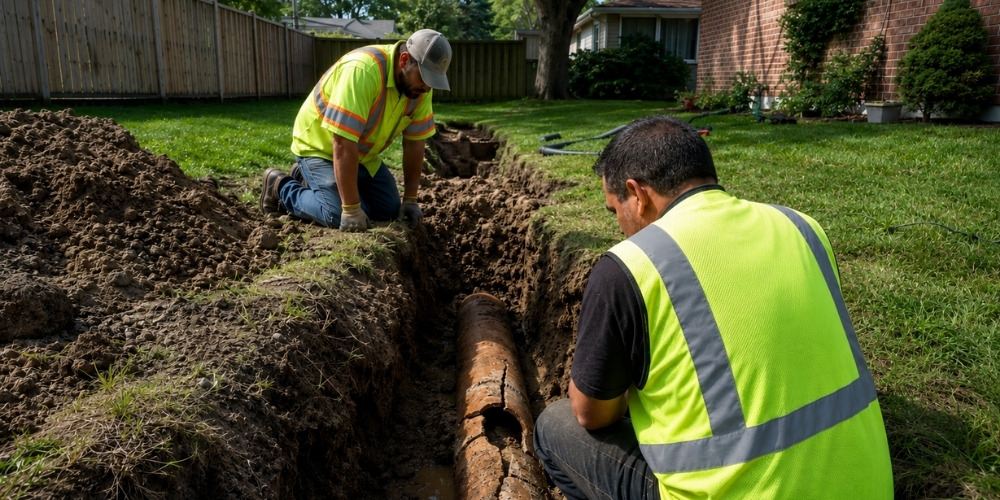
According to Angi (2025), sewer line replacement costs range from $50 to $125 per foot. The total repair or replacement averages $1,200 to $6,000 depending on depth, access, and pipe material. A simple hydro-jetting service clears grease or root blockages more affordably than a full excavation. However, those figures vary by region and job complexity.
Understanding how much does drain cleaning cost will help you break down pricing by method and service type. This resource covers the cost differences between various professional solutions.
One financial question homeowners frequently ask is whether their policy covers these expenses. Therefore, understanding does homeowners insurance cover sewer line damage is worth reviewing before assuming a claim will be approved. Standard policies often exclude gradual damage or root intrusion.
Things to Know
- Main line clogs often build up gradually over months before any symptoms appear. Therefore, annual camera inspections are worth considering for homes with older pipe.
- Chemical drain cleaners offer no effective solution for root intrusion or collapsed pipe sections, regardless of how concentrated the formula is.
- The sewer lateral from your foundation to the city main is your financial responsibility in most U.S. municipalities. Moreover, this applies even if the blockage originated at the connection point.
- Municipal investments in sewer infrastructure increased by 18% year-over-year, according to Intel Market Research (2025). However, public system upgrades do not eliminate the need to maintain the private lateral connecting your home.
- Never ignore a single backup event if it is accompanied by gurgling in other drains. One symptom plus one other is enough to warrant a professional evaluation of main sewer line clog symptoms.
Take Action Before a Main Sewer Line Clog Becomes a Catastrophe
A partial sewer line blockage can escalate to a full backup and sewage damage inside your home within hours of reaching a tipping point. If you are seeing two or more of the symptoms described above, waiting is not a safe option.
At Zippy Plumber, we specialize in exterior underground pipe work from the foundation to the street. We cover exactly the section of your sewer system where main sewer line clog symptoms occur. Request a free estimate today. Let our team assess your line with a professional camera inspection before the problem forces your hand. Call or fill out our contact form now to schedule your evaluation.
Frequently Asked Questions
Q: Can a main sewer line clog clear itself?
No, a main sewer line clog will not resolve on its own.
Unlike a light blockage in a sink trap, obstructions in the main sewer line involve debris, roots, or structural issues that require mechanical or hydro-jet removal. Waiting typically allows the blockage to worsen.
Q: What is the first symptom homeowners usually notice?
Most homeowners first notice multiple slow drains appearing at the same time.
This often gets dismissed as a coincidence or a shared soap buildup issue. If two or more fixtures are slow simultaneously, especially after running large appliances, the main line should be inspected for main sewer line clog symptoms.
Q: How long does it take to clear a main sewer line clog?
Most professional main line clearings take between one and three hours depending on the blockage type and method used.
Root intrusion requiring hydro-jetting may take longer than a simple grease blockage. Furthermore, camera inspection time adds to the total. However, it is essential for accurate diagnosis.
Q: Are main sewer line clogs more common in older homes?
Yes, homes built before 1980 with clay or cast-iron pipe face significantly higher clog risk.
These materials are more prone to joint separation, root intrusion, and interior corrosion buildup. Many older neighborhoods in the U.S. still have their original lateral pipe in place.
Q: Is it safe to use the home while waiting for a plumber?
Minimize water use to essential needs only until the line is cleared.
Every flush and drain cycle pushes more water into an already-restricted line. This increases the risk of sewage backing up into your lowest fixtures. Therefore, shower and toilet use should be kept to a minimum until service is complete.