
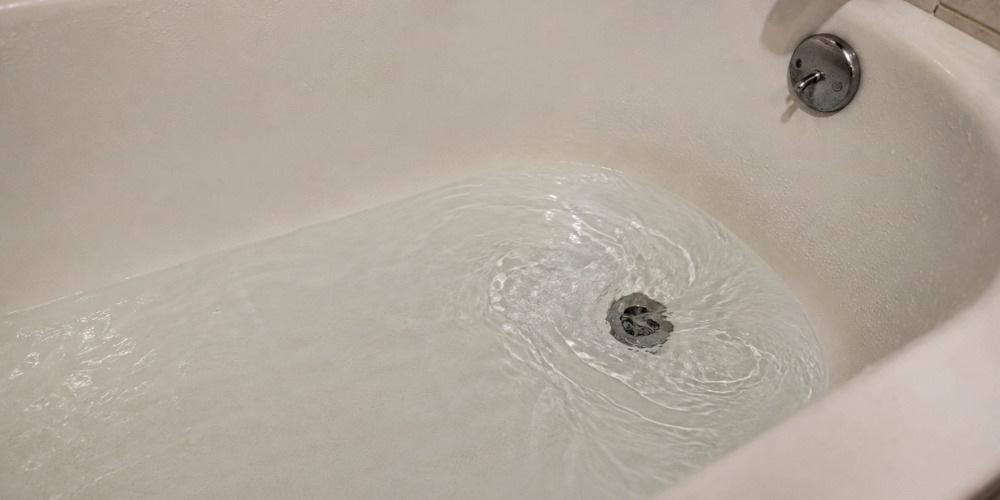
A slow draining bathtub stems from several common sources. These include blockages in the drain line, soap scum and hair buildup, or deeper pipe issues further down. Additionally, understanding the root cause prevents minor inconveniences from becoming costly plumbing repairs. Slow draining bathtub causes vary widely, but identifying them early makes all the difference.
Table of Contents
- What’s Actually Blocking Your Drain
- Pipe and Venting Problems That Cause Slow Drainage
- DIY Fixes Worth Trying First
- When the Problem Is Underground
- Things to Know
- Take Action Before a Slow Drain Becomes a Burst Pipe
- Frequently Asked Questions
Key Takeaways
- Hair buildup is the leading cause of bathtub clogs, according to the EPA (2026).
- Soap scum is a significant secondary contributor, confirmed by Plumbing Manufacturers International (2025).
- Chemical drain cleaners can damage your pipes over time; mechanical removal is safer.
- Slow drains affecting multiple fixtures often signal a shared line or venting issue.
- Underground pipe damage requires a licensed specialist, not DIY fixes.
- Addressing the cause early almost always costs less than emergency plumbing later.
What’s Actually Blocking Your Drain
Most slow draining bathtub causes fall into a handful of repeatable categories. Furthermore, understanding which one applies determines whether you need a $5 drain snake or a professional pipe inspection.
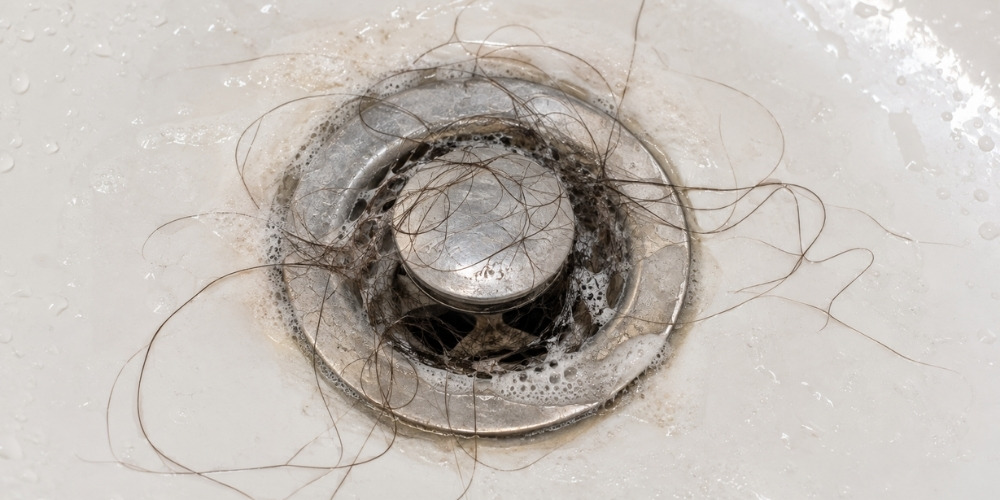
Hair accumulation is the single most common culprit. According to the EPA (2026), hair, soap, and grease rank as the primary sources of household drain blockages. Hair catches on the drain stopper or crossbars inside the pipe. It forms a net that traps everything else passing through. Over time, that mass becomes dense enough to restrict flow significantly.
Soap scum and body oils compound the problem considerably. Plumbing Manufacturers International (2025) notes that drain-related issues rank among the top five plumbing concerns in U.S. households. Soap scum gets identified as a key contributor. Traditional bar soap contains tallow, which bonds with minerals in hard water. This creates a waxy residue along pipe walls. The residue narrows the effective diameter of your drain line, slowing water even without a visible clog.
Mineral scale represents another underappreciated cause of slow draining bathtub problems, particularly in regions with hard water. Calcium and magnesium deposits accumulate on the interior surface of pipes over years. They gradually choke flow. This process accelerates in older galvanized steel pipes, which are rougher on the inside. They hold deposits more readily than modern PVC or copper.
Foreign objects are a less common but impactful cause. Small caps, razor guards, and children’s toys can lodge inside the drain opening or just below it. These partially obstruct flow without fully blocking it.
Pipe and Venting Problems That Cause Slow Drainage
When the clog is not immediately at the drain opening, the issue shifts to the pipe network itself. Therefore, understanding these deeper causes helps you identify when professional help is necessary.
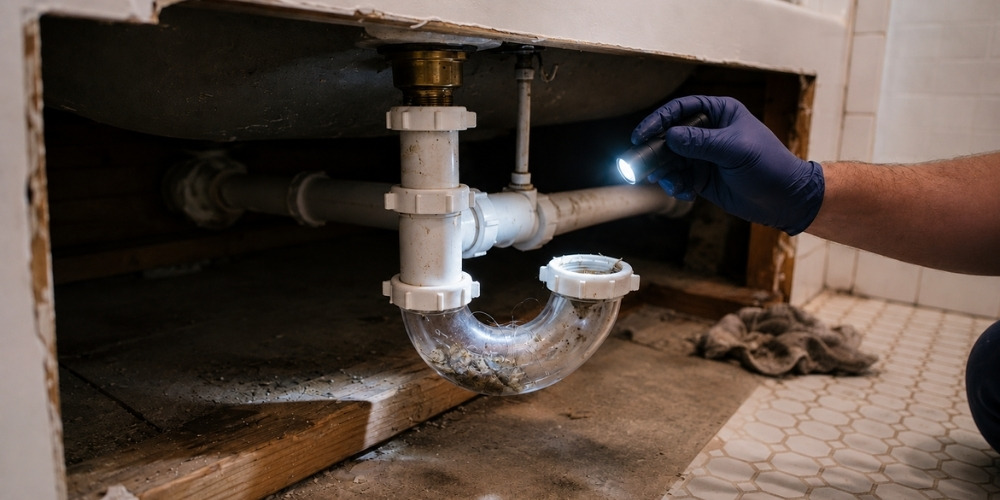
P-trap buildup is common in tubs that get used frequently. The P-trap is the curved pipe section beneath the tub. It retains water to block sewer gases, but it also collects debris. A partially blocked P-trap produces the same slow-drain symptom as a surface clog. However, a plunger alone will not clear it effectively.
Drain vent obstruction is a cause that homeowners routinely overlook. Plumbing systems rely on vent pipes to allow air into the drain line. This keeps water flowing freely. When a vent pipe gets blocked by a bird’s nest, leaves, or debris on the roof, negative pressure builds in the system. This manifests as gurgling sounds, sluggish draining, and sometimes an odor. You may recognize this from researching sewer smell in house causes.
Shared drain line blockages explain why multiple fixtures may slow down simultaneously. Your bathtub, toilet, and sink often share a single branch drain. They connect to the main sewer line afterward. A blockage in that shared section affects all fixtures on the branch. It does not just affect the tub.
Pipe corrosion and root intrusion represent deeper issues that require professional diagnosis. Tree roots seek moisture. They can infiltrate sewer lines through small joints or cracks. This causes partial obstructions that worsen over time.
DIY Fixes Worth Trying First
Before calling a plumber, a few targeted approaches can resolve surface-level slow draining bathtub causes. Moreover, these methods avoid damaging your pipes.
Manual removal is the most effective first step. Remove the drain stopper first. Use needle-nose pliers or a plastic hair-removal tool and pull out accumulated debris. This costs nothing. It resolves the majority of tub clogs.
A cup plunger creates pressure changes that dislodge soft blockages further down the line. Cover the overflow plate with a wet rag first. This creates proper suction.
Baking soda and white vinegar create a mild chemical reaction that breaks up soft soap scum. Pour half a cup of baking soda followed by half a cup of white vinegar. Wait 20 minutes, then flush with hot water.
Before reaching for a commercial chemical product, consider this important question: is drain cleaner bad for pipes. We cover this in detail. The short answer is yes—repeated use can degrade older pipe materials. Mechanical methods remain always safer for your plumbing long term.
If you are weighing whether to DIY or hire out, reviewing how much does drain cleaning cost gives you a realistic baseline. You can compare options before committing.
When the Problem Is Underground
If clearing the drain opening and P-trap does not improve flow, the obstruction is likely deeper in the system. In this case, the fix moves from DIY territory into professional plumbing work.
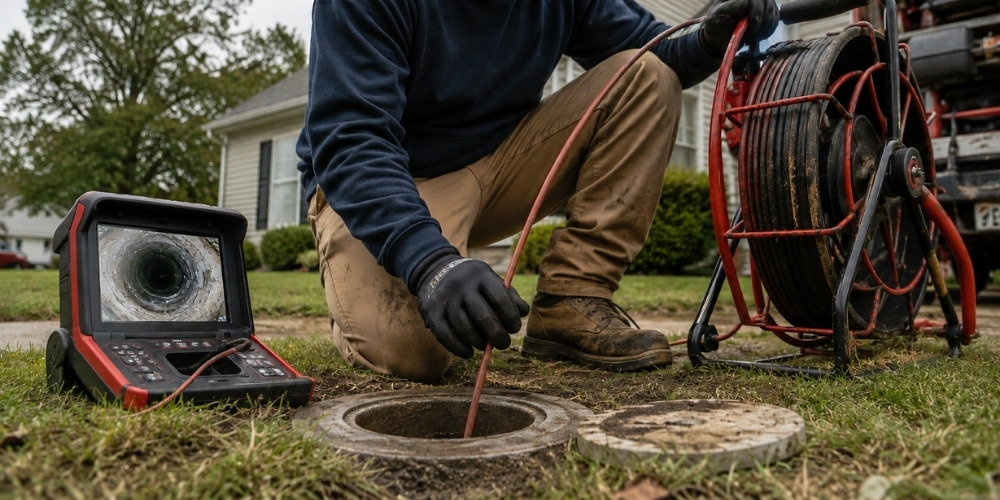
Root intrusion, collapsed pipe sections, and heavy grease accumulation require specific intervention. These issues affect the main sewer line. Camera inspection and mechanical hydro-jetting or pipe replacement become necessary at this stage. These are exterior underground issues, exactly the kind of work that Zippy Plumber specializes in. Based in Alpharetta, GA, Zippy Plumber focuses exclusively on underground exterior pipe work. They handle everything from the building to the street. They do not perform indoor fixture repairs. If your slow drain traces back to a damaged or blocked underground line, that is their area of expertise.
Additionally, it is worth knowing whether your homeowner’s policy covers this kind of work. Understanding does homeowners insurance cover sewer line repairs makes a meaningful difference in your out-of-pocket costs.
Things to Know
- Hair catchers installed over the drain opening cost under $15. They are the single most effective preventive measure against tub clogs.
- Hard water accelerates mineral scale buildup. Homes on well water or in regions with high mineral content should clean drains more frequently.
- Gurgling from other fixtures when you drain the tub almost always points to a shared line or venting issue. It is not a localized clog.
- Chemical drain cleaners labeled “safe for all pipes” still carry risks for older galvanized or clay pipe systems. Always check your pipe material first.
- If your home was built before 1980, the drain lines may be cast iron or clay. These corrode differently than modern PVC. They warrant a professional inspection if drainage is consistently slow.
Take Action Before a Slow Drain Becomes a Burst Pipe
Ignoring a slow drain does not make it better. Instead, it accelerates the buildup and puts stress on aging pipe joints. If you have worked through the DIY steps and still cannot restore normal flow, the blockage extends beyond the fixture level. Request a free estimate from Zippy Plumber to get a professional assessment of your underground pipe system. There is no guesswork and no unnecessary upselling. Contact the team today to schedule your inspection. Find out exactly where your drainage problem begins.
Frequently Asked Questions
Q: Can a slow bathtub drain fix itself over time?
No, slow drains do not resolve on their own.
Blockages almost always grow larger as more hair, soap, and debris accumulate around the existing obstruction. Waiting makes the clog denser and harder to remove without professional tools.
Q: Why does my bathtub drain slowly but my sink drains fine?
The two fixtures likely share separate branch lines, or the clog is localized to the tub’s own drain and P-trap.
If your sink drains freely but the tub does not, the blockage is specific to that fixture. Check the tub’s drain stopper and P-trap before assuming a shared-line issue.
Q: How often should I clean my bathtub drain to prevent clogs?
A basic drain cleaning every four to six weeks is a reasonable maintenance interval for most households.
Homes with multiple people using the tub daily, especially with long hair, may need more frequent attention. A drain hair catcher reduces the interval significantly.
Q: Is it safe to use boiling water to clear a bathtub clog?
Boiling water is safe for metal pipes but can soften and warp PVC pipe joints.
Use very hot tap water instead of boiling water if you are unsure of your pipe material. It is effective against soap scum without the risk of joint damage.
Q: When does a slow bathtub drain become a plumber’s job?
When DIY methods fail after two or three attempts, or when multiple fixtures are affected simultaneously, it is time to call a professional.
Persistent slow drains, gurgling sounds, and sewage odors together indicate a deeper obstruction or pipe damage. They require camera inspection and professional clearing.
The Bottom Line on Slow Draining Bathtub Causes
Understanding slow draining bathtub causes puts you in a much better position to respond proportionately. Minor surface clogs respond to manual removal. Mid-level blockages respond to mechanical tools. Deep or underground obstructions require expert diagnosis. Acting early keeps costs manageable. It protects your pipe system from compounding damage.
Start with the simplest fix. Work methodically toward the drain line. Bring in a licensed specialist when the problem extends beyond what you can reach. The earlier you address it, the fewer surprises you will face.